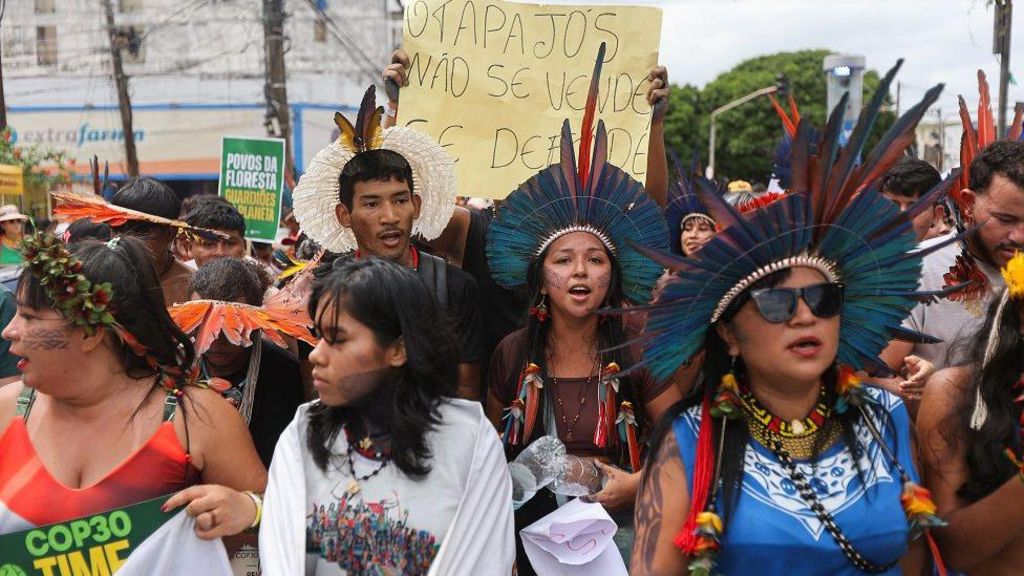
Thousands of climate activists descended upon the gates of the COP30 climate talks in Belém, Brazil, delivering a powerful message through music, chants, and symbolic protests. Under the scorching sun, demonstrators carried three giant coffins labeled ‘Oil,’ ‘Coal,’ and ‘Gas,’ flanked by grim reapers, symbolizing the death of fossil fuels. Indigenous groups held signs proclaiming ‘the answer is us,’ while inflatable elephants and anacondas weaved through the crowd. This marks the first time since 2021 that protesters have been permitted to demonstrate outside the UN climate talks, as the previous three summits were held in countries that restrict public protest.
Tuga Cíntia, a member of the theater group Hydra Dance from the Federal University of Pará, told the BBC, ‘We are holding a funeral for fossil fuels. Enough is enough with COP meetings and theory. It’s time for us to actually act.’ Indigenous communities, Brazilian youth groups, and international activists joined the march, amplifying calls for justice and the end of fossil fuel dependency.
Brianna Fruean, a climate activist from Samoa, emphasized the urgency of the situation: ‘Fossil fuels are still being burned. We know all too well what it’s like to live on the frontline of climate change.’ Ilan, from the NGO 350, echoed her sentiments, stating, ‘We are here after so many COPs, marching for justice, for the end of fossil fuels.’
The protest also highlighted indigenous rights, with signs demanding ‘demarcation now’ to secure legal ownership of ancestral territories. Hundreds of indigenous groups in the Amazon, recognized as vital protectors of biodiversity, participated in the march. Smaller protests occurred globally, including in the UK.
Security was tight at the COP30 venue, with riot police guarding the entrance. On Tuesday, protesters breached security lines, causing minor injuries to two staff and limited damage to the venue. Indigenous voices have been a focal point of the talks, with many groups expressing frustration that their concerns about deforestation, land protection, and resource extraction are being ignored.
Negotiations at COP30, hosted by Brazilian President Luiz Inácio Lula da Silva, aim to address climate change, but progress has been slow. Despite Brazil’s pledge to focus on the Amazon, the government recently granted permission to the state oil company to explore for oil at the mouth of the river. Additionally, a record number of fossil fuel lobbyists—1,600—are attending the summit, a 12% increase from last year.
In a notable absence, the US sent no delegation to the talks, following former President Donald Trump’s dismissal of climate change as ‘a con.’ Meanwhile, ten countries signed the Declaration on Information Integrity on Climate Change, an initiative to combat climate disinformation and promote evidence-based information. Brazil has promised the talks will deliver actionable outcomes, but with negotiations continuing into next week, the world watches to see if words will translate into meaningful action.