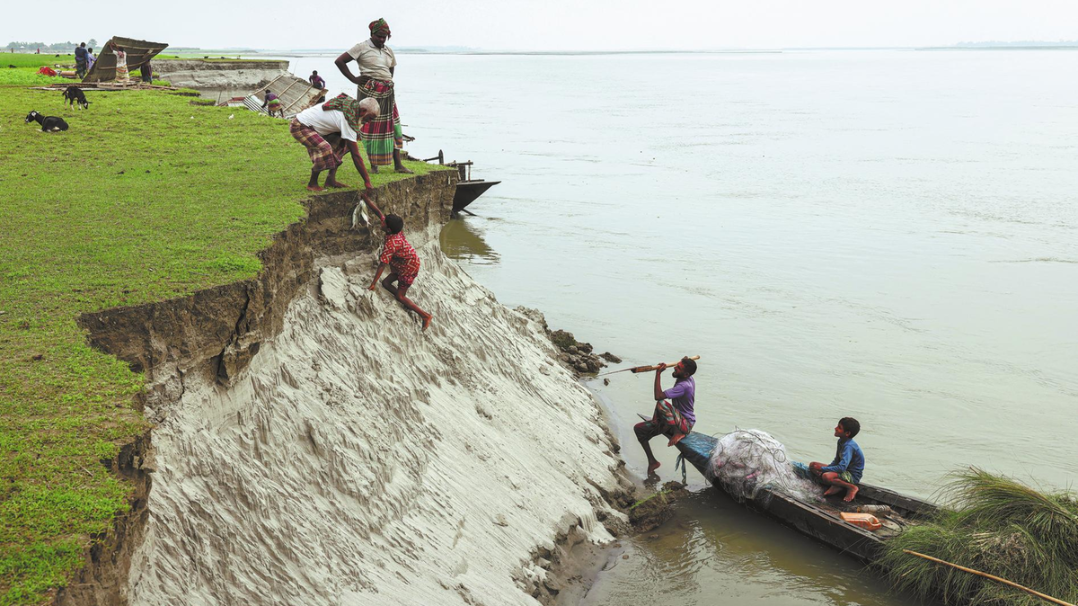
As global leaders convene at COP30 to address climate challenges, Bangladesh continues to grapple with the devastating effects of river erosion. On a somber morning in Kurigram, Nurun Nabi prepares to relocate his family for the second time in a year. His home, constructed just twelve months ago on the precarious Char Youthnet island in the Brahmaputra River, is now threatened by the encroaching waters. ‘The river is coming closer every day,’ Nabi lamented, his voice heavy with fatigue. ‘We are born to suffer. Our struggle is never-ending. I’ve lost count of how many times the river took my home.’
The plight of Nabi and countless others underscores the urgent need for effective climate solutions. The Brahmaputra River, a lifeline for many, has become a source of relentless destruction, swallowing homes, schools, and livelihoods. The only school on Char Youthnet island, where children continue their education amidst the crisis, stands as a fragile symbol of resilience.
As nations gather to strategize at COP30, the situation in Bangladesh serves as a stark reminder of the human cost of climate change. The country, already vulnerable to rising sea levels and extreme weather events, faces an existential threat from river erosion. The international community’s response will be crucial in determining whether nations like Bangladesh can adapt and survive in an increasingly unstable climate.