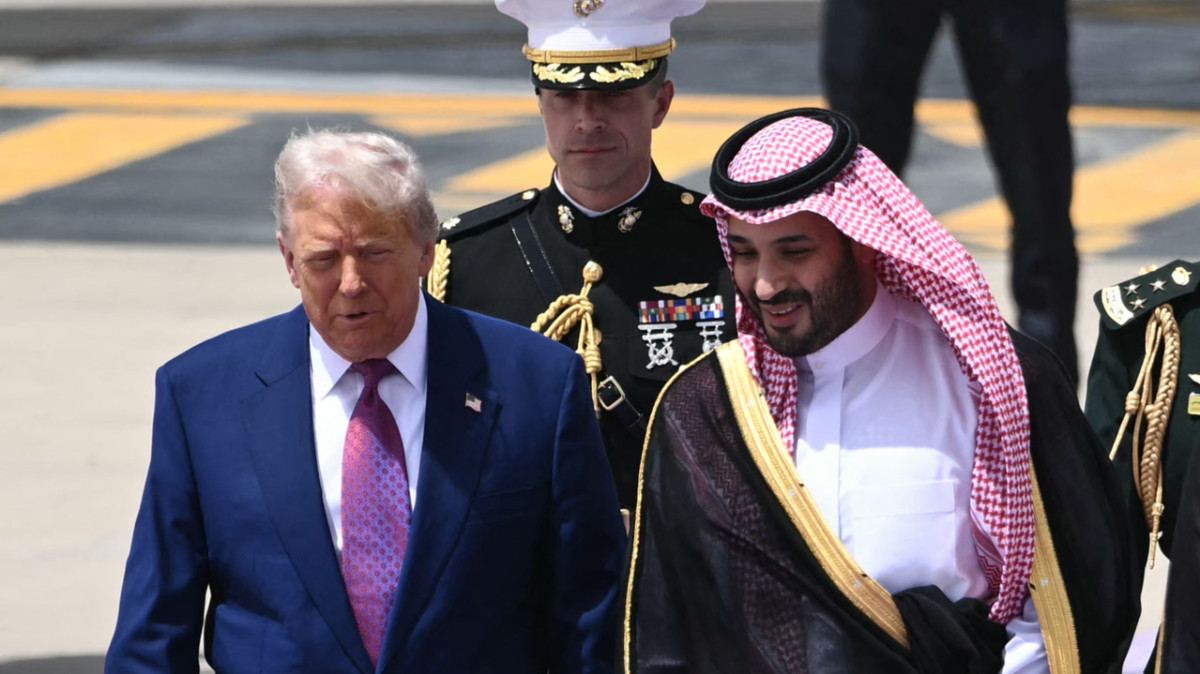
Saudi Arabia’s Crown Prince Mohammed bin Salman (MBS) is set to embark on a high-stakes visit to Washington, aiming to secure a landmark defense agreement that surpasses Qatar’s recent deals. His ambitious agenda includes acquiring advanced AI chips, AI-powered drones, and potentially positioning American nuclear weapons on Saudi soil. This visit underscores MBS’s growing confidence as a regional leader, having navigated intense geopolitical pressures, including calls to normalize ties with Israel amid the ongoing conflict in Gaza and maintaining neutrality during the Israel-Iran tensions earlier this year.
On the other side of the negotiating table is President Donald Trump, who appears willing to leverage America’s cutting-edge nuclear and AI technologies to forge a robust partnership with Saudi Arabia. Analysts suggest that Trump’s focus on boosting foreign sales aligns with Saudi Arabia’s financial capacity to invest heavily in defense and technology, despite global economic uncertainties.
MBS’s visit marks a departure from traditional Middle Eastern leaders’ approaches to Washington. Unlike past deals that primarily benefited American defense contractors like Boeing and Lockheed Martin, MBS’s sophisticated wishlist reflects Saudi Arabia’s vision of a modern, forward-thinking kingdom. Ayham Kamel, Middle East president at Edelman Public and Government Affairs, notes that MBS seeks to strengthen long-term US-Saudi cooperation, emphasizing a two-way flow of technology and trade.
A key area of focus is Saudi Arabia’s push for inclusion under the US nuclear umbrella, a move that would elevate its strategic position in the region. This follows a recent defense pact with Pakistan, the only nuclear-armed Muslim state, which has raised eyebrows in Washington. Experts suggest that extending US nuclear protection to Saudi Arabia could serve as a counterbalance to Pakistan’s influence and enhance Riyadh’s regional standing.
However, the negotiations are not without challenges. The Trump administration’s approval of an Israeli attack on Qatar in 2023 has undermined the US’s role as a regional security guarantor, prompting Saudi Arabia to seek more credible and binding defense arrangements. Riyadh is wary of symbolic gestures and is pushing for concrete commitments, including the potential deployment of US nuclear weapons systems on its soil.
In addition to defense, Saudi Arabia is eyeing significant advancements in AI and nuclear energy. The kingdom aims to enrich uranium domestically, a move that aligns with its economic ambitions and national pride. While the US has historically opposed uranium enrichment in the region, experts speculate that Trump may offer concessions in exchange for lucrative business deals with American companies like Westinghouse and Bechtel.
MBS’s visit also highlights Saudi Arabia’s efforts to decouple its bilateral agreements with the US from the contentious issue of normalizing ties with Israel. Despite Trump’s claims that Riyadh will establish diplomatic relations with Israel by year-end, Saudi officials remain reluctant, insisting on progress toward an independent Palestinian state.
As MBS arrives in Washington with a delegation of 1,000 officials, the visit is poised to consolidate a raft of deals announced during Trump’s trip to the Gulf in May, including $142 billion in defense sales. Potential agreements on F-35 fighter jets, MQ-9 Reaper drones, and AI technologies are on the table, though concerns about maintaining Israel’s military edge and preventing Chinese access to US technology persist.
This visit underscores Saudi Arabia’s strategic pivot to leverage its relationship with the US to bolster its defense capabilities, technological advancements, and regional influence, while navigating the complexities of Middle Eastern geopolitics.