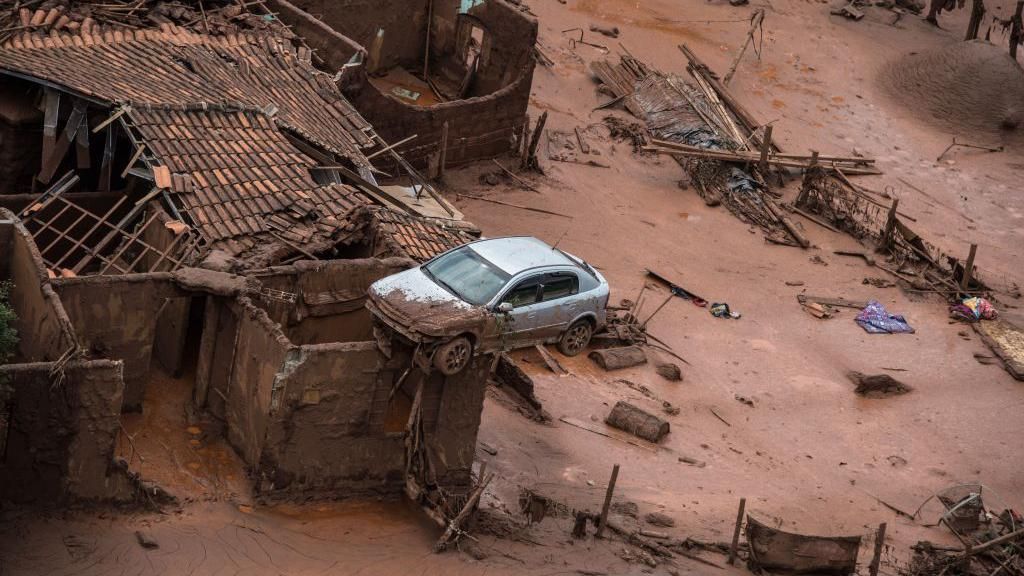
In a landmark ruling by London’s High Court, mining giant BHP has been found liable for the catastrophic 2015 collapse of the Fundão dam in Brazil, an event widely regarded as the country’s most severe environmental disaster. The collapse unleashed tens of millions of cubic meters of toxic waste and mud, devastating communities, claiming 19 lives, and causing extensive environmental damage. The civil lawsuit, representing over 600,000 claimants including individuals, local governments, and businesses, was valued at up to £36 billion ($48 billion). BHP has announced its intention to appeal the ruling, arguing that many claimants have already received compensation in Brazil. The dam, located in Mariana, southeastern Brazil, was owned by Samarco, a joint venture between BHP and Brazilian mining company Vale. The claimants’ legal team successfully argued that the case should be heard in London due to BHP’s UK headquarters at the time of the incident. A separate lawsuit against Vale is ongoing in the Netherlands, involving more than 70,000 plaintiffs. Judge Finola O’Farrell ruled that the decision to continue raising the dam’s height despite safety concerns was the direct cause of the collapse, making BHP liable under Brazilian law. BHP’s Minerals Americas president, Brandon Craig, stated that 240,000 claimants in the London lawsuit have already been compensated in Brazil, which he believes will reduce the scale of UK claims. The case has been marked by disputes between BHP and the claimants’ UK law firm, Pogust Goodhead, which has faced accusations of exploiting vulnerable Brazilians. Pogust Goodhead has denied these allegations, claiming that BHP and Vale pressured claimants into settling for less than their claims’ true value. The Renova Foundation, established by BHP and Vale, has disbursed billions in compensation and repair efforts, including building a new city for displaced residents. However, Pogust Goodhead alleges that a $30.3 billion compensation agreement signed in 2024 prevents claimants from discussing the deal or paying legal fees. The firm claims to have incurred $1 billion in borrowing costs to finance the UK case. BHP has rejected all allegations, stating that Brazil remains the most appropriate jurisdiction for compensation. The case highlights the ongoing legal and ethical complexities surrounding one of the world’s worst mining disasters.
UK court finds mining firm liable for Brazil’s worst environmental disaster