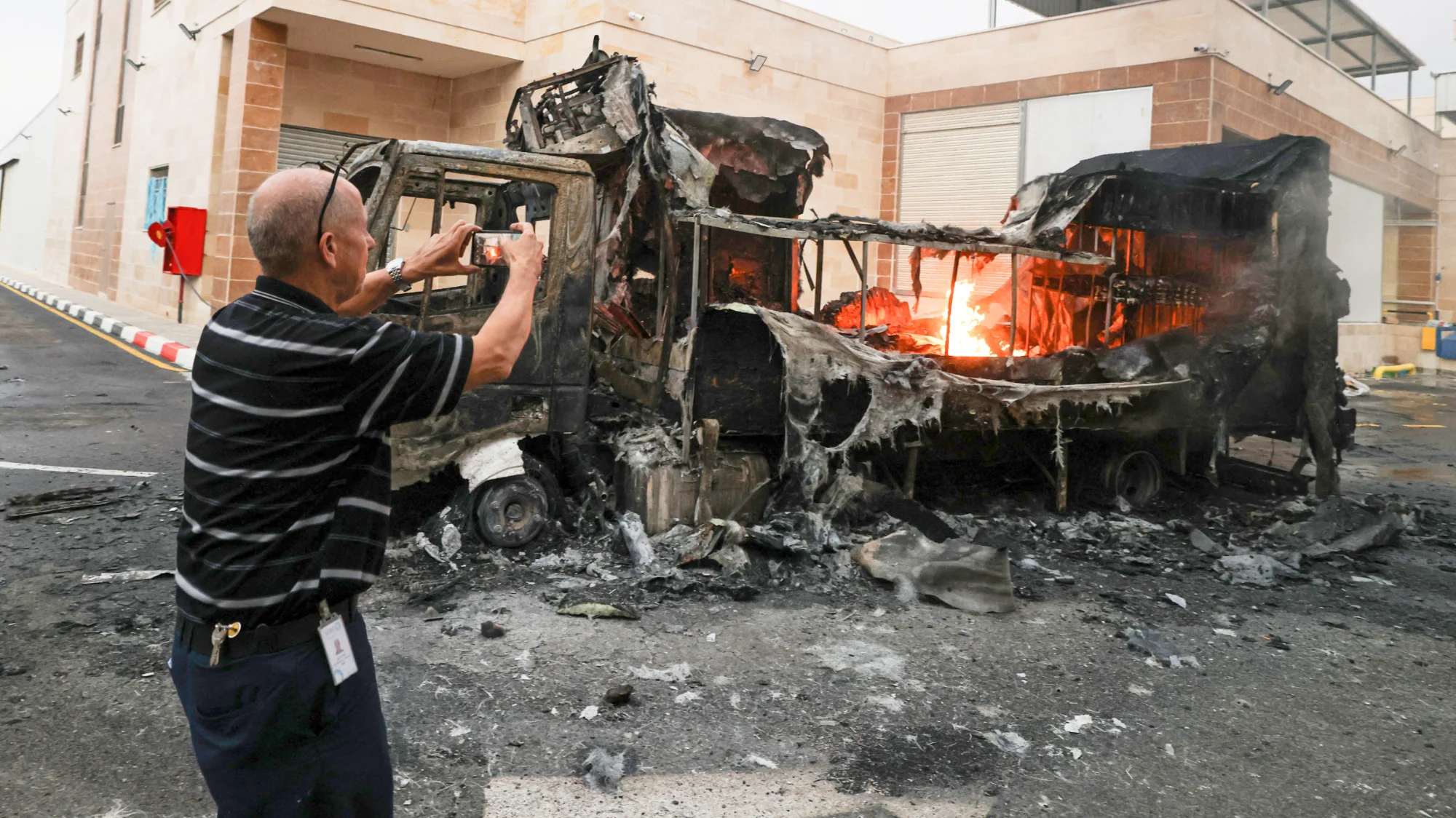
In a disturbing escalation of violence, Israeli settlers launched a coordinated arson attack on Palestinian communities in the occupied West Bank on Tuesday, November 12, 2025. The assault targeted an industrial area east of Tulkarm, near Beit Lid, where masked settlers set fire to a dairy factory, surrounding farmland, multiple buildings, and trucks. The flames spread to a nearby nomadic Palestinian community, destroying their tents. At least four Palestinians were injured as settlers hurled rocks at those attempting to resist the attack. Israeli forces reportedly accompanied and protected the settlers during the assault, further exacerbating tensions.
This incident is part of a broader surge in settler violence that has intensified since October 2023, with a sharp increase in attacks during the olive harvest season—a critical source of income for thousands of Palestinian families. According to the Colonization and Wall Resistance Commission, over 2,350 attacks were recorded in October 2025 alone, with 1,584 directly carried out by the Israeli army. These assaults include physical violence, the uprooting of olive trees, the burning of fields, and the obstruction of farmers’ access to their land.
In addition to the arson attack, settlers fenced off Palestinian land in the northern Jordan Valley, preventing farmers from working and undermining their livelihoods. Meanwhile, in occupied East Jerusalem, over 200 settlers entered the courtyards of Al-Aqsa Mosque under Israeli police protection, performing Talmudic prayers and rituals while barring Muslim worshippers from entering.
The violence extends beyond property destruction. On Sunday, November 10, settlers attacked a Palestinian community in al-Ara’ara, north of Jerusalem, injuring at least seven people and torching livestock sheds. Similar incidents occurred in Mount Sabih, south of Nablus, where masked settlers armed with clubs assaulted farmers, journalists, and foreign activists during the olive harvest. Among the injured were Reuters photographer Raneen Sawafta, Al Jazeera correspondent Mohammed al-Atrash, and photographer Louay Saeed.
UN bodies and international human rights organizations have condemned the escalating violence. Ajith Sunghay, head of the UN Human Rights Office in Palestine, warned that the attacks aim to sever Palestinians’ connection to their land, facilitate illegal settlement expansion, and dispossess communities. He emphasized the cultural and economic significance of olive cultivation, which represents livelihood, lineage, and resilience for Palestinians.
The international community continues to call for accountability, as most settlers involved in such attacks are rarely prosecuted. The ongoing violence underscores the urgent need for intervention to protect Palestinian lives and livelihoods in the occupied West Bank.