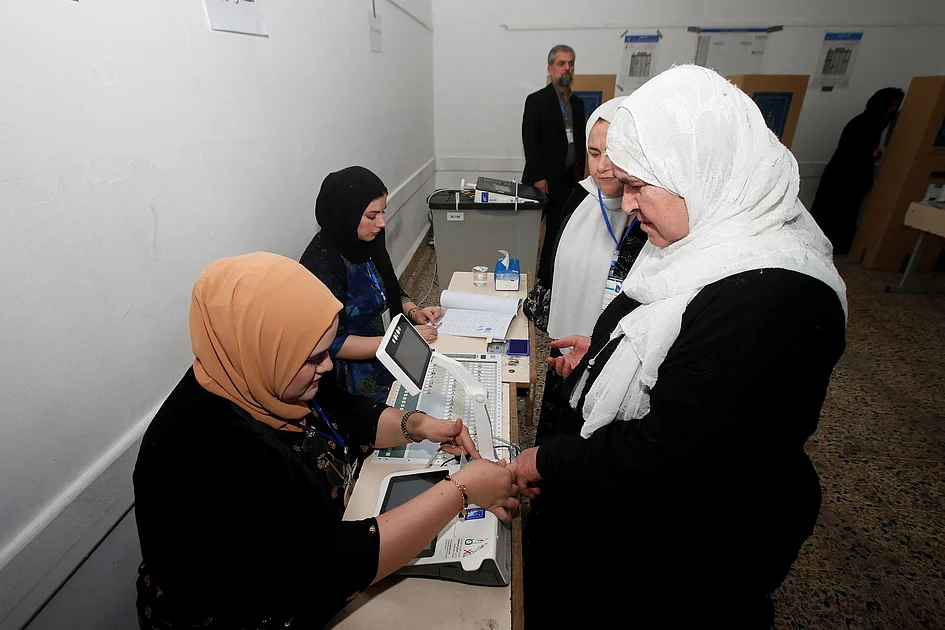
In a surprising development, Iraq’s parliamentary elections on Tuesday saw a significant voter turnout of over 55 percent, defying expectations and calls for a boycott by influential Shia cleric Moqtada Sadr. More than 12 million out of 21 million eligible voters participated, marking a sharp increase from the record low of 41 percent in 2021. This election, held at a critical juncture for Iraq and the broader Middle East, underscores the country’s fragile stability amid ongoing challenges of corruption, poor infrastructure, and regional proxy influences. Preliminary results are expected within 24 hours, with Prime Minister Mohammed Shia al-Sudani likely to secure a large bloc but fall short of a majority. Analysts view the high turnout as a positive sign for Iraq’s democracy, suggesting that Sadr’s influence may be waning. The election also highlighted the delicate balance Iraq must maintain between its allies, Iran and the United States, as the region undergoes significant geopolitical shifts. Despite voter optimism for change, many remain skeptical about the election’s ability to address systemic issues such as unemployment and mismanagement.