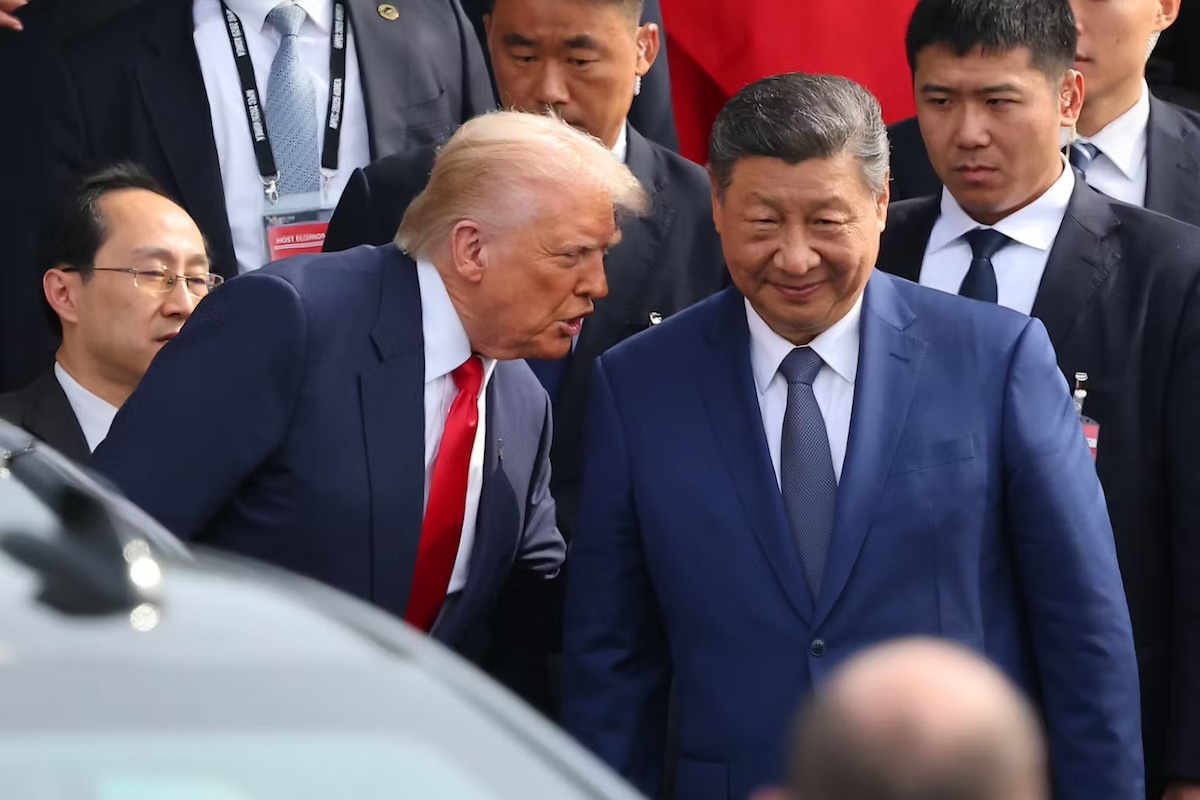
The recent Xi–Trump summit in South Korea has underscored China’s unprecedented rise on the global stage. Once a nation caught between the Cold War superpowers of the United States and the Soviet Union, China has now emerged as a pivotal player, wielding significant influence over both Washington and Moscow. This shift marks a dramatic transformation from the past, where China relied heavily on Soviet support and later on Russian military imports. Today, with Russia’s economy faltering under Western sanctions and its military weakened by the Ukraine conflict, Moscow has become increasingly dependent on Beijing. Bilateral trade between China and Russia reached a record $237 billion in 2024, with China serving as Russia’s largest trading partner and a critical supplier of dual-use goods essential for its defense industry. Meanwhile, China’s strategic leverage over the United States has also grown, particularly through its dominance in rare earth materials and global supply chains. During the recent trade turbulence, Beijing’s targeted countermeasures forced Washington back to the negotiating table, highlighting a shift from unilateral U.S. sanctions to a more balanced power dynamic. The Xi–Trump summit further revealed China’s ability to assert its interests on the global stage, with both Russia and the United States increasingly constrained by Beijing’s influence. As economic and security frictions intensify, China’s strategic use of its rare earth monopoly and its growing role in global politics signal a new era of power dynamics, where Beijing stands at the forefront of international affairs.