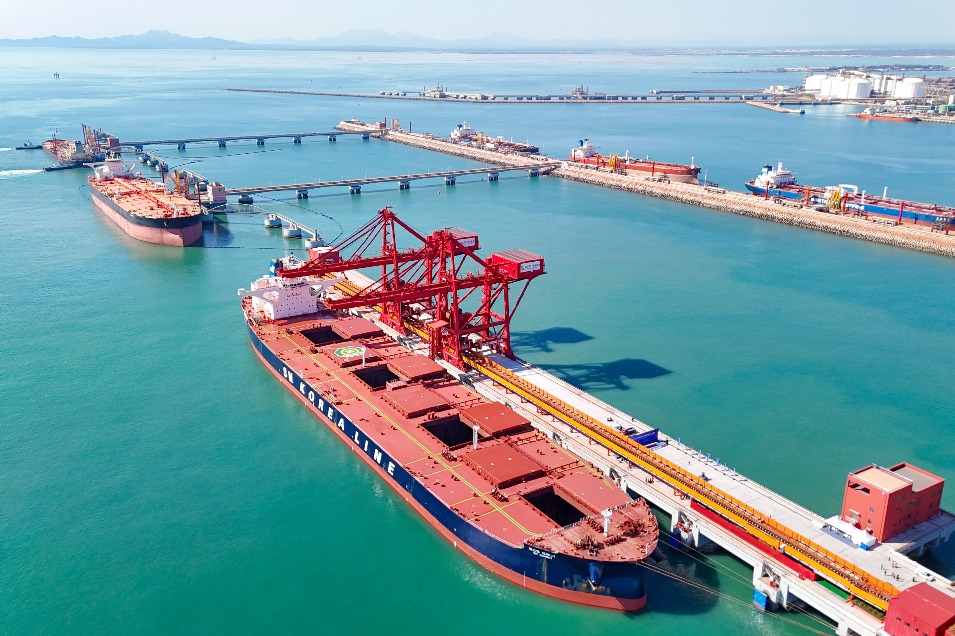
As the world grapples with unprecedented challenges, China is steadfastly advancing its modernization agenda under a transformative development philosophy. Introduced in 2015, this philosophy emphasizes innovation, coordination, green development, openness, and shared benefits, guiding the nation through both domestic and global turbulence. Over the past decade, it has been instrumental in driving high-quality growth and creating new opportunities for the global community. During the 14th Five-Year Plan period (2021-25), China’s economy achieved remarkable milestones, with its total output surpassing 130 trillion yuan ($15.5 trillion) and projected to reach 140 trillion yuan by 2025. Contributing approximately 30% to global growth annually, China has emerged as a beacon of stability in an uncertain world. The Communist Party of China (CPC) Central Committee has recently unveiled recommendations for the 15th Five-Year Plan (2026-30), underscoring the continued application of this philosophy to steer the nation’s next phase of development. Innovation remains a cornerstone of China’s progress. The Seres smart factory in Chongqing, where two new energy vehicles (NEVs) are produced every minute, exemplifies the nation’s technological advancements. China has led the world in NEV production and sales for a decade, holding over 40% of global patents in new-energy technologies. This innovation-driven growth has propelled China from a follower to a global leader in strategic industries. The country’s Global Innovation Index ranking has surged from 34th in 2012 to 10th in 2025, with research and development spending reaching 3.6 trillion yuan in 2024, the second highest globally. Looking ahead, China aims to enhance self-reliance in science and technology, deepen industrial innovation, and accelerate the application of major technological breakthroughs. Green development is another pillar of China’s strategy. The Kubuqi Desert in Inner Mongolia, home to millions of solar panels, symbolizes the nation’s commitment to renewable energy. China’s installed capacity for wind and solar power accounts for nearly half of the global total, and its exports of related products are expected to help other countries reduce carbon emissions by 4.1 billion tonnes. The country has built the world’s largest renewable energy system, with energy consumption per unit of GDP dropping by 11.6% during the 14th Five-Year Plan period. Over the next five years, China will accelerate its green transition, aiming for carbon peaking and neutrality while fostering a green, low-carbon economy. China’s openness to the world remains unwavering. The offshore duty-free policy in Hainan, for instance, has transformed the province into a hub for global luxury brands, reflecting the nation’s commitment to shared benefits. Despite global protectionism, China has eliminated all foreign investment restrictions in manufacturing and steadily opened its services sector. By June 2025, it had utilized $708.73 billion in foreign investment and established 22 pilot free trade zones. The 15th Five-Year Plan recommendations emphasize high-standard opening up, innovative trade development, and two-way investment cooperation, signaling China’s dedication to mutual benefit. The philosophy also prioritizes shared development, aiming for common prosperity through measures such as improving employment, income distribution, social security, and access to public services. As China continues its modernization journey, the new development philosophy will remain the driving force behind its economic resilience and vitality, enabling the nation to seize new opportunities and sustain high-quality growth.