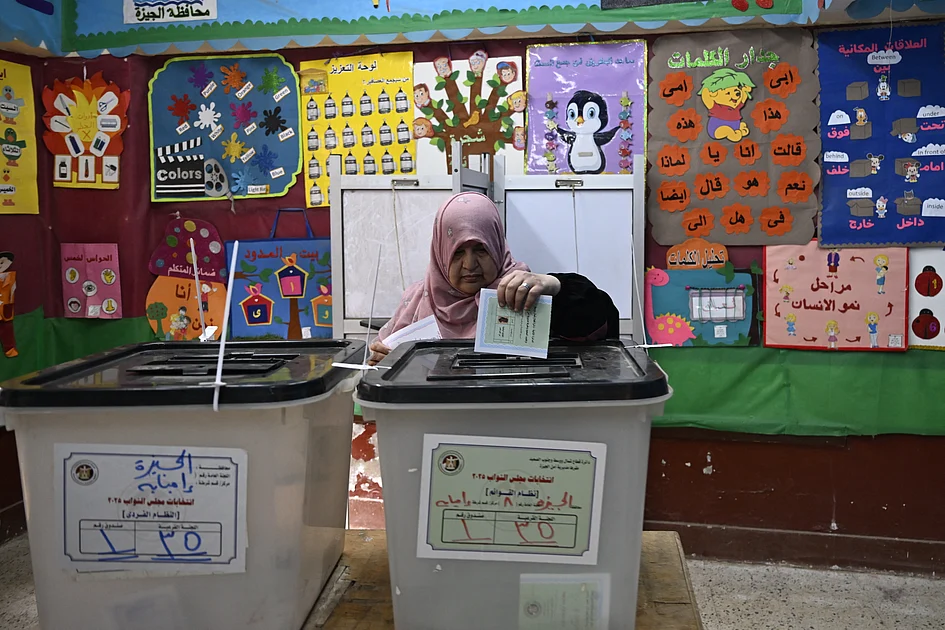
Egyptians commenced voting on Monday in a pivotal parliamentary election, a process that will span several weeks to determine the composition of the lower house. Polling stations opened at 9:00 am (0700 GMT), initiating the election of 568 out of 596 seats in the House of Representatives. The remaining 28 lawmakers will be directly appointed by President Abdel Fattah Al Sisi. Voting timelines vary across regions, with some areas, including Cairo, not casting ballots until November 24. Egyptians abroad participated in the election on Friday and Saturday. Final results are anticipated by December 25. The election employs a dual system, with half of the seats allocated through closed party lists and the other half via individual candidates. Notably, a quarter of the seats are reserved for women. This parliamentary vote follows the senate elections held two months prior, which saw a low turnout of approximately 17%. The pro-government ‘National List for Egypt’ coalition, which dominated the senate elections, is expected to maintain its stronghold. Leading the coalition are the pro-Sisi Mostaqbal Watan (Nation’s Future) party and the National Front party, headed by former minister Essam Al Gazzar. Gazzar’s newly formed party, backed by business tycoon Ibrahim Al Organi, a close ally of Sisi, unites former government officials. Meanwhile, opposition groups remain fragmented, with some running independently and others aligning with pro-government lists. Analysts highlight the election’s significance, as it is the last before Sisi’s third and final term concludes in 2030. Timothy Kaldas of the Tahrir Institute for Middle East Policy emphasized that Sisi requires a parliament under his full control to potentially extend his tenure beyond 2030, necessitating constitutional amendments. The 2019 constitutional revisions extended Sisi’s term from four to six years and retroactively counted his previous term as his first, enabling him to remain in office until 2030. In 2022, Sisi’s administration initiated a national dialogue, ostensibly to engage with the marginalized opposition.