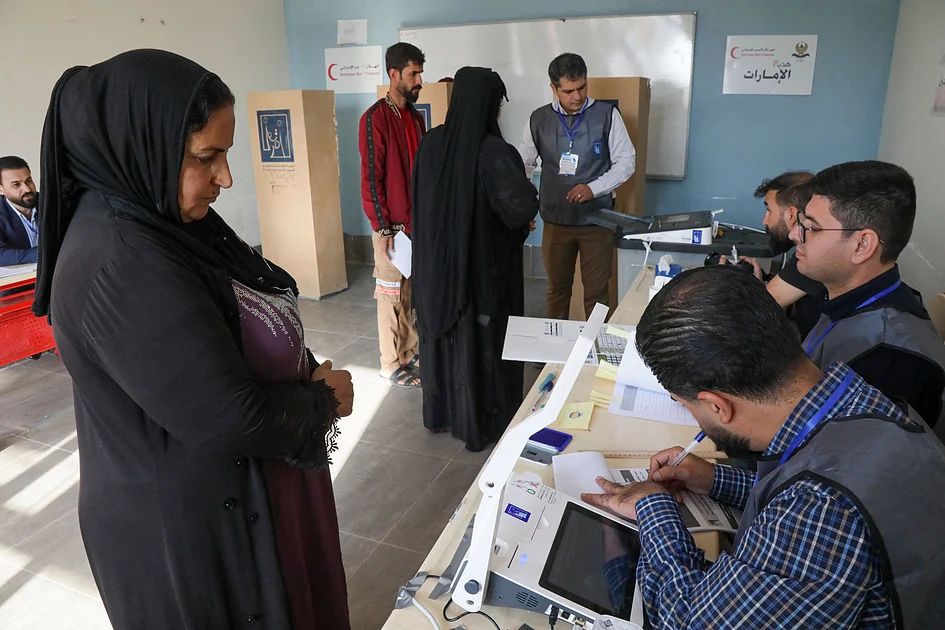
Iraqi security forces and internally displaced persons (IDPs) cast their ballots on Sunday in early voting ahead of the country’s parliamentary elections scheduled for November 11. The polls opened at 0400 GMT, allowing over 1.3 million members of the armed forces and more than 26,500 IDPs to participate. This election marks the sixth parliamentary vote since the 2003 US-led invasion that ousted dictator Saddam Hussein. A total of 7,740 candidates, including nearly a third women, are vying for the 329 seats in parliament. The elections will be governed by an old electoral law reinstated in 2023, which critics argue favors larger political parties. In the 2021 elections, around 70 independents secured seats, but only 75 are contesting this time. Concerns loom over voter turnout, which hit a record low of 41% in 2021, reflecting widespread voter apathy and disillusionment amid entrenched leadership, mismanagement, and corruption. Influential Shia cleric Moqtada Sadr has called for a boycott, labeling the election as ‘flawed.’ Since the US-led invasion, Iraq’s Shia majority has dominated politics, with key figures like former Prime Minister Nuri Al Maliki and cleric Ammar Al Hakim expected to play pivotal roles. Current Prime Minister Mohammed Shia Al Sudani, backed by pro-Iranian parties, is seeking a second term and is anticipated to secure a significant bloc. By tradition, the prime minister’s post is held by a Shia, the parliament speaker by a Sunni, and the largely ceremonial presidency by a Kurd. The next prime minister will be chosen by the coalition that forms the largest parliamentary bloc through negotiations.