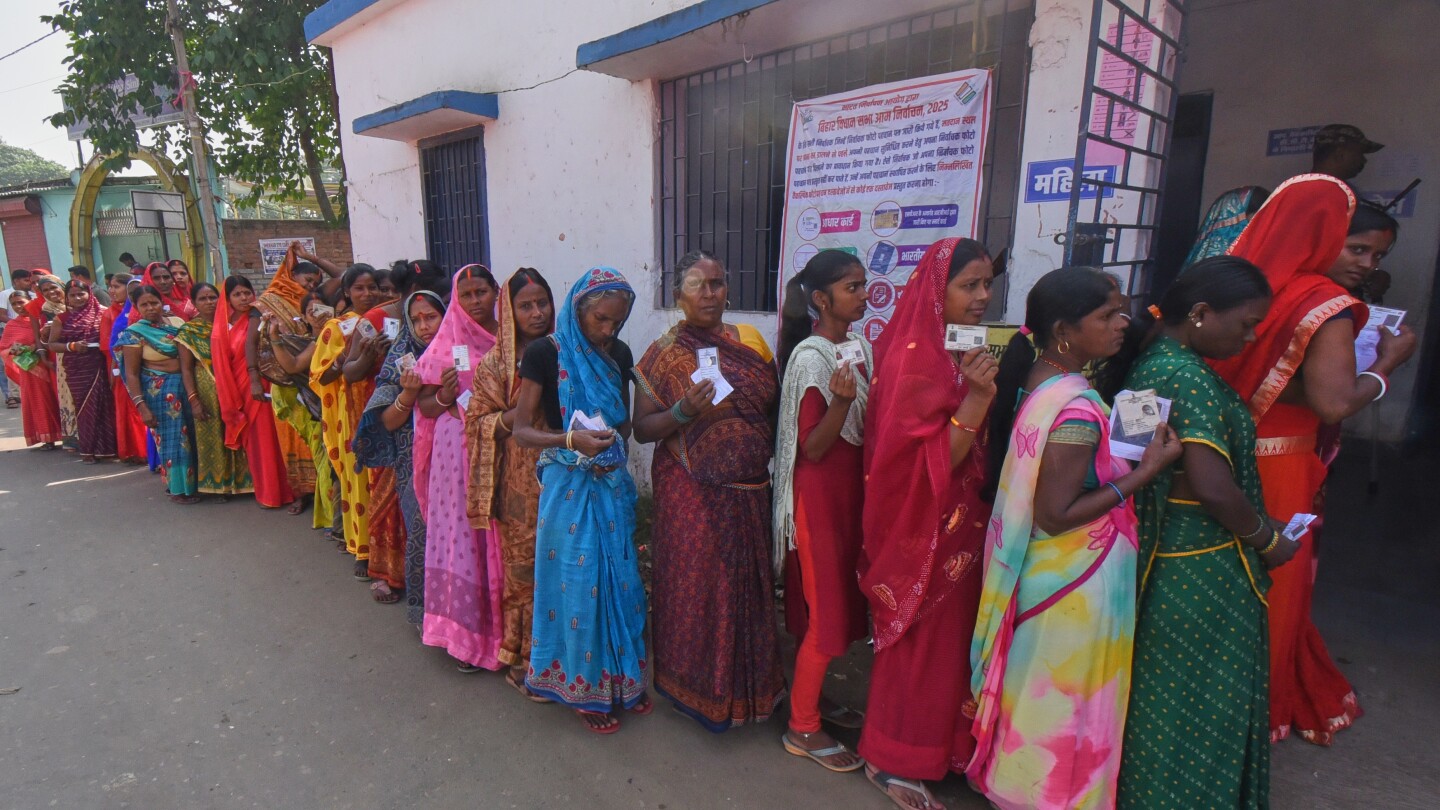
India’s eastern state of Bihar is witnessing a pivotal local election on Thursday, with millions of voters casting their ballots to determine the composition of the state’s 243-seat legislature. This election is widely regarded as a litmus test for Prime Minister Narendra Modi’s popularity and the resilience of his Bharatiya Janata Party (BJP)-led National Democratic Alliance (NDA). The outcome, expected on November 14, will not only shape Bihar’s political landscape but also influence Modi’s broader national strategy ahead of the 2029 general elections and key state polls in Uttar Pradesh, West Bengal, and Assam. Bihar, often considered India’s political bellwether, sends 40 lawmakers to the national parliament, making it a critical battleground for Modi’s coalition. A victory here could bolster his government’s stability, while a setback might embolden the opposition. The election unfolds amid widespread concerns over unemployment, law and order, and allegations of irregularities in the revision of electoral rolls, which saw nearly 10% of Bihar’s 74 million voters removed from the lists. Opposition leaders, including Congress Party’s Rahul Gandhi, have criticized the move as politically motivated, claiming it disenfranchised poor and minority voters. The Election Commission, however, maintains that the revision was necessary due to migration, new voter eligibility, and unreported deaths. The BJP-led alliance, with Chief Minister Nitish Kumar of the Janata Dal (United) at the helm, faces challenges from the opposition Rashtriya Janata Dal (RJD) and a new group, Jan Suraaj, led by Modi’s former poll strategist Prashant Kishor. Kumar, a seasoned politician who has governed Bihar for nearly two decades, is credited with improving infrastructure and addressing law and order issues. However, analysts warn that a loss in Bihar could fracture his party and destabilize Modi’s federal coalition, which relies on 12 of Kumar’s lawmakers. Economically, Bihar remains one of India’s poorest states, with a predominantly agrarian economy and widespread poverty. Both the ruling alliance and the opposition have promised to create millions of government jobs, though economists remain skeptical given the state’s fragile economic conditions. In a bid to appeal to women voters, Modi recently announced cash transfers of 10,000 Indian rupees ($113) each to 7.5 million women as part of an employment program. Women constitute a significant voting bloc in Bihar, as men often migrate to larger cities for work. Despite welfare measures, critics argue that the government has failed to address systemic issues such as landlessness, low wages, and limited employment opportunities. The Bihar election, therefore, is not just a local contest but a barometer of Modi’s political fortunes and the broader challenges facing India’s democracy.
Indians vote in a state election in Bihar seen as key test for Prime Minister Modi