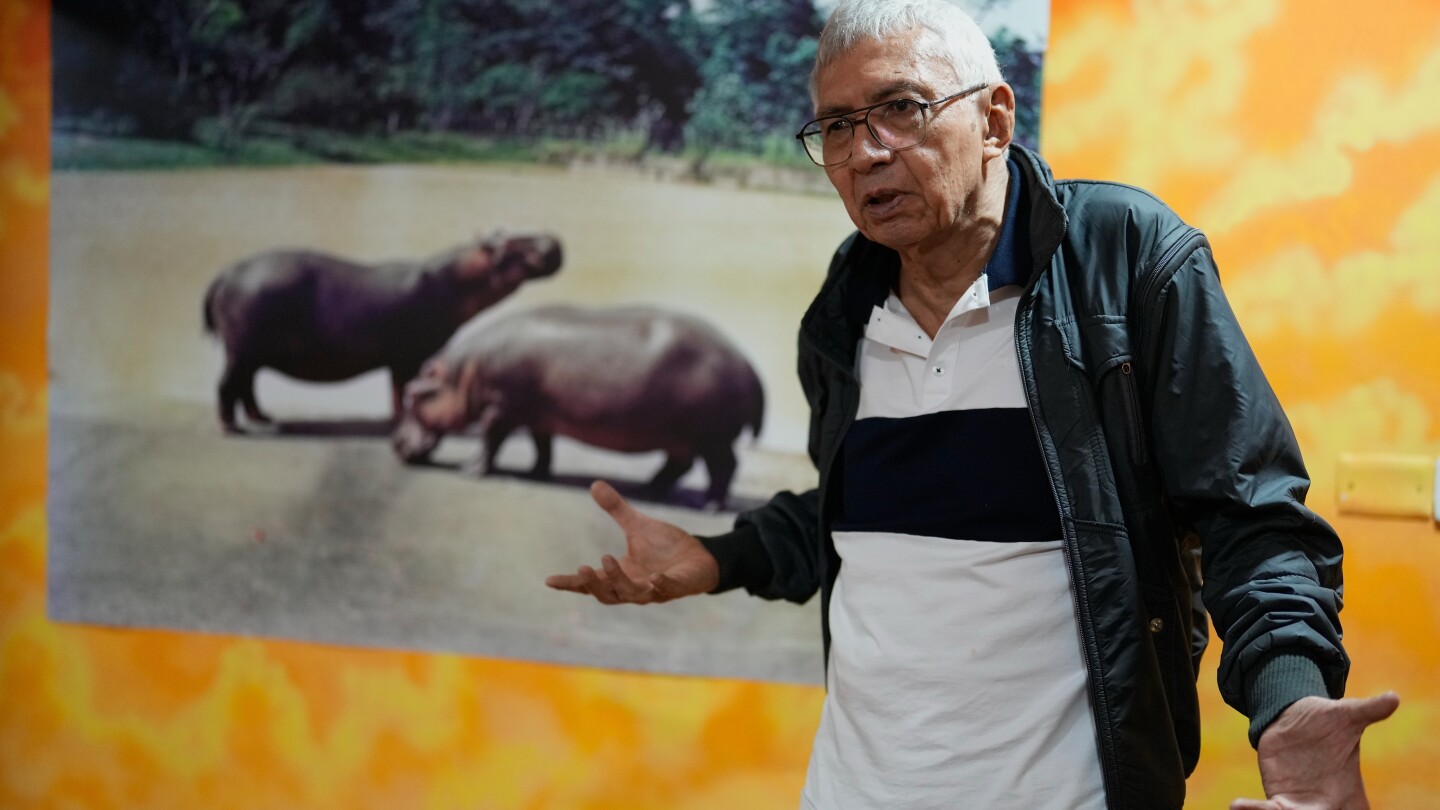
In Bogotá, Colombia, photographer Édgar Jiménez is showcasing his iconic portrait, “Adam and Eve,” at an art exhibition titled “Microdoses to Tame the Inner Hippopotamus.” The photograph captures two of the first hippopotamuses brought to Colombia by the notorious drug lord Pablo Escobar in the 1980s. Jiménez, who once served as Escobar’s personal photographer, recalls the perilous moment he took the shot from just four meters away, unaware of the danger posed by the animals. These same hippos later attacked and killed a camel. Escobar, who imported the hippos from a U.S. zoo, continued expanding his collection until his death in 1993. Today, their population has surged to over 160, leading them to be classified as an invasive species in Colombia. The exhibition, featuring works by 20 artists, uses the hippos as a lens to critique the legacy of Escobar and the broader narcoculture. Curator Santiago Rueda emphasizes that the show is not moralizing but invites reflection on the paradoxical nature of Escobar’s hippos. The exhibit includes diverse mediums, from oil paintings and graffiti to a unique cultivation of psychoactive mushrooms grown in hippo dung. One standout piece, “The Great Narco Ark” by Carlos Castro, depicts Escobar alongside animals descending from a military aircraft, symbolizing the excess and madness of the narcotics era. Another work, featuring a hippo nicknamed “El Gordo,” parodies the drug cartels’ bounty systems. Artist Camilo Restrepo highlights the irony of hallucinogenic mushrooms thriving in hippo dung, contrasting the ego-dissolving effects of these mushrooms with the ego-enhancing nature of cocaine. The exhibition, hosted at Casa Échele Cabeza, a project focused on drug regulation and harm reduction, opened on Thursday and offers a thought-provoking exploration of Escobar’s legacy and its cultural impact.
Colombian artists transform Pablo Escobar’s hippos and excesses into art