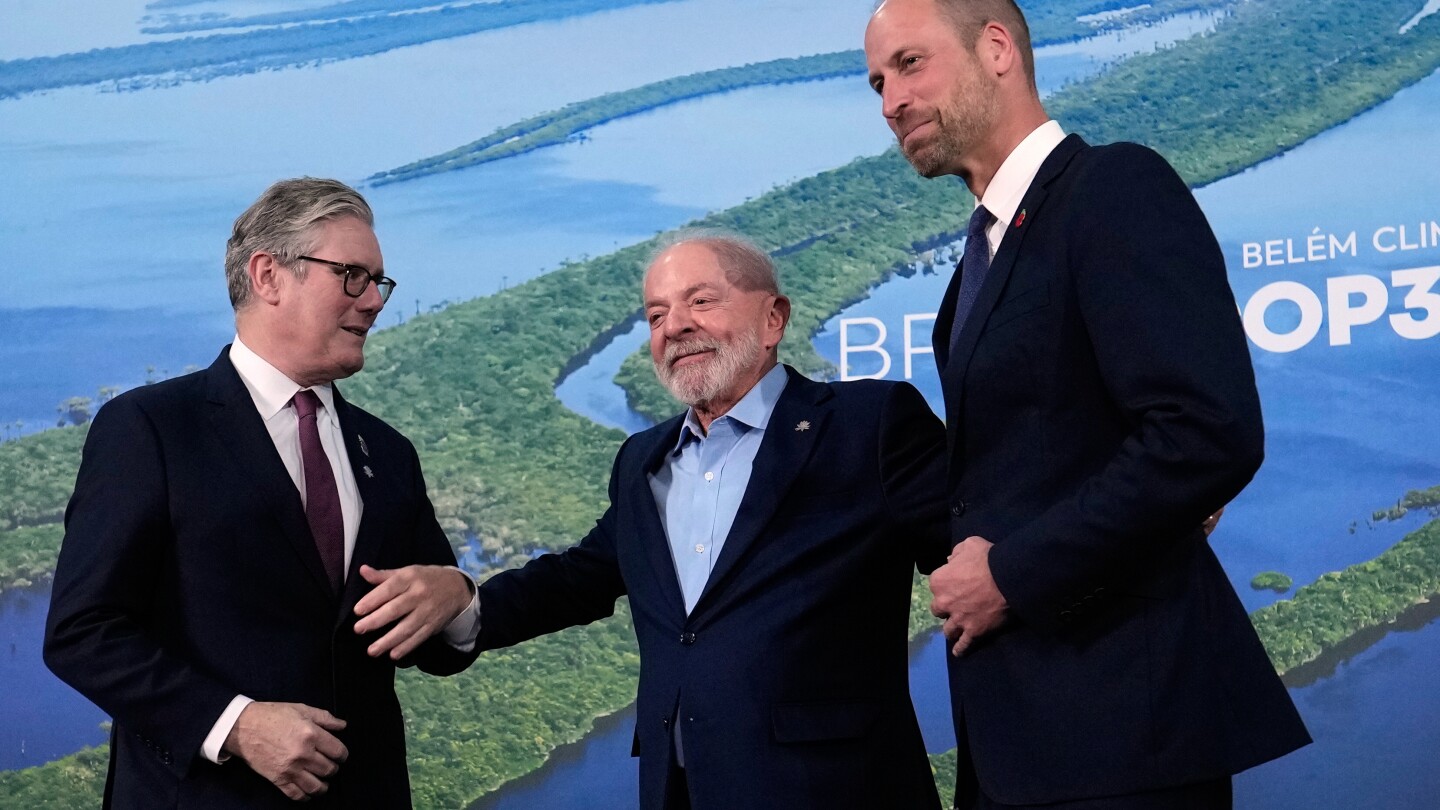
As global leaders convened for the second day of the COP30 climate summit in Belem, Brazil, President Luiz Inácio Lula da Silva unveiled a groundbreaking initiative aimed at safeguarding the world’s tropical forests. The proposed Tropical Forests Forever Facility seeks to incentivize 74 developing nations to preserve their forests by offering financial rewards funded through interest-bearing loans from wealthier countries and commercial investors. This innovative approach aims to make forest conservation more economically viable than deforestation, which currently benefits industries like cattle ranching, mining, and illegal logging. Belem, the summit’s host city, holds symbolic significance as part of the Amazon rainforest, a critical regulator of the global climate. The fund’s structure allocates 20% of its resources to Indigenous communities, who have historically been stewards of these lands. Norway led the charge with a $3 billion pledge, followed by other nations, bringing total commitments to $5.5 billion. However, the absence of leaders from the world’s top polluters—China, the United States, and India—highlighted ongoing geopolitical divisions. U.N. Secretary-General António Guterres criticized global powers for prioritizing fossil fuel interests over public welfare, warning that exceeding the 1.5°C warming threshold would result in catastrophic consequences. The summit underscored the urgent need for collective action to combat climate change while addressing economic and social inequities.
World leaders gather for second day in Brazil, seeking solutions to confront global warming