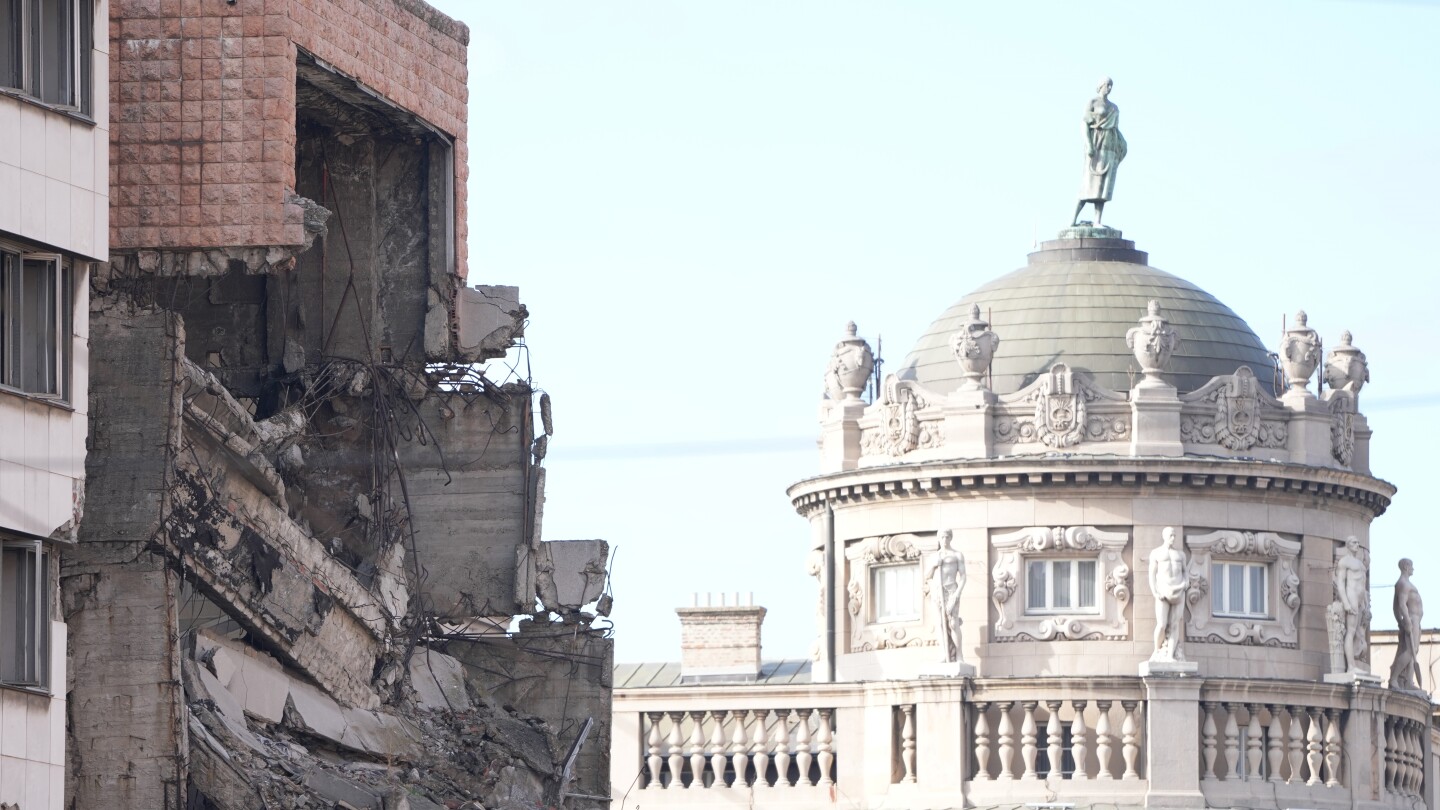
In a contentious move, Serbian lawmakers passed a special law on Friday to facilitate a real estate project financed by a company associated with Jared Kushner, son-in-law of former U.S. President Donald Trump. The project, which aims to redevelop a historic former Yugoslav military complex in Belgrade, has sparked widespread public opposition and legal challenges. The site, partially destroyed during NATO’s 1999 bombing campaign, holds significant architectural and symbolic value for many Serbians. Despite protests and a heated parliamentary debate, the bill was approved with a 130-40 vote in the 250-member assembly. The law, known as Lex Specialis, bypasses legal hurdles and allows the demolition of remaining structures on the site, which are considered prime examples of mid-20th century Yugoslav architecture. Critics argue that the project undermines Serbia’s legal system and cultural heritage, with corruption watchdog Transparency Serbia warning of dangerous precedents. President Aleksandar Vucic’s government, however, defends the initiative as a boost to the economy and U.S.-Serbia relations. The $500-million project includes plans for a luxury hotel, apartments, offices, and shops, with a memorial complex dedicated to NATO bombing victims. Opposition lawmakers and protesters decry the move as a betrayal of national heritage, with banners reading, ‘Culture is not for sale.’ The project’s sensitivity is heightened by lingering anti-NATO sentiments in Serbia, stemming from the 1999 bombing campaign. This development follows Kushner’s company securing a $1.6 billion investment deal in Albania, further fueling debates over foreign influence in the Balkans.
Serbia passes a special bill enabling Trump’s son-in-law to build luxury complex despite opposition