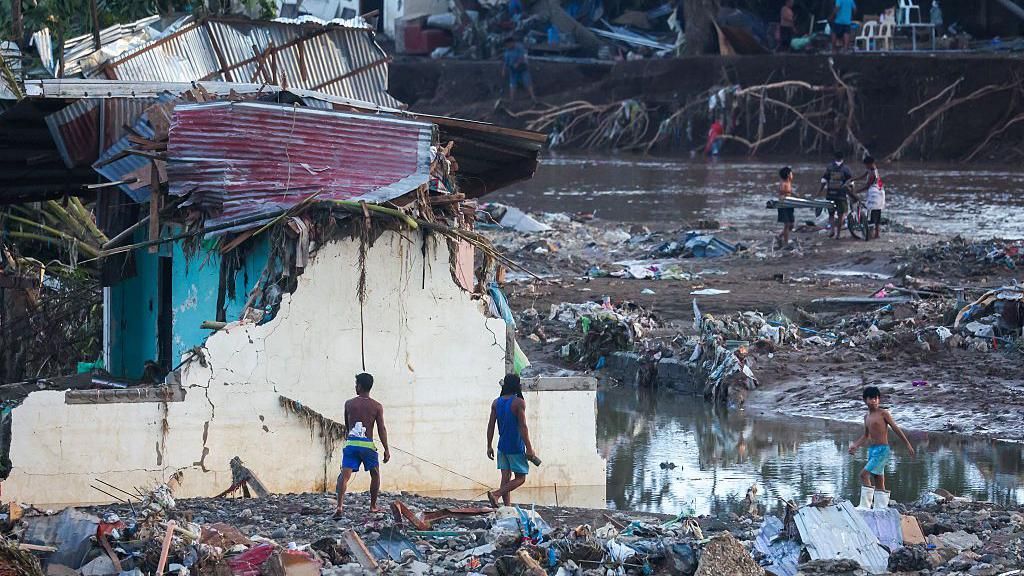
The Philippines is grappling with the aftermath of Typhoon Kalmaegi, one of the most powerful storms to hit the region this year. As of Thursday, the death toll has climbed to at least 114, with 127 people still missing and 82 injured, according to authorities. The typhoon caused catastrophic flooding across Cebu, the country’s most populous island, where 71 fatalities were reported. Provincial authorities in Cebu have confirmed an additional 28 deaths, which were not included in the national civil defense office’s initial tally. Kalmaegi has since exited the Philippines and is now heading toward central Vietnam, where residents are already dealing with severe flooding that has claimed dozens of lives. The storm unleashed torrents of muddy water, sweeping through towns and cities, leaving behind widespread destruction. Residential areas in Cebu were particularly hard-hit, with many small buildings destroyed and thick layers of mud covering the landscape. Local officials described the devastation as ‘unprecedented.’ Residents returning to their homes are struggling to cope with the aftermath. Jel-an Moira Servas, a business owner from Mandaue city, recounted her harrowing experience of being waist-deep in water within minutes and evacuating with her family. ‘Our houses are filled with mud, and everything is in shambles,’ she said. ‘We don’t even know where to start cleaning.’ The national disaster agency reported that over 400,000 people have been displaced in Cebu, home to 2.5 million residents. The death toll also includes six crew members of a military helicopter that crashed during relief operations on Mindanao island. Volunteer rescuer Carlos Jose Lañas described the situation as the worst flood he has ever witnessed, with emergency responders overwhelmed by the scale of the disaster. Kalmaegi, locally known as Tino, is the 20th tropical cyclone to strike the Philippines this year, a country frequently battered by powerful storms. This disaster follows closely on the heels of back-to-back typhoons in September that killed over a dozen people and caused significant damage to infrastructure and crops. The region has also faced an unusually wet monsoon season, exacerbating the crisis and sparking public outrage over inadequate flood control systems. As Kalmaegi strengthens, with winds reaching 155 km/h, it is expected to make landfall in central Vietnam on Friday, where more than 50 flights have already been canceled or rescheduled. Thailand is also preparing for potential impacts, including flash floods and landslides.