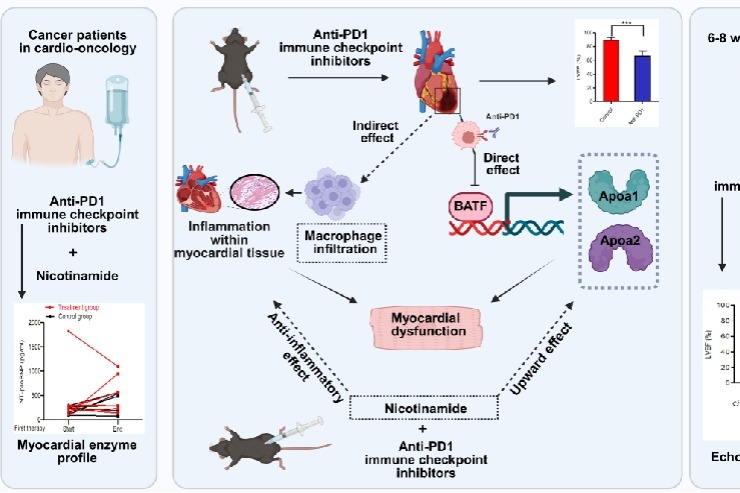
In a groundbreaking study, researchers from Lanzhou University have unveiled the heart-protective properties of nicotinamide, a derivative of B vitamins, in the context of tumor treatment. Published in the journal *Science China: Life Sciences*, the research sheds light on the mechanisms behind early cardiotoxicity induced by immune checkpoint inhibitors, such as anti-programmed cell death protein 1 (PD-1), which are increasingly used in cancer immunotherapy. Led by Professor Bai Ming of Lanzhou University First Hospital, the study combined clinical data with experimental models to explore the role of PD-1 in cardiotoxicity and its underlying pathways. The team conducted randomized controlled trials to validate nicotinamide’s efficacy in preventing early cardiotoxicity linked to PD-1 therapy. Their findings revealed that nicotinamide, a clinically accessible drug, offers a safe and effective preventive strategy. This approach emphasizes early intervention, enabling the protection of heart function without compromising anti-tumor efficacy. Professor Bai highlighted the significance of the study in addressing safety concerns in cancer treatment, noting that nicotinamide could serve as a promising preventive measure against cardiac immune-related adverse events. The research underscores the potential for rapid clinical application, offering a synergistic treatment model that balances tumor control and heart health.
Chinese researchers reveal nicotinamide’s heart-protective effect in tumor treatment