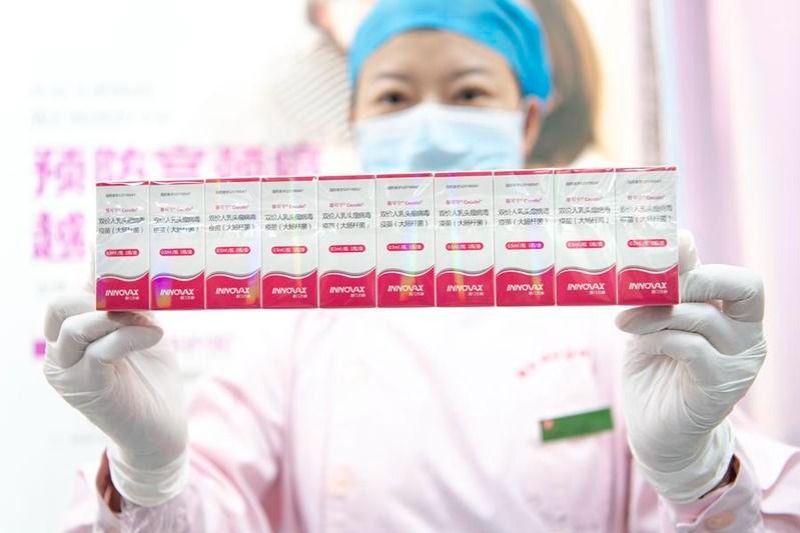
Health experts are urging for heightened public awareness and the dispelling of misconceptions to improve the coverage rate of the human papillomavirus (HPV) vaccine in China. HPV, a leading cause of cervical cancer, claimed 350,000 lives globally in 2022, with China accounting for 16% of these fatalities. Starting November 10, China will integrate the HPV vaccine into its national immunization program, offering free bivalent HPV vaccines to girls aged 13 and above born after November 10, 2011. This marks a significant shift from previous policies that targeted children under six, now extending to adolescents and focusing on preventing a malignant tumor caused by chronic infection, particularly in women. Du Heng of the Gates Foundation emphasized the long-term impact of this initiative, noting that full outcomes may take 20 to 30 years to manifest. As of June, 18 provincial-level regions in China have already provided free HPV vaccinations to about 5 million girls annually, targeting those aged 9 to 14. In Beijing, for instance, girls in the 7th grade and above can receive free domestically developed bivalent vaccines, which protect against the two most common HPV strains responsible for 70-80% of cervical cancers. Despite these efforts, some parents remain hesitant, citing concerns about the necessity and safety of the vaccine. However, experts like Qiao Youlin from Peking Union Medical College believe that these challenges are temporary and will improve with increased health awareness. The World Health Organization aims for 90% of girls globally to be fully vaccinated against HPV by the age of 15 by 2030, as part of its strategy to eliminate cervical cancer. In China, the free vaccination policy has already covered many eligible girls, showcasing significant progress. Experts also stress the importance of regular cervical cancer screenings and the role of men in HPV prevention, as their infection rate is as high as 45%, often without symptoms. Eliminating cervical cancer is seen as a shared societal responsibility, achievable through enhanced scientific awareness and collective action.