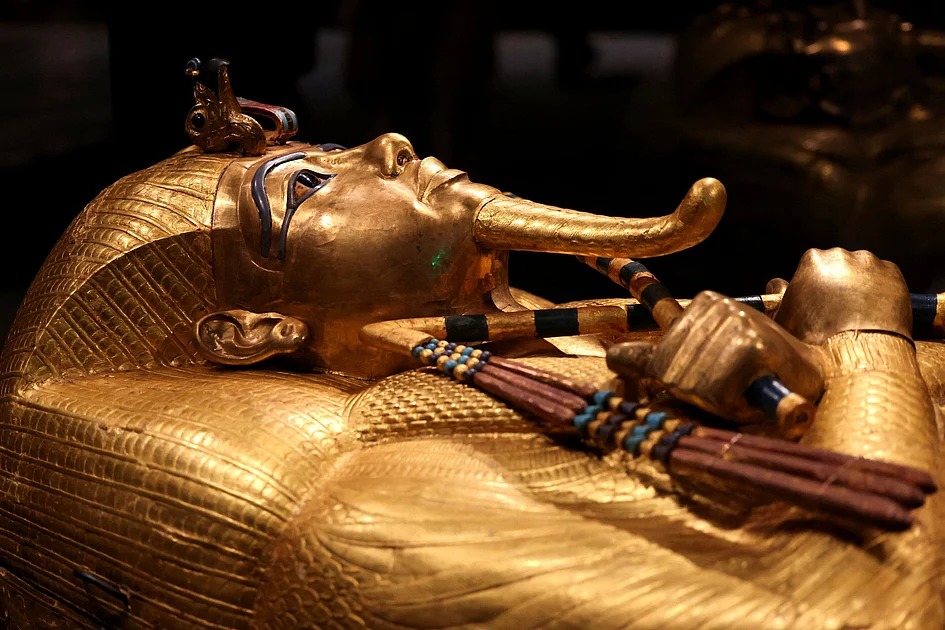
The Grand Egyptian Museum has made history by showcasing the complete collection of King Tutankhamun’s treasures for the first time since their discovery in 1922. Over 4,500 meticulously curated artefacts, including the iconic golden mask of the young pharaoh, were unveiled to the public on Tuesday, just two days after the museum’s grand opening ceremony on Saturday. The display, housed in a vast, dimly lit hall spanning four levels, features chariots, jewelled ornaments, household items, and Tutankhamun’s personal belongings. A poignant addition to the exhibition is the public debut of two small mummified princesses, believed to be Tutankhamun’s daughters who died before birth. Tutankhamun, who died at the age of 18 or 19 between 1323 and 1324 BC, was buried in Luxor’s Valley of the Kings within three nested coffins, the smallest weighing 110kg, all encased in four gilded shrines. While the coffins are now at the museum, the mummy remains in Luxor. Visitors can also marvel at the Khufu Sun Boat, the oldest and largest wooden artefact in human history, with a second solar boat undergoing restoration. The museum, a $1-billion architectural marvel overlooking the Giza Plateau, aims to attract five million visitors annually, revitalising Egypt’s tourism sector and economy.