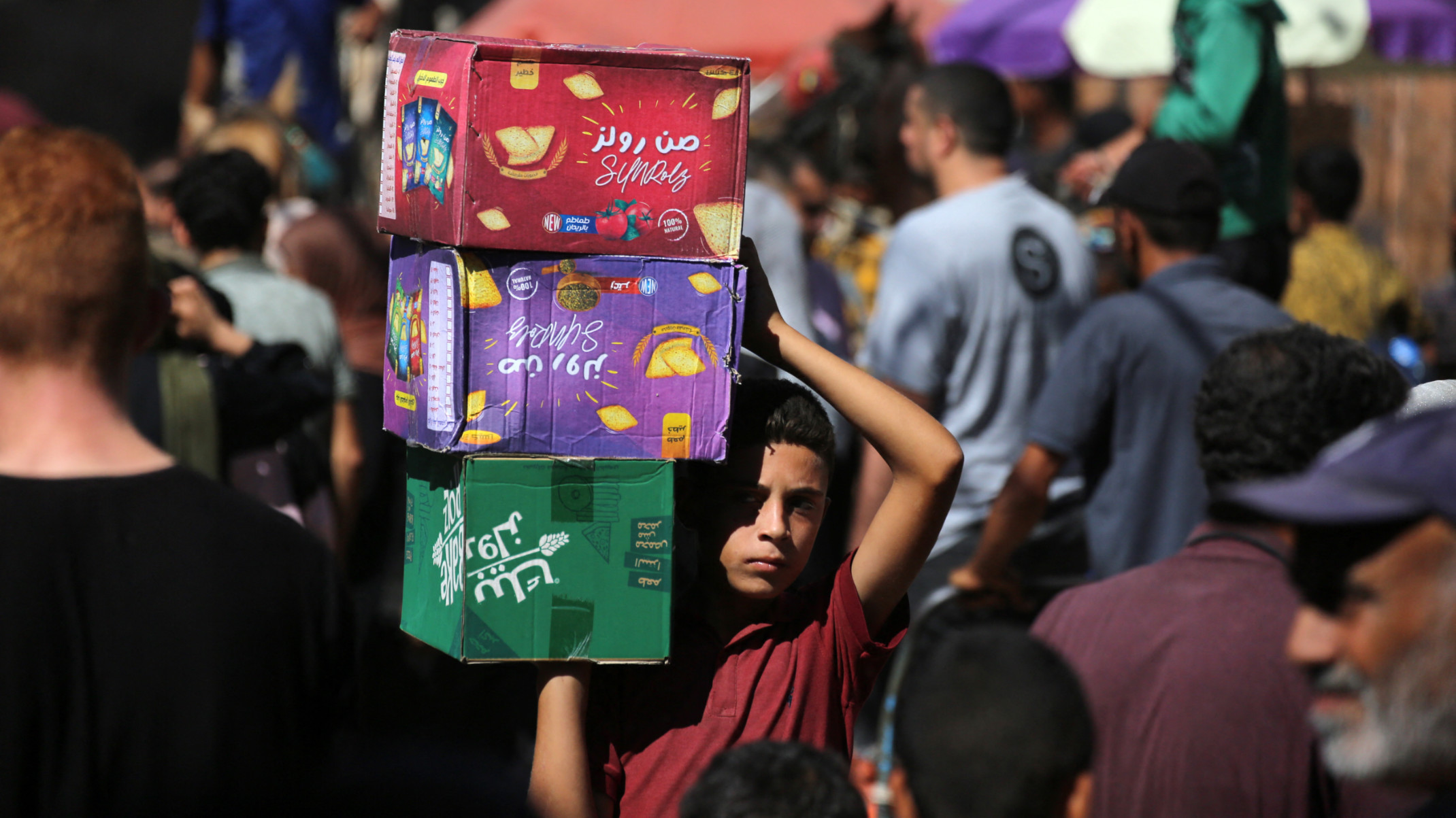
In the wake of a ceasefire that ended two years of conflict, supermarkets in Gaza have reopened, revealing a stark contrast between the return of luxury items and the continued scarcity of essential goods. Monther al-Shrafi, a resident of Gaza City, observes shelves stocked with chocolates, soft drinks, and cigarettes—items that were once considered unattainable during the famine. However, basic necessities like eggs, fresh meat, and vital medicines such as antibiotics remain conspicuously absent. Shrafi laments, “Can you imagine that there is chocolate in Gaza while there are no antibiotics?”
Following the ceasefire on October 10, Israeli authorities partially reopened the Kerem Shalom border crossing, allowing the entry of goods and international aid for the first time since March 2. While carbohydrates, starches, and sugary products like chocolate and candies have flooded the markets, animal proteins and dairy products are severely restricted. For instance, frozen chicken now costs around 80 shekels (approximately $25) per kilogram, making it unaffordable for most residents.
Shrafi highlights the ongoing food crisis, stating that the available items are unhealthy and cannot replace basic natural foods. He recounts his futile search for painkillers for his daughter’s infected toe, underscoring the dire shortage of essential medicines. According to Gaza’s Ministry of Health, Israeli restrictions have led to significant shortages in drugs (56%), medical consumables (68%), and laboratory supplies (67%). Critical medical services, including orthopaedic and open-heart surgeries, face severe gaps.
Israeli authorities control the entry of goods into Gaza, either through direct bans or by delaying import requests. While hundreds of truckloads have entered Gaza in recent weeks, the focus on carbohydrates and sugars has created a misleading impression of abundance. Abdallah Sharshara, a Gaza-based lawyer, argues that Israel is deliberately allowing certain items to conceal the visible signs of starvation. He notes that people are gaining weight unnaturally due to the reliance on processed foods, while fresh meat and eggs remain banned.
Sharshara emphasizes that the partial entry of goods does not meet the actual needs of the population, stating, “Even if Israel allows some goods in, they do not truly reach the people.” The situation in Gaza remains a paradox, with luxury goods symbolizing a superficial recovery while the essential needs of the population continue to be unmet.