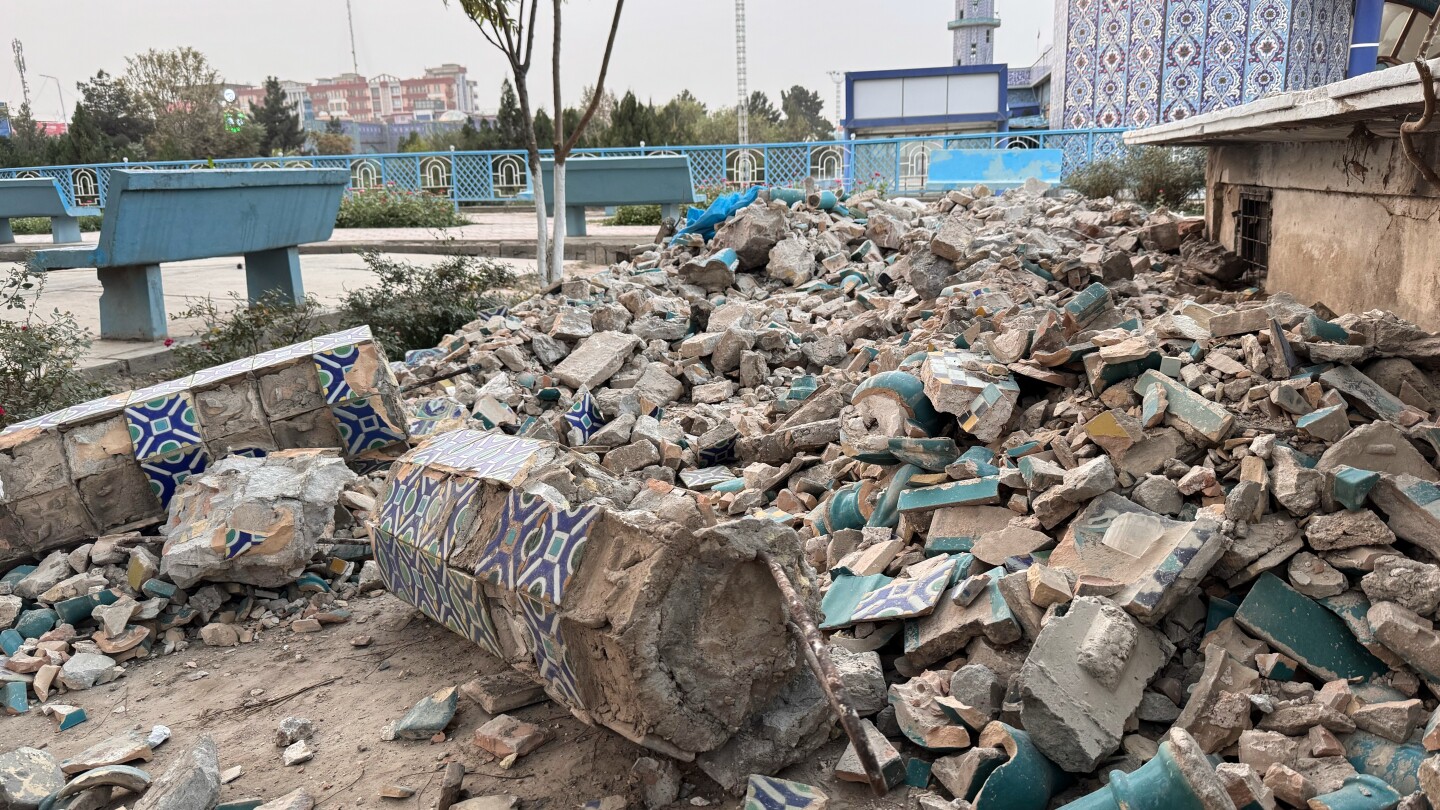
Northern Afghanistan is reeling from the aftermath of a catastrophic 6.3 magnitude earthquake that struck early Monday morning, claiming at least 21 lives and injuring over 800 people. The quake, centered 22 kilometers west-southwest of Khulm in Samangan province, has left survivors sifting through the ruins of their homes amidst freezing temperatures and the threat of impending rain. The disaster has also inflicted significant damage on historical landmarks, including the revered Blue Mosque in Mazar-e-Sharif and the Bagh-e-Jahan Nama Palace in Khulm. Authorities have reported that the Blue Mosque’s minaret suffered severe damage, with bricks and tiles dislodged from its walls, while the palace’s surrounding wall and a tower collapsed. Survivors, still shaken by aftershocks, spent the night in the open, enduring harsh weather conditions. Local resident Asadullah Samangani described the dire situation, noting that many homes were completely destroyed, leaving families without shelter or basic necessities. Emergency response teams, including health and rescue units, are working tirelessly to provide aid, though the region’s impoverished infrastructure complicates recovery efforts. This tragedy follows a deadly earthquake in eastern Afghanistan in August, which claimed over 2,200 lives, highlighting the country’s vulnerability to natural disasters.
Afghanistan earthquake survivors spend the night in the open; the quake damaged historical sites