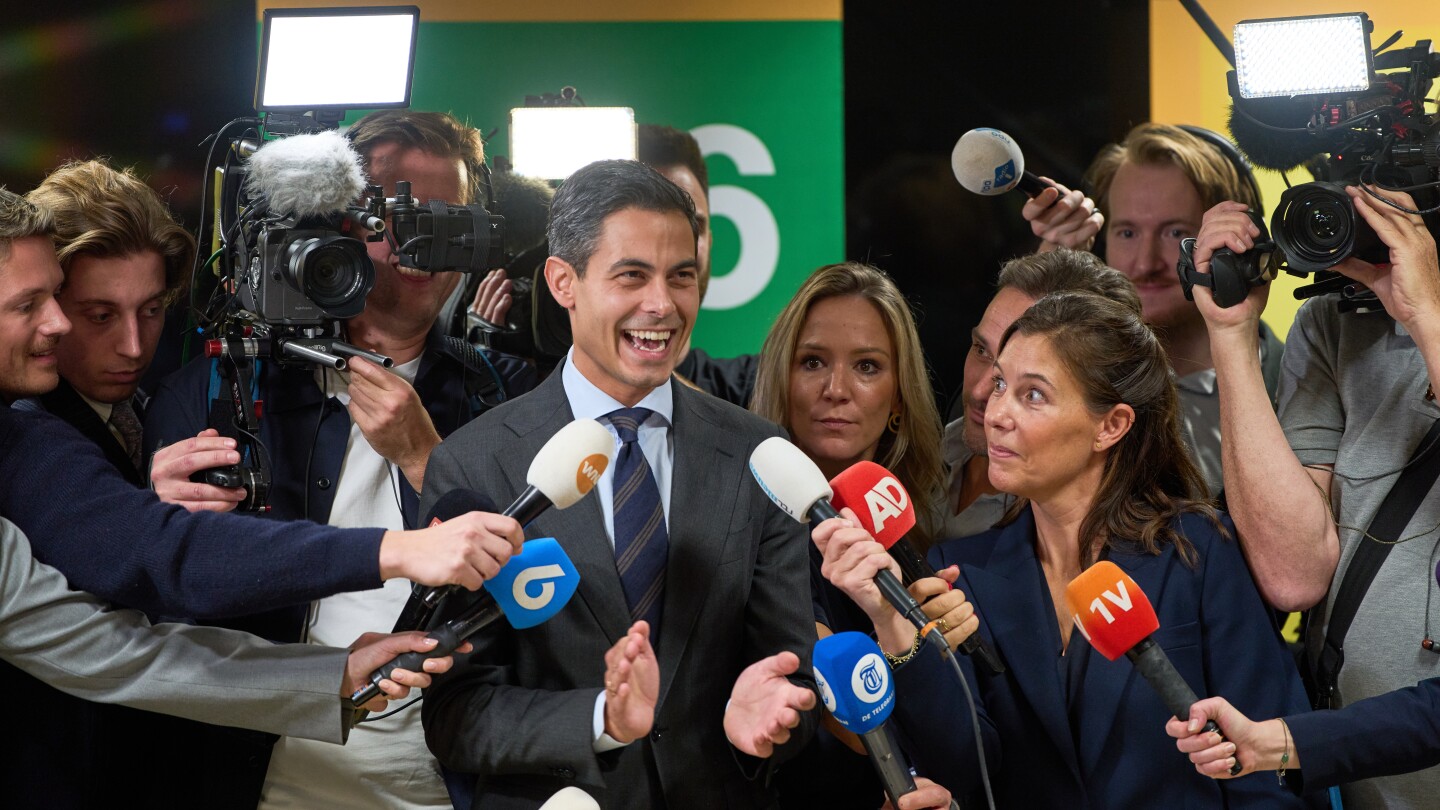
In a dramatic conclusion to the Netherlands’ national election, the centrist D66 party narrowly defeated Geert Wilders’ far-right Party for Freedom (PVV), according to the final tally by national news agency ANP. Both parties secured 26 seats in parliament, with D66’s slim margin of approximately 28,000 votes insufficient to claim an additional seat. The outcome hinged on postal votes from Dutch citizens abroad, making it one of the closest electoral contests in recent Dutch history. Rob Jetten, the 38-year-old leader of D66, hailed the result as “historic” and expressed both pride and a sense of “great responsibility” to the nation. If successful in forming a coalition, Jetten would become the country’s youngest and first openly gay leader. For Wilders, the result marked an 11-seat decline for the PVV, a significant setback following its surge to prominence two years ago. Wilders has since faced criticism for his role in destabilizing a four-party coalition over migration policies. He has also raised unsubstantiated claims of voting irregularities, which were swiftly dismissed by local authorities and the independent Electoral Council. The council is set to formalize the election results on Friday. With the Dutch political landscape deeply fragmented, coalition negotiations are expected to be protracted, potentially lasting weeks or months. As the largest party, D66 will lead the efforts to form a government, with Jetten and his team beginning discussions on Tuesday.