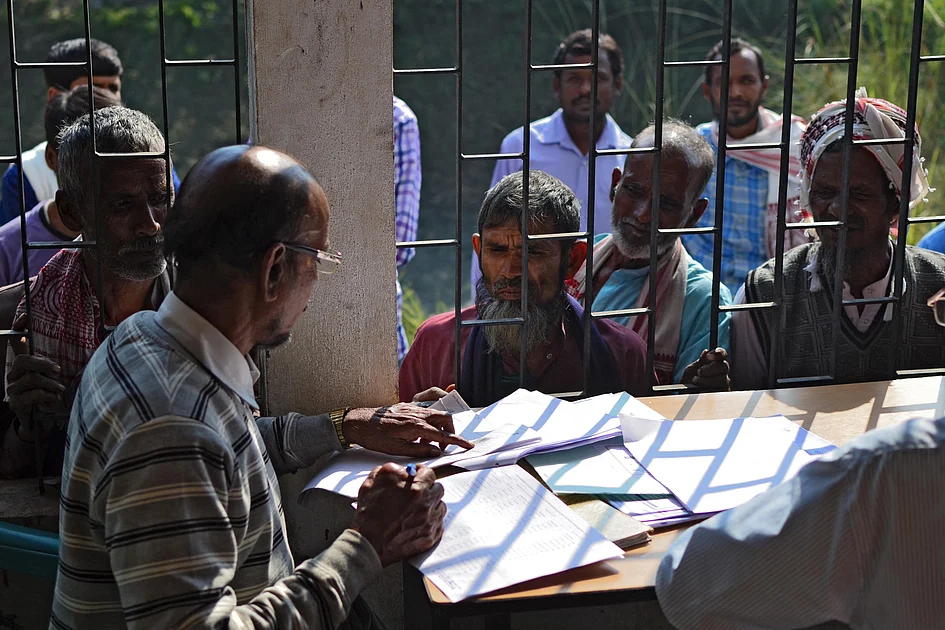
India has initiated a comprehensive three-month voter registration overhaul, termed the Special Intensive Revision (SIR), across 12 states and territories. This extensive exercise, involving tens of thousands of election officials and nearly half a million volunteers, aims to update voter rolls by visiting households to assist residents in completing voter enumeration forms. The initiative, announced by Election Commission of India chief Gyanesh Kumar, is set to cover key regions such as Uttar Pradesh, West Bengal, Tamil Nadu, and Kerala, which collectively house hundreds of millions of citizens according to the 2011 census. The final electoral roll is slated for release on February 7, 2026. However, the process has sparked significant controversy. Critics, including opposition parties and rights groups, argue that the stringent documentation requirements could lead to the wrongful exclusion of legitimate voters, particularly marginalized communities. Earlier this year, a similar revision in Bihar resulted in the removal of approximately 6.5 million names, with the ECI citing the need to prevent the inclusion of ‘foreign illegal immigrants.’ Members of Prime Minister Narendra Modi’s Bharatiya Janata Party (BJP) have long alleged that undocumented Muslim migrants from Bangladesh have fraudulently registered as voters. Tamil Nadu Chief Minister M.K. Stalin has condemned the exercise as a ‘trick to delete the names of genuine voters,’ warning that the right to vote—the cornerstone of democracy—is under threat. Despite these concerns, India’s Supreme Court has provided some relief by ruling that the biometric-linked Aadhaar identity card can be used as valid documentation for the process. The ongoing legal challenges and political debates underscore the high stakes of this voter registration drive in the world’s largest democracy.