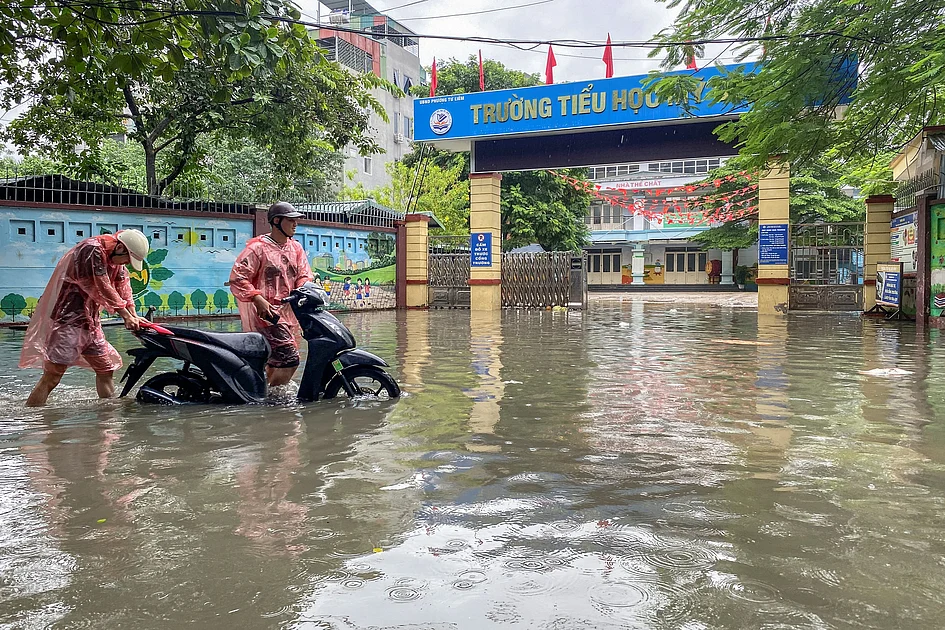
Central Vietnam is grappling with the devastating aftermath of relentless torrential rains, which have claimed 40 lives and left six people missing. The catastrophic flooding has transformed streets into waterways, breached riverbanks, and submerged some of the nation’s most cherished historical landmarks. In a particularly severe 24-hour period, rainfall reached an unprecedented 1.7 meters (5 feet 6 inches), setting a national record. The provinces of Hue, Da Nang, Lam Dong, and Quang Tri have borne the brunt of the disaster. The region now faces an additional threat as Typhoon Kalmaegi, currently battering the Philippines, is expected to make landfall in Vietnam by Friday. With wind speeds potentially reaching 166 kilometers per hour (100 miles per hour), the typhoon could exacerbate the already dire situation. The floods have destroyed over 10,000 hectares of crops, killed more than 68,000 livestock, and inundated nearly 80,000 homes. Remote areas remain cut off due to landslides, further complicating relief efforts. Vietnam, which typically experiences ten typhoons or tropical storms annually, is witnessing its 13th such event in 2025, underscoring the intensifying impact of climate change on extreme weather patterns.