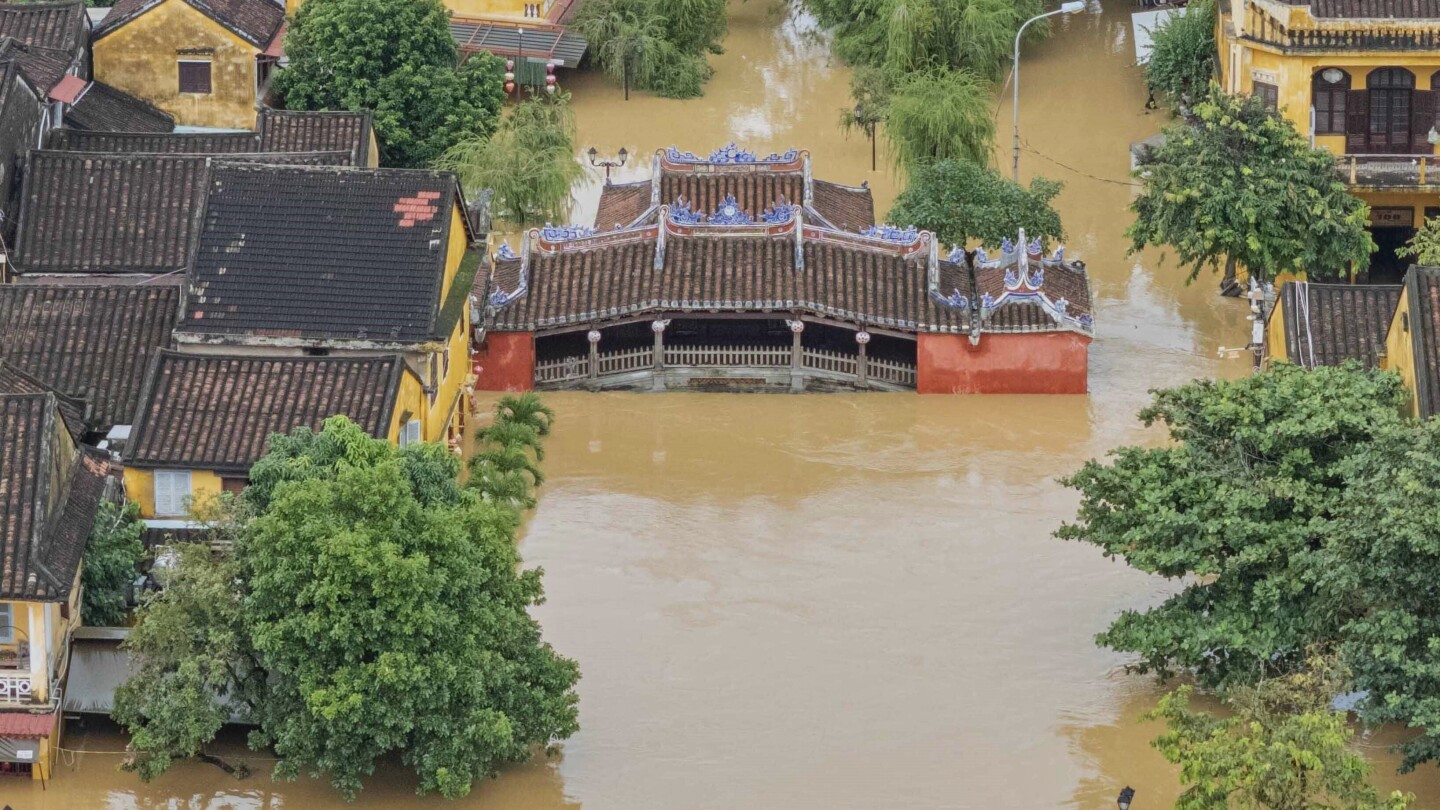
Central Vietnam is grappling with the aftermath of severe floods and landslides that have claimed at least 37 lives, displaced tens of thousands, and left many areas isolated and without power. The disaster, triggered by record-breaking rainfall since late October, has caused widespread destruction, including the erosion of canals, riverbanks, and coastlines, as well as the blockage of several national highways. Rescue teams and aid workers are racing to reach affected communities, particularly in Danang and Hue City, where rivers have reached dangerous levels. Meanwhile, Typhoon Kalmaegi is expected to intensify as it approaches Vietnam’s central coast, with winds potentially reaching 166 kph (103 mph) by Wednesday. The storm, which recently crossed the Philippines, poses an additional threat to the already battered region. Authorities have been distributing food, clean water, medicine, and shelter while assisting families in rebuilding damaged homes. Efforts are also underway to restore power, water, and transport links, clean debris, and prevent disease outbreaks. The government is focusing on repairing irrigation systems and supporting farmers to restart agricultural activities as floodwaters recede. Vietnam has faced a relentless series of storms this year, including Typhoon Ragasa, Typhoon Bualoi, and Typhoon Matmo, which collectively caused over 85 deaths or disappearances and an estimated $1.36 billion in damage. As one of the world’s most flood-prone countries, Vietnam’s vulnerability is exacerbated by climate change, which scientists warn is intensifying storms and rainfall across Southeast Asia.
Vietnam flood death toll rises to 37 as a new typhoon threatens to worsen devastation