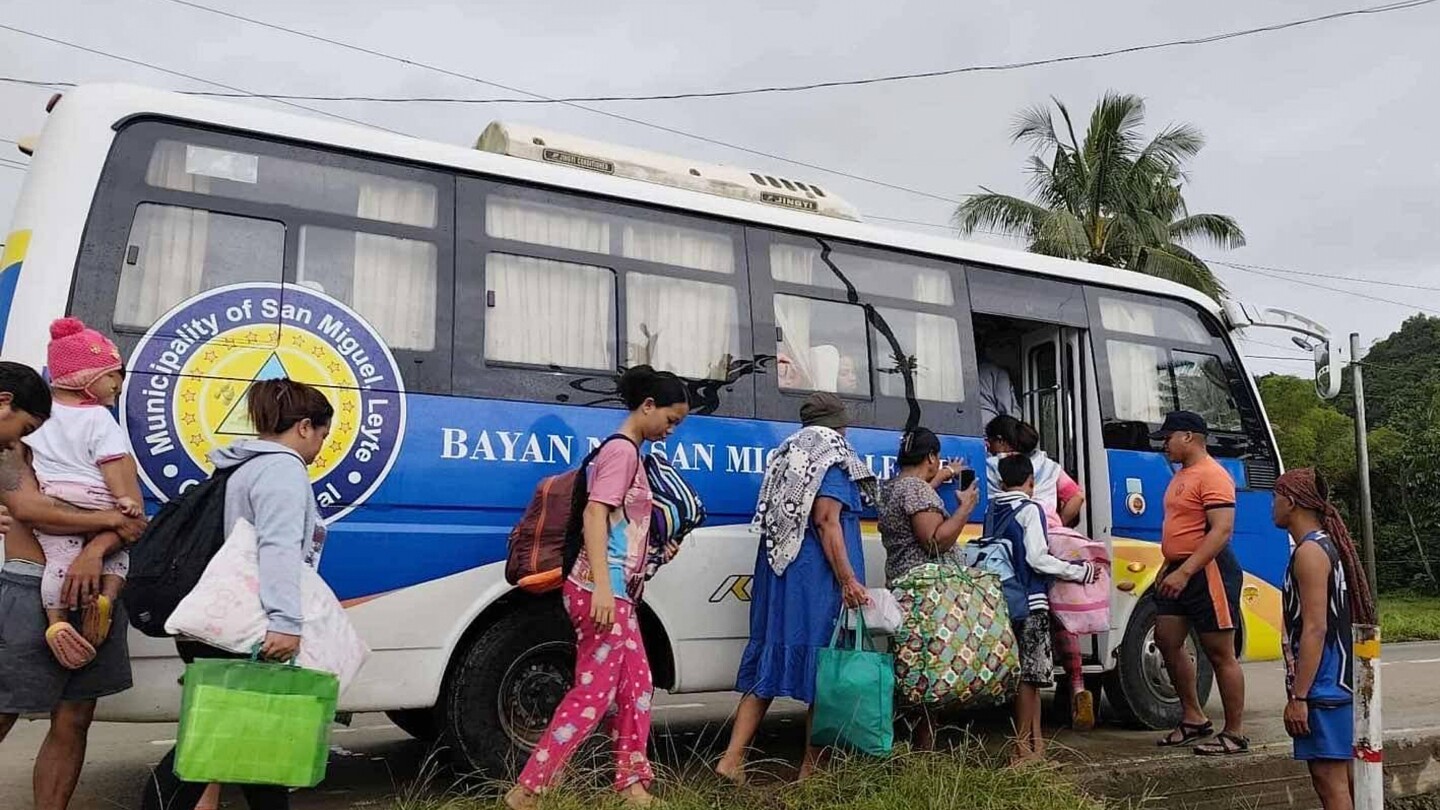
Philippine authorities have initiated large-scale evacuations and imposed fishing bans in the east-central region as Typhoon Kalmaegi, locally known as Tino, approaches from the Pacific. The storm, with sustained winds of up to 120 kilometers per hour and gusts reaching 150 kph, was last observed approximately 235 kilometers east of Guiuan in Eastern Samar province. Forecasters predict it will make landfall later Monday, bringing torrential rains and life-threatening storm surges of up to 3 meters (nearly 10 feet). Eastern Samar Governor RV Evardone has issued mandatory evacuation orders, mobilizing army troops, police, firefighters, and disaster-response teams to assist residents. Over 70,000 people in coastal towns such as Guiuan, Mercedes, and Salcedo have been directed to seek refuge in evacuation centers or sturdy buildings. The typhoon is expected to strengthen over the Philippine Sea before impacting central island provinces, including Cebu, which is still recovering from a devastating 6.9-magnitude earthquake in late September. The Philippines, a disaster-prone nation, faces approximately 20 typhoons annually, alongside frequent earthquakes and volcanic activity. The memory of Typhoon Haiyan in 2013, which claimed over 7,300 lives and displaced millions, has heightened public compliance with evacuation orders. ‘Nobody’s complaining because of their experience with Yolanda,’ Governor Evardone remarked, emphasizing the importance of preparedness.
Tens of thousands of people evacuate to safety as typhoon approaches eastern Philippines