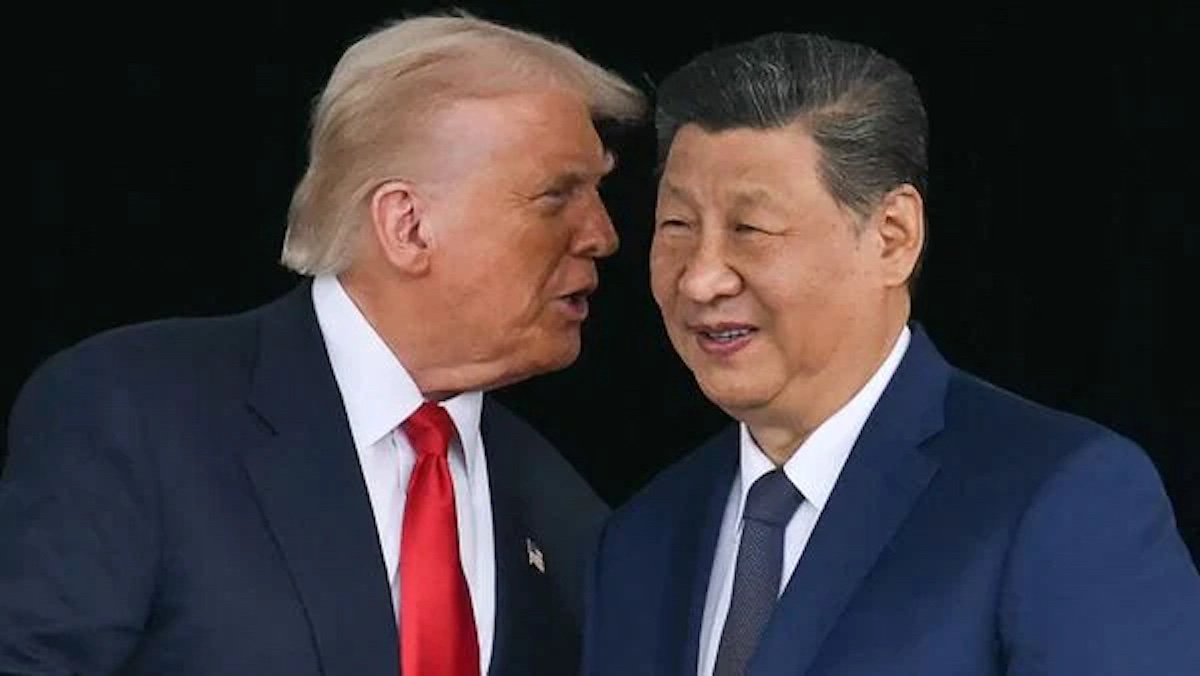
The recent agreement between US President Donald Trump and Chinese President Xi Jinping has temporarily averted a trade war, offering a brief respite to global markets. While not a comprehensive resolution, the deal represents a truce that could stabilize economic relations between the two superpowers for the near future. The agreement includes preliminary deals on several contentious issues, with the US stepping back from imposing high tariffs on Chinese imports and easing restrictions on technology transfers. In return, China has refrained from leveraging its monopoly on rare earth elements (REEs) as a bargaining chip. This delicate balance underscores the strategic competition between the two nations, as both seek to strengthen their positions in the global economic arena. China aims to diversify its export markets and boost domestic consumption to mitigate potential losses from US trade policies, while the US is striving to reduce its reliance on Chinese REEs. The agreement is set to be reviewed annually, coinciding with the US midterm elections, which could give China significant leverage. In the short term, China holds an advantage with its control over REEs, but the long-term outcome hinges on broader strategic maneuvers. The contrasting governance models of the two nations—China’s authoritarian system and the US’s democratic framework—play a crucial role in shaping their respective strategies. While China can mobilize resources swiftly, the US relies on market dynamics and electoral cycles, which can be both a strength and a vulnerability. The race for economic and technological supremacy is far from over, and the stakes are higher than ever.