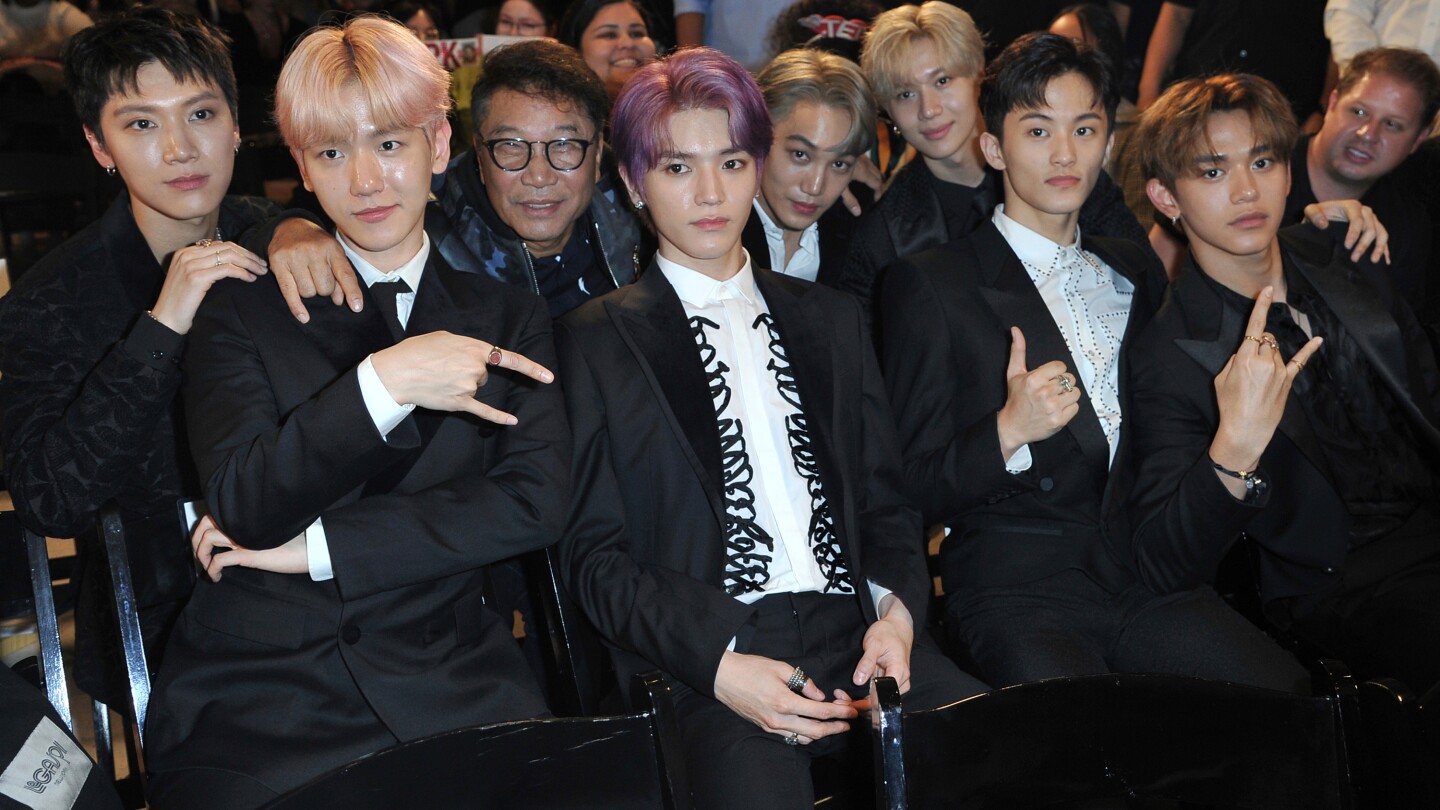
SEOUL, South Korea — Lee Soo Man, the 73-year-old founder of SM Entertainment, initially hesitated to embrace the title ‘King of K-pop.’ During a recent interview with The Associated Press, he revealed that he preferred the more modest ‘Father of K-pop.’ However, the producers of an Amazon Prime documentary about his career insisted on the bolder title, believing it would resonate more with American audiences. Lee eventually relented, showcasing his pragmatic approach to breaking South Korean acts into the U.S. mainstream—a three-decade journey marked by resilience and innovation. On Saturday, Lee will be inducted into the Asian Hall of Fame alongside luminaries like Yao Ming, Michelle Kwan, and Yoshiki, cementing his legacy as the architect of K-pop’s global expansion. Lee’s career has been both celebrated and contentious. As the pioneer of K-pop’s intensive training system, he recruited performers as young as elementary school age, subjecting them to years of rigorous preparation. This approach has sparked debates about industry practices, with some artists challenging their contracts as unfair. Lee’s recent reemergence follows a high-profile departure from SM Entertainment, the agency he founded in 1995, which involved a public feud with his nephew-in-law and a bidding war over his shares. Since then, he has launched a new band, A2O MAY, and invested in cutting-edge production technologies in China. Born in South Korea, Lee’s technical background in computer engineering has profoundly influenced his approach to K-pop, from pioneering elaborate ‘worldviews’ for groups like EXO and aespa to integrating virtual avatars and cinematic storytelling. His vision has transformed K-pop into a global phenomenon, blending music, visuals, and narrative into a cohesive art form. Despite K-pop’s global success, Lee remains focused on Asia’s potential, envisioning South Korea as a creative hub for international talent. His latest venture with A2O MAY aims to navigate China’s restrictive entertainment landscape while elevating South Korea’s cultural influence. Lee’s journey has not been without challenges. He recalls the $5 million investment in BoA’s 2009 American debut, which failed to gain traction due to the market’s unpreparedness for Asian artists. This setback taught him the importance of maintaining creative control while sourcing global talent. Lee’s relentless pursuit of the perfect tracks took him worldwide, culminating in the creation of iconic songs like ‘Dreams Come True’ for S.E.S. Lee also addressed the darker aspects of K-pop, including the suicides of SM Entertainment artists, attributing the issue to malicious online comments. He advocates for international cooperation to establish user verification standards and mediation systems to protect victims. Despite these challenges, Lee remains optimistic about K-pop’s future, viewing it as a new language of communication that transcends cultural barriers. ‘What you can’t stop is culture,’ he said, encapsulating his enduring belief in the power of music to unite and inspire.
‘King of K-pop’ Lee Soo Man on his career, a global industry and what’s next