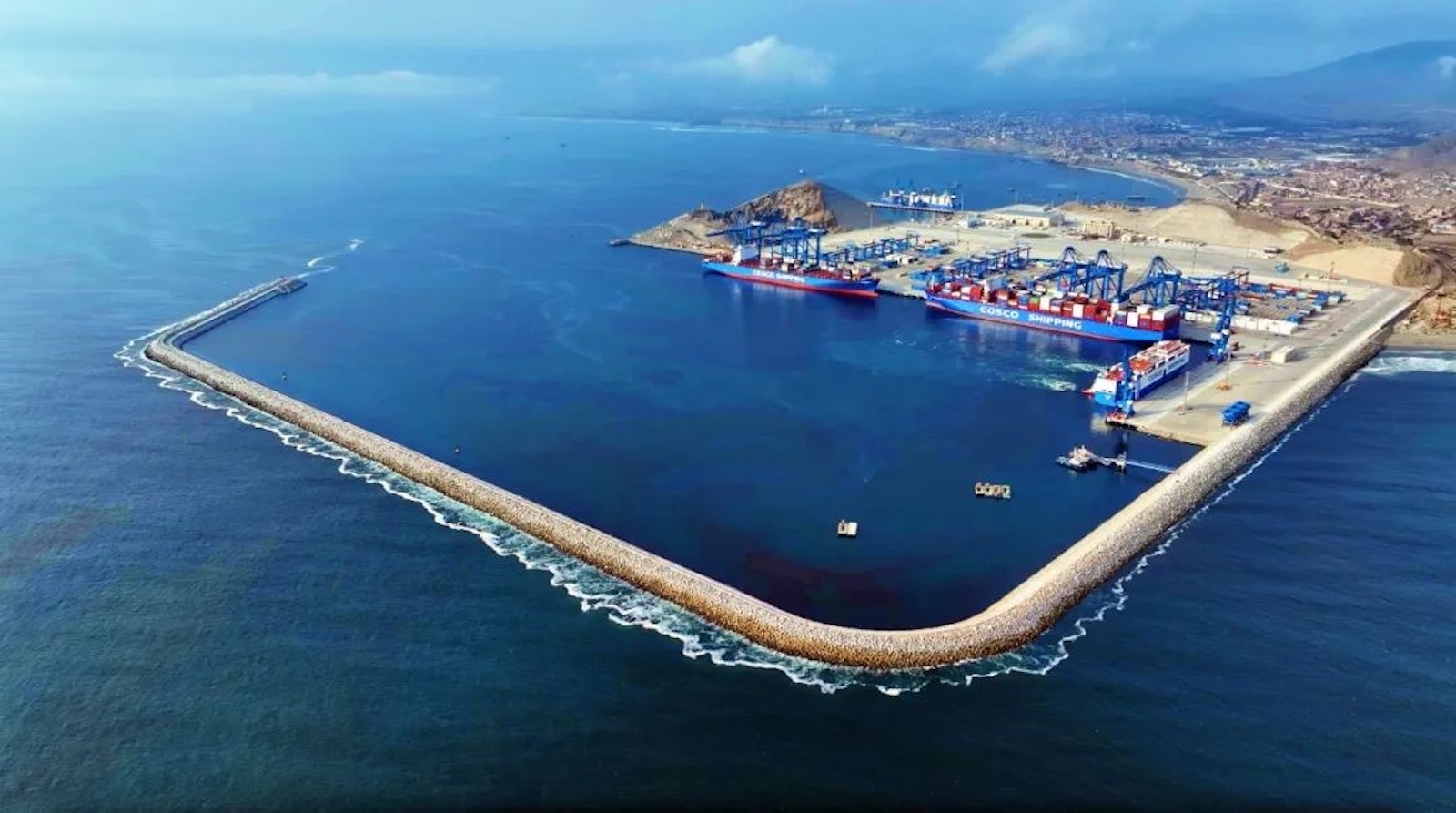
China has solidified its position as a formidable economic and strategic competitor to the United States in South America, particularly through its significant investments in the region’s infrastructure. A prime example of this is the $1.3 billion investment in the Port of Chancay, a state-of-the-art deepwater facility in Peru that became fully operational in November 2024. This port, majority-owned by the Chinese state-owned conglomerate COSCO Shipping, is the first on South America’s West Coast capable of handling ultra-large container vessels (UCLVs), which can carry between 18,000 to 24,000 shipping containers and require a depth of at least 16-17 meters. The Port of Chancay is expected to process 1-1.5 million shipping containers in its first year, with full capacity projected to reach 3.5 million in the coming years. This development not only deepens the trade relationship between South America and China but also reorients Pacific shipping networks away from traditional US ports like Los Angeles, Long Beach, and Oakland. The port’s strategic location and advanced technologies, such as fully autonomous cranes, reduce shipping times and costs significantly. For instance, the new corridor will cut the 35-day trip between China and Peru by 10 days, slashing costs by up to 20%. This shift has already begun to impact trade dynamics, with China announcing its first major shipping lane from Guangzhou directly to Chancay, bypassing North American ports entirely. The Port of Chancay is expected to enhance China’s influence over the region’s trade and infrastructure, further sidelining the US, which has increasingly isolated itself from the region. The US has been criticized for its insufficient response to China’s growing influence, offering little in terms of investment or viable alternatives to South American countries. The Trump administration’s implementation of tariffs has only pushed the region closer to China, which has established free trade agreements with major trading partners like Chile, Ecuador, and Peru. The Port of Chancay is not just a logistical hub but a symbol of China’s expanding economic and strategic footprint in South America, positioning Peru as the new focal point of Chinese trade in the region. As South American countries grow increasingly dependent on China for trade and infrastructure, the US must re-engage economically to counterbalance China’s influence, focusing on shoring up trade relationships and committing to impactful infrastructure investments.