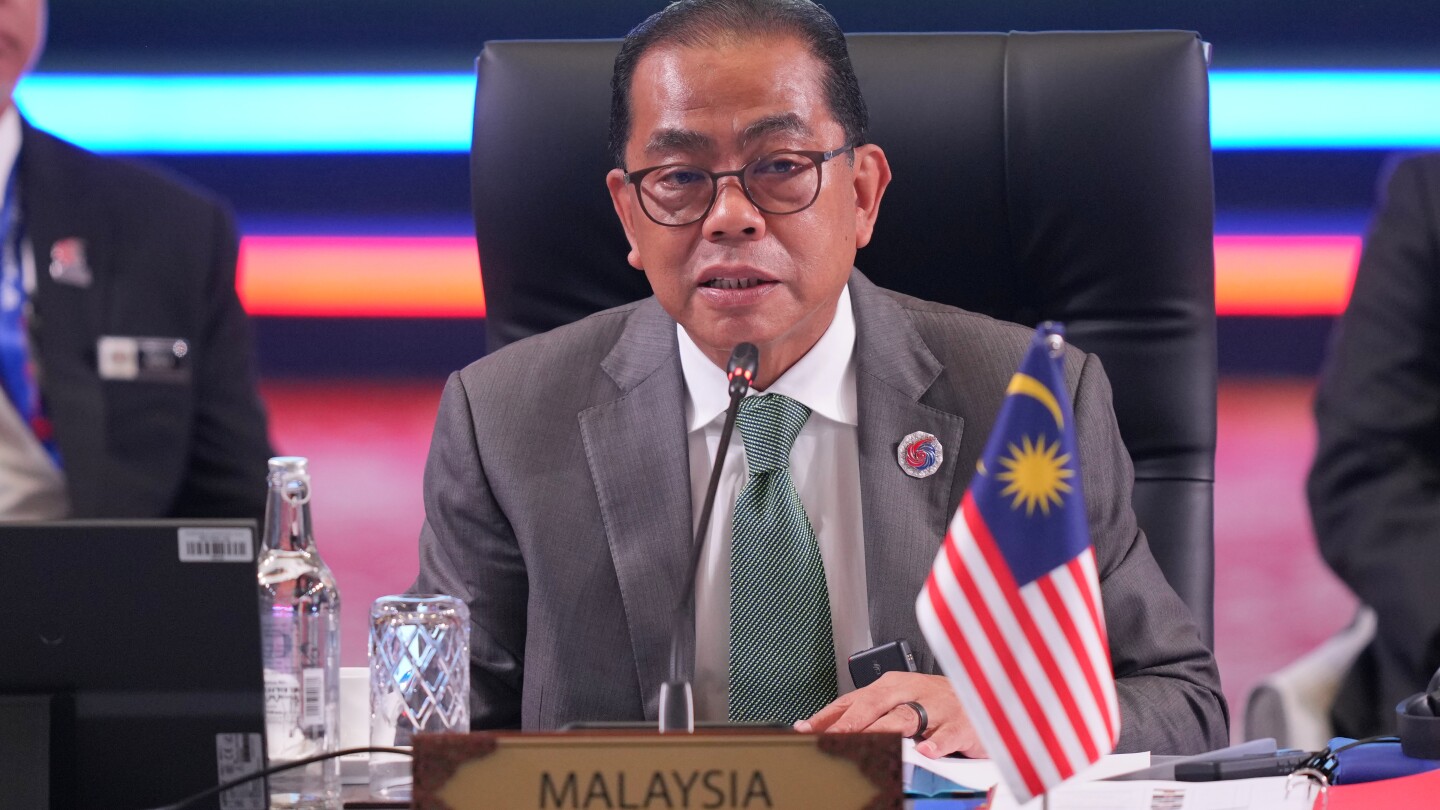
KUALA LUMPUR, Malaysia — Malaysia has called on its fellow Association of Southeast Asian Nations (ASEAN) members to broaden their security collaborations beyond maritime concerns to include cyberspace. The appeal was made during the annual ASEAN Defense Ministers’ Meeting, where Defense Minister Mohamed Khaled Nordin highlighted the escalating pressures on regional peace from both traditional and emerging threats. These include rising tensions in the disputed South China Sea and the increasing prevalence of cyberattacks, which Nordin warned could “disrupt societies, topple governments, and undermine critical infrastructure.”
Nordin emphasized that modern threats transcend physical borders, stating, “The challenges in the South China Sea are evident, but we must also recognize that our digital realm is equally at risk. The invisible threats to our networks and systems are just as dangerous as those in our maritime zones.”
The ASEAN defense ministers are set to engage in discussions on Saturday with dialogue partners, including the United States, China, Japan, India, Australia, South Korea, and Russia. U.S. Defense Secretary Pete Hegseth and Chinese Defense Minister Dong Jun are among the attendees. Hegseth and Nordin held a bilateral meeting on Thursday, reaffirming their nations’ commitment to maritime security in the South China Sea.
In a joint statement issued Friday, Nordin indirectly criticized China, referencing “grey-zone tactics” such as hydrographic research conducted under the protection of foreign coast guard vessels, which he described as a “clear provocation and threat to sovereignty.” Malaysia has historically preferred quiet diplomacy over public confrontations, unlike the Philippines, which has faced significant maritime disputes with China in recent years.
Nordin also urged ASEAN nations to accelerate the formation of an observer team to assist Thailand and Cambodia in resolving their border crisis. Additionally, he reiterated ASEAN’s commitment to supporting a peaceful resolution to the civil war in Myanmar, emphasizing the bloc’s determination to help the country “return to its rightful place in ASEAN.” Myanmar’s military leaders have been excluded from ASEAN meetings since 2021 due to their failure to comply with the bloc’s Five-Point Consensus on peace and dialogue, following the military takeover that ousted the elected government and plunged the nation into conflict.