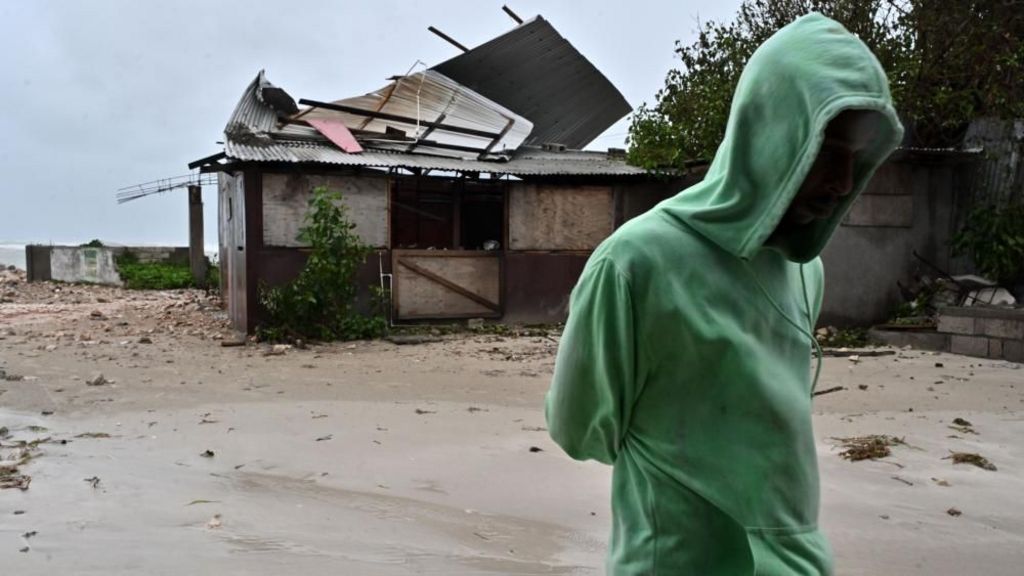
Jamaica is on high alert as Hurricane Melissa, a Category 5 hurricane with winds exceeding 280 km/h (174 mph), approaches its southern coast. This storm, now one of the most powerful ever recorded in the Atlantic, has intensified rapidly, growing from a tropical system to a Category 5 hurricane in just 24 hours. Fueled by unusually warm Caribbean waters, Melissa’s peak intensity has surpassed that of Hurricane Katrina in 2005, making it a historic threat to the island nation. The storm’s slow westward movement at 5 km/h raises concerns of prolonged rainfall, severe flooding, and devastating storm surges, particularly in low-lying areas like Clarendon and St Catherine. Meteorologists warn that Melissa’s sluggish pace could lead to catastrophic conditions, similar to Hurricane Harvey’s impact on Houston in 2017. Jamaica’s Prime Minister Andrew Holness has cautioned that no infrastructure can withstand a storm of this magnitude, with rural and hillside communities expected to bear the brunt of the damage. The storm has already claimed lives in Jamaica, Haiti, and the Dominican Republic, and its impact on tourism, power, and transportation networks could leave the country reeling for months. As Jamaica braces for this unprecedented disaster, experts emphasize the role of climate change in intensifying such extreme weather events.