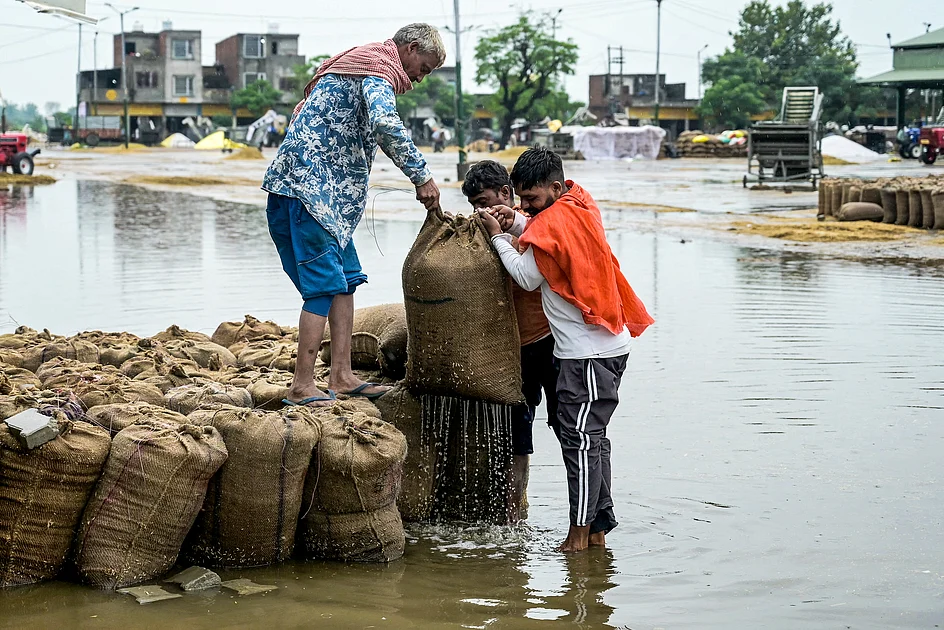
Indian farmers, who had initially welcomed an abundant monsoon season, are now grappling with the devastating aftermath of late downpours that have ruined their crops. The unexpected heavy rains, which arrived just before harvest, have severely damaged key crops such as cotton and soybean, leaving millions of farmers in distress. This agricultural setback is expected to halve the sector’s growth in the December quarter, with projections dropping to 3% to 3.5% from 6.6% the previous year, according to Garima Kapoor, an economist at Elara Securities in Mumbai. The crop losses are not only threatening farmers’ livelihoods but also exacerbating rural debt and dampening consumption, which had been poised to rise following the Indian government’s recent tax cuts on consumer goods. Farmers like Kishore Hangargekar from Maharashtra, who had anticipated a bountiful soybean harvest, are now facing significant financial strain. ‘We hoped for 10 to 12 quintals per acre, but now we’ll be lucky to get 2 to 3 quintals,’ he lamented. The situation is further complicated by the fact that damaged crops are being sold at prices far below the government’s minimum support price, leaving farmers with little recourse. Sachin Nanaware, another farmer, sold his soybean at 3,200 rupees per 100 kg, well below the government-fixed rate of 5,328 rupees. The financial strain has forced many farmers to mortgage their gold jewelry to afford seeds and fertilizers for the upcoming winter sowing season. While the excessive rain has improved soil moisture for winter crops like wheat and rapeseed, the lack of funds remains a critical issue. Industry analyst Thomas Mielke of Oil World predicts that the damage to soybean and cotton crops will drive India’s vegetable oil imports to a record 18 million tons in the upcoming marketing year. As farmers scramble to salvage what they can, the broader implications for India’s agricultural sector and rural economy remain deeply concerning.