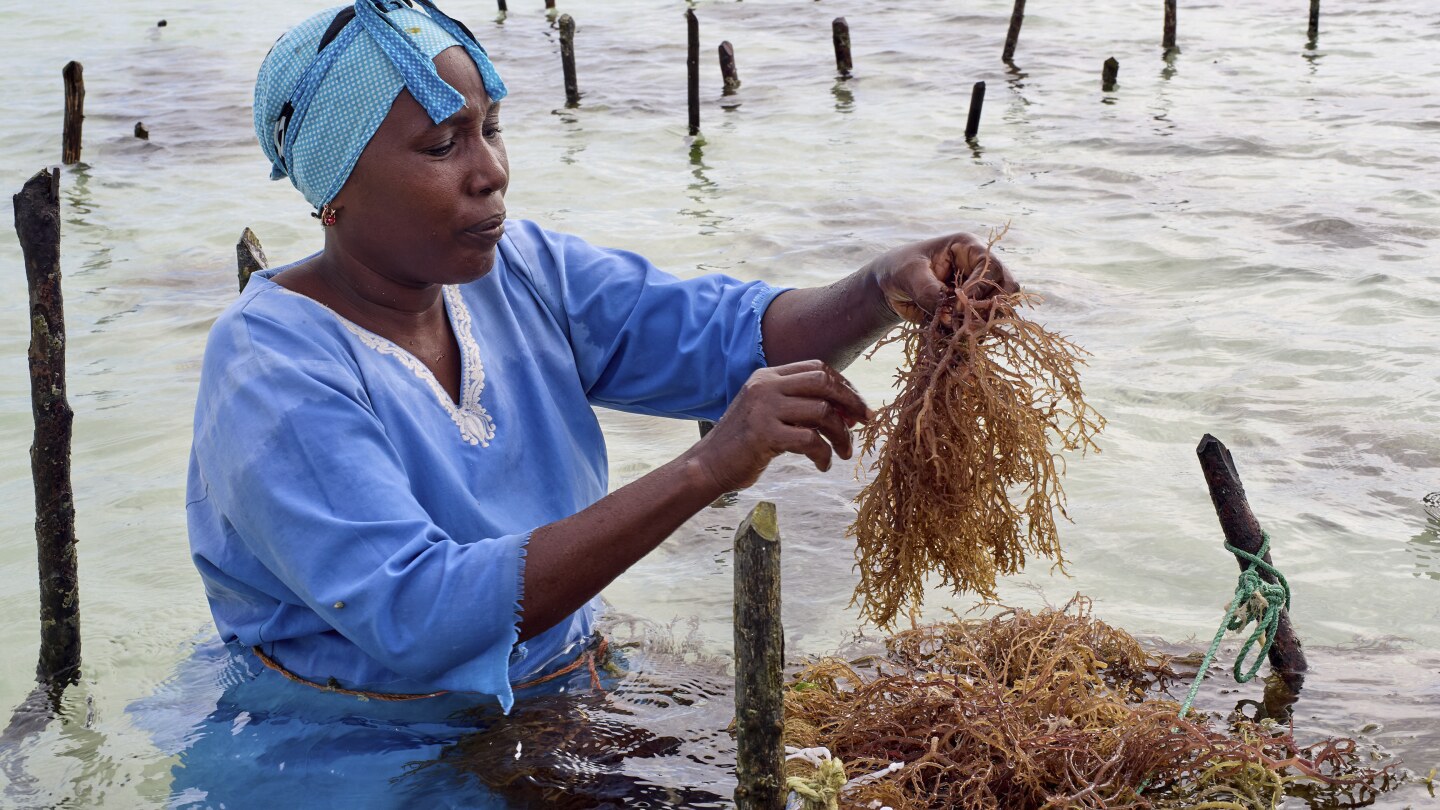
In the picturesque coastal waters of Zanzibar, Tanzania, women clad in vibrant dresses wade through the shallows, their baskets filled with seaweed. This seemingly idyllic scene, often captured by tourists, belies the harsh realities of their labor-intensive work. Seaweed farming, a cornerstone of Zanzibar’s economy, employs thousands of women, yet it comes with significant physical and environmental challenges.
Seaweed, primarily exported for use in the global food, cosmetics, and pharmaceutical industries, has seen a surge in demand. This has spurred increased private investment and donor funding, making seaweed the third-largest contributor to Zanzibar’s economy after tourism and spices. However, the women who form the backbone of this industry often face grueling conditions.
Mwanaisha Makame Simai, a seaweed farmer, describes the physical toll: ‘I experience pain in my back, waist, and chest due to the labor in the sea. There are also risks of being stung or bitten. Sometimes strong waves sweep you away. I have personally witnessed three cases of people drowning.’
The industry’s growth is part of Zanzibar’s ‘blue economy’ initiative, aimed at leveraging sustainable marine resources for economic development. Global players like Cargill have invested in the sector, partnering with organizations like The Nature Conservancy to improve yields and farmers’ incomes. NGOs such as the Global Seaweed Coalition are also stepping up efforts to ensure the sector’s safety and sustainability.
Despite these advancements, the majority of Zanzibar’s 25,000 seaweed farmers, predominantly women, work independently or in collectives, selling to local middlemen with little to no protections. Long hours under the equatorial sun lead to backaches, skin irritation, and the risk of stings from sea creatures. Rising sea temperatures due to climate change have further compounded these challenges, forcing women to venture into deeper waters.
Efforts to empower these women are underway. Organizations like Milele Zanzibar Foundation are teaching women to swim to combat the growing drowning crisis. Mwani Zanzibar, a boutique seaweed farm and factory, is training women in cosmetics manufacturing, offering them higher-paying jobs and reducing their time spent in the sea.
However, concerns remain about the equitable distribution of benefits from the industry’s growth. Simai notes, ‘Most of the money ends up with those who have office jobs, rather than the hardworking farmers.’ As Zanzibar’s seaweed industry continues to expand, ensuring that its benefits reach those at the grassroots level remains a critical challenge.