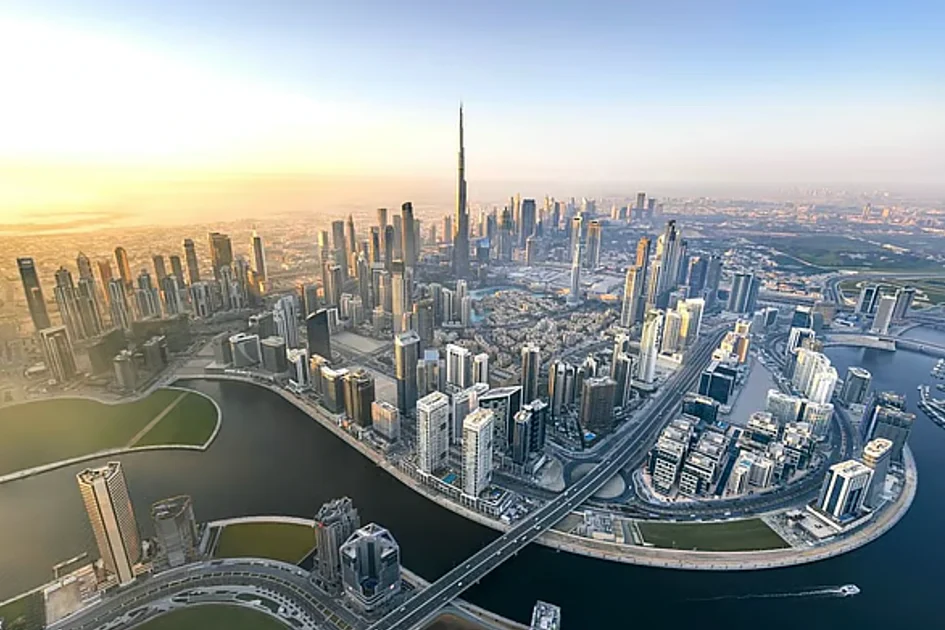
Dubai’s property market has witnessed a significant surge, with prices increasing by up to 16% due to the emirate’s extensive transport and infrastructure projects, according to a recent study by McKinsey & Company commissioned by the Roads and Transport Authority (RTA). The report highlights that proximity to metro stations and major highways has been a critical factor in driving real estate appreciation. Areas such as Downtown Dubai, Dubai Marina, and Business Bay, which are well-connected to the transport network, have experienced gains surpassing the overall market average, underscoring the importance of improved accessibility and reduced travel times in boosting property demand. The study, released on the RTA’s 20th anniversary, emphasizes the transformative role of the Dubai Metro, the first of its kind in the Gulf region. Over the past 16 years, the Metro has reduced travel distances by nearly 29.8 billion kilometers, alleviating congestion and enhancing mobility between business and residential districts. The Metro and Tram networks span over 100 kilometers across the emirate. Additionally, Dubai’s road network has made the city more accessible than comparable global cities, contributing to a reduction of 9.5 million tonnes of carbon dioxide emissions over 15 years. This reduction, equivalent to several billion dirhams in global carbon credit trading, has also positively impacted public health by decreasing respiratory and cardiovascular illnesses. The upcoming Dubai Metro Blue Line, a 30-kilometer extension with 14 stations, is expected to serve six key districts with a projected population of one million by 2040. The study links Dubai’s growth to two decades of sustained investment in mobility infrastructure, with Dh175 billion invested since 2005, generating Dh150 billion in revenues and saving Dh319 billion in fuel and time costs. RTA’s projects have contributed Dh156 billion to Dubai’s GDP, while property values have risen by Dh158 billion due to enhanced connectivity. The internal rate of return on RTA’s investments is estimated at 5%, with total cash returns projected to exceed Dh254 billion by 2050. Over the past decade, RTA’s initiatives have attracted Dh32.4 billion in foreign direct investment, particularly in logistics, distribution, and transport services. The study also highlights Dubai’s cost efficiency in infrastructure delivery, with the average annual length of road lanes built by RTA reaching 829 kilometers, double the global average. Mattar Al Tayer, Director General of the RTA, stated that transport investments have been a catalyst for Dubai’s long-term growth and that the emirate is preparing for a new era of sustainable mobility in 2026 with the introduction of autonomous taxis and aerial taxi services. Dubai has already commenced trial flights for its air taxis, with a network of vertical take-off and landing stations set to be established across the city by next year. The RTA has also launched a program to test autonomous taxis, aiming for 25% of total mobility in Dubai to be autonomous by 2030.