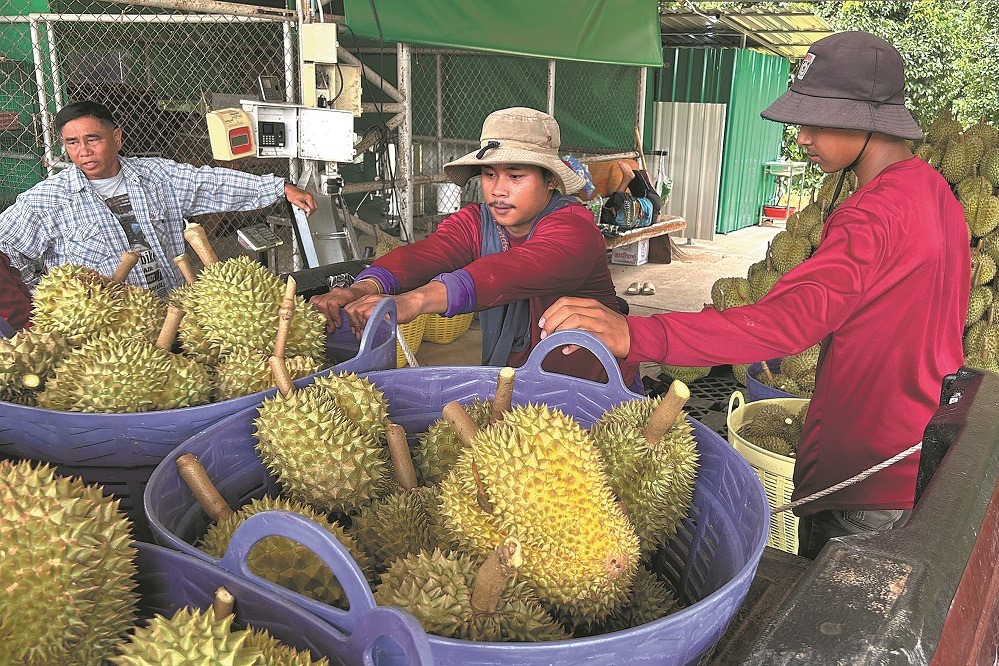
Once considered an acquired taste due to its pungent aroma, durian has emerged as a symbol of cultural and economic exchange between China and Thailand. Over the past decade, the spiky fruit has not only captivated Chinese consumers but also fostered deeper bilateral ties through trade and investment. Thailand, home to over 200 durian varieties, has become the primary supplier to China, accounting for 97.4% of its durian market. In 2024 alone, Thailand exported 833,000 metric tons of durian to China, valued at $3.7 billion. The fruit’s popularity has spurred online sales campaigns on platforms like Douyin and Taobao, while attracting Chinese investors to Thailand’s orchards and logistics sectors. However, the durian trade faced a significant setback earlier this year when Chinese customs detected Basic Yellow 2 (BY2), a harmful dye used to enhance the fruit’s appearance. This led to rejected shipments, investigations, and temporary export suspensions, causing financial losses for Thai farmers and raising concerns among Chinese consumers. The incident highlighted the need for stricter safety standards, traceability, and consumer education. Despite the challenges, the BY2 scandal prompted Thailand to upgrade its fruit industry, with increased government investment in testing and scientific farming. It also deepened Chinese consumers’ understanding of durian, paving the way for stronger partnerships. Beyond trade, durian has become a cultural bridge, reflecting shared values of respect for nature and traditional farming practices. As both nations continue to collaborate, the ‘king of fruits’ remains a testament to the evolving relationship between China and Thailand.