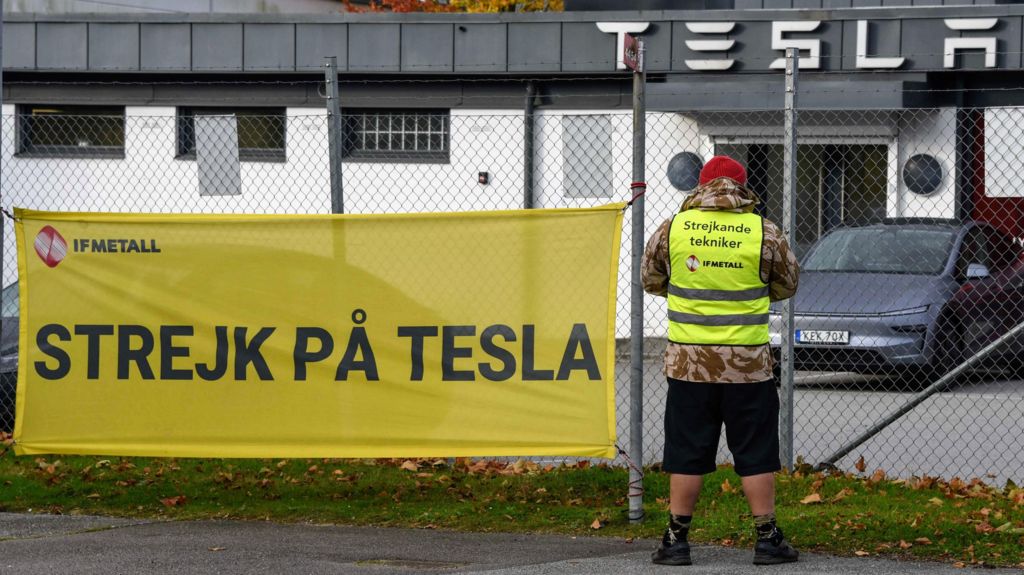
In Sweden, a protracted labor dispute between Tesla and its workforce has reached a critical juncture. For two years, 70 car mechanics, represented by the Swedish union IF Metall, have been on strike at Tesla’s 10 service centers across the country. The strike, which began on October 27, 2023, centers on the union’s demand for a collective agreement to negotiate pay and working conditions on behalf of its members—a cornerstone of Sweden’s industrial culture. Despite the ongoing industrial action, Tesla has continued operations by replacing striking workers, a move unprecedented since the 1930s. Janis Kuzma, a 39-year-old mechanic from Latvia, has been on the picket line since the strike’s inception. He describes the experience as grueling, especially as Sweden’s harsh winter sets in. IF Metall provides basic support, including a mobile van for shelter and refreshments, but the standoff shows no signs of resolution. Tesla’s CEO, Elon Musk, has been vocal in his opposition to unions, describing them as divisive and detrimental to company culture. This stance has put Tesla at odds with Sweden’s labor norms, where 70% of workers are unionized, and 90% are covered by collective agreements. The strike has garnered international attention, with unions in neighboring countries like Denmark, Norway, and Finland refusing to handle Tesla vehicles or provide services. Despite the disruption, Tesla’s popularity in Sweden remains unaffected, with owners still able to purchase, service, and charge their vehicles. Analysts suggest that Tesla’s refusal to concede is driven by Musk’s aversion to external influence and the potential ripple effect of unionization in its U.S. and German facilities. With both sides entrenched, the conflict shows no signs of abating, raising concerns about the future of labor relations in Sweden and beyond.