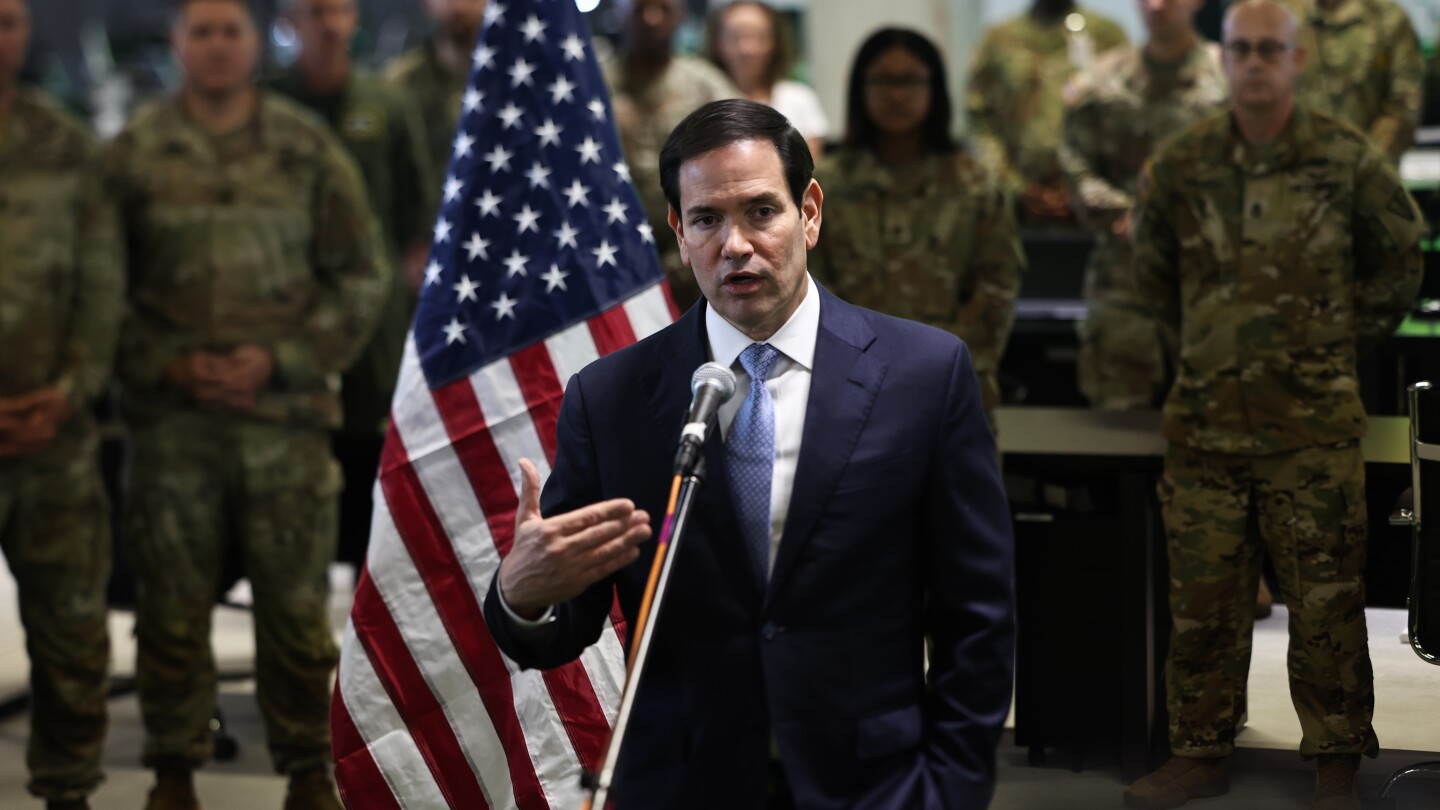
In a significant development, U.S. Secretary of State Marco Rubio revealed on Saturday that Israel, the United States, and other mediators of the Gaza ceasefire agreement are actively sharing intelligence to preempt potential threats. This collaborative effort reportedly enabled the identification of a possible imminent attack last weekend, which was subsequently averted. The State Department had earlier issued warnings based on credible reports suggesting that Hamas might violate the ceasefire by targeting Palestinian civilians in Gaza. Rubio emphasized the importance of proactive threat detection, stating, ‘The goal is to identify a threat before it happens.’
Rubio also highlighted the growing interest among multiple nations in joining an international stabilization force aimed at deploying to Gaza. However, he noted that these countries require further clarity on the mission’s objectives and rules of engagement. The U.S. is considering advocating for a U.N. resolution to support the force, thereby encouraging broader participation. Countries such as Qatar, Egypt, Turkey, Indonesia, and Azerbaijan have expressed interest in the initiative.
During his multistop tour in Asia, Rubio met with President Donald Trump in Qatar, following his visit to Israel. In Israel, he engaged with Prime Minister Benjamin Netanyahu and toured a U.S.-led coordination center overseeing the ceasefire. Vice President JD Vance, special envoy Steve Witkoff, and Trump adviser Jared Kushner had previously visited Israel to reinforce the fragile ceasefire agreement.
Rubio also addressed other pressing foreign policy issues, including the recent U.S. sanctions on Colombian President Gustavo Petro over alleged involvement in the global drug trade. He clarified that the sanctions were not intended to target Colombia as a nation but were a response to Petro’s actions, which he described as hostile. Rubio reiterated the U.S.’s strong relationship with Colombia’s people and institutions, emphasizing that economic measures like tariffs were avoided to prevent harm to the country’s economy.
On the topic of Venezuela, Rubio dismissed speculation that recent U.S. military actions in Latin America were aimed at ousting President Nicolás Maduro. He framed these actions as part of a counterdrug operation, accusing Maduro’s government of facilitating narcotics trafficking. Maduro, however, denied the allegations, calling them a fabricated narrative.
Regarding U.S.-China relations, Rubio affirmed that Taiwan would not be used as a bargaining chip in trade negotiations. He stressed the importance of maintaining U.S. engagement with China while upholding commitments to Taiwan’s security.