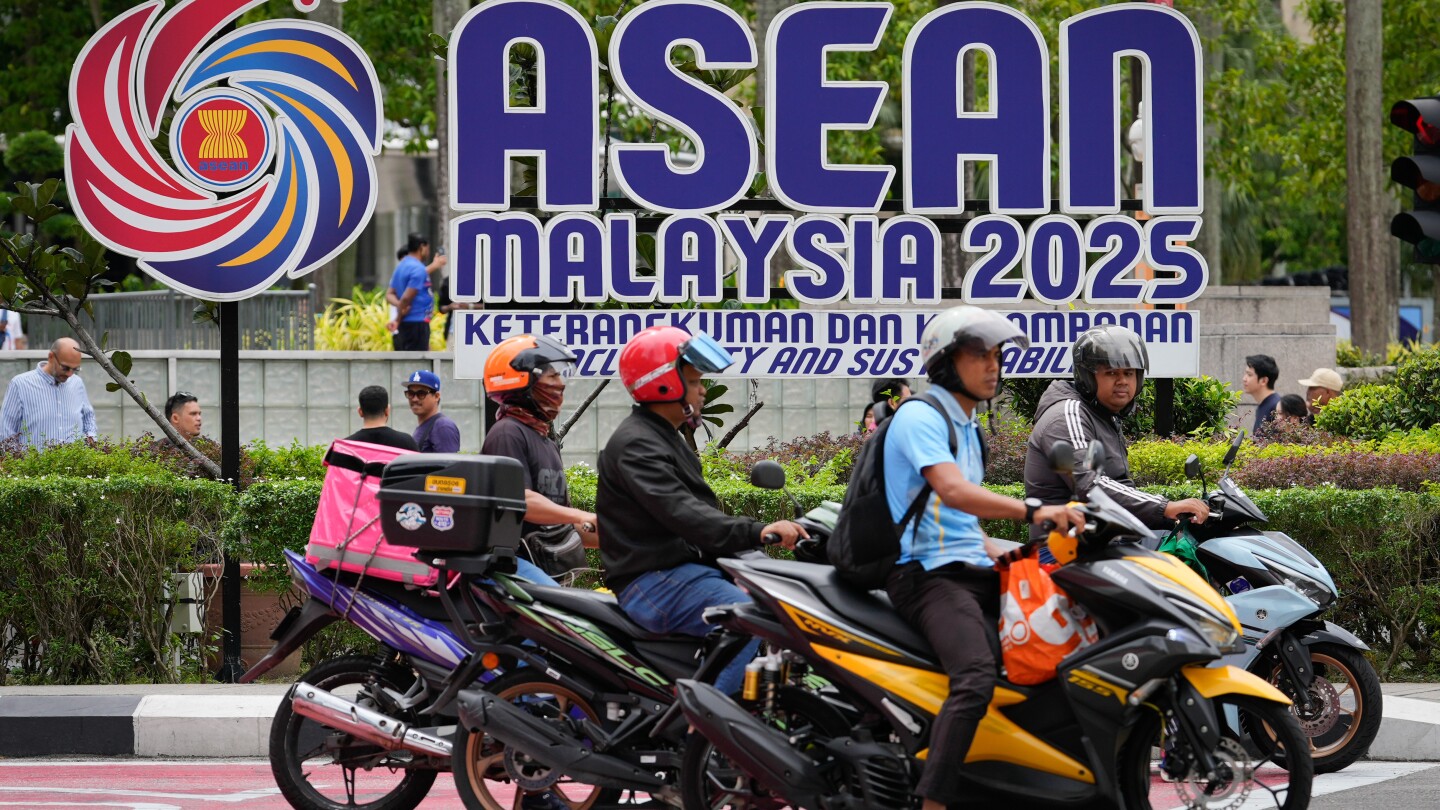
The 2023 ASEAN Summit in Kuala Lumpur, Malaysia, has commenced with significant developments on multiple fronts. The event marks the formal inclusion of East Timor as the 11th member of the Association of Southeast Asian Nations (ASEAN), the first expansion in 26 years. This milestone underscores ASEAN’s commitment to regional inclusivity, offering East Timor access to free trade agreements, investment opportunities, and a broader market to diversify its oil-dependent economy.
The summit also highlights the return of U.S. President Donald Trump to Asia for the first time since his re-election. Trump’s presence signals renewed U.S. engagement in the Indo-Pacific region, with expectations of new trade deals and his involvement in brokering an expanded ceasefire between Thailand and Cambodia. However, his visit has sparked protests in Kuala Lumpur, particularly over his administration’s stance on the Palestinian issue, despite Malaysia’s acknowledgment of his role in facilitating a Gaza ceasefire.
Regional security and economic resilience dominate the agenda, with discussions on the South China Sea disputes, Myanmar’s civil war, and the proliferation of cross-border scam networks. ASEAN is set to sign an upgraded free trade pact with China and continue negotiations on a code of conduct for the contested waterway. Meanwhile, Myanmar’s military government, barred from summits since the 2021 coup, faces scrutiny over its planned elections in December, which critics deem neither free nor fair.
The summit also features the revival of the Regional Comprehensive Economic Partnership (RCEP), the world’s largest trade bloc, as regional economies seek stability amid U.S. tariff measures and shifting global trade patterns. Leaders from China, Japan, India, Australia, and other key partners are attending, alongside Brazilian President Luiz Inácio Lula da Silva and South African President Cyril Ramaphosa, reflecting ASEAN’s efforts to deepen ties with Africa and Latin America.