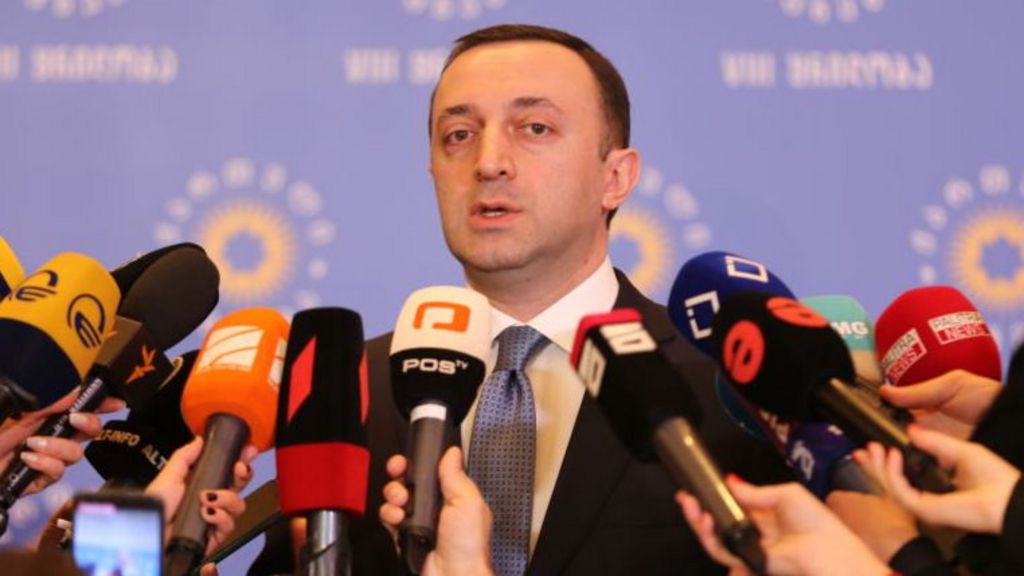
In a dramatic turn of events, former Georgian Prime Minister Irakli Garibashvili has appeared in court on charges of large-scale money laundering, marking a significant fall from grace for one of the most loyal allies of billionaire Bidzina Ivanishvili, Georgia’s de facto leader. Prosecutors revealed that during a raid on Garibashvili’s home earlier this month, investigators discovered $6.5 million in cash. Garibashvili, who served as prime minister twice under Ivanishvili’s influence—first from 2013 to 2015 and then from 2021 to January 2023—has pleaded guilty to corruption charges that could result in a 12-year prison sentence. He has been granted bail set at one million Georgian lari ($368,000).
The case against Garibashvili is part of a broader crackdown on former government officials, but it stands out as the first prosecution of a senior member of Georgia’s ruling elite. This development comes as the ruling Georgian Dream party shifts towards an authoritarian stance, distancing itself from the West. Garibashvili is accused of secretly engaging in illicit business activities and laundering substantial sums of money, which he allegedly declared as gifts from family members.
Garibashvili’s lawyer, Amiran Giguashvili, confirmed that his client is cooperating with authorities, a factor that influenced the court’s decision to grant bail. The former prime minister’s downfall is seen as a reflection of Ivanishvili’s growing mistrust of his inner circle, including other high-profile figures like ex-security chief Liluashvili.
Meanwhile, Georgia’s political landscape remains turbulent. Since the government announced in November 2024 that it would halt EU membership talks, daily protests have erupted, and most opposition leaders have been imprisoned. New legislation has targeted civil society and pro-opposition media, further intensifying the crackdown. Political analyst Ghia Nodia suggests that Ivanishvili feels besieged, believing in deep state conspiracies that the West aims to destabilize his rule through ongoing protests.
Garibashvili’s case underscores the deepening political crisis in Georgia, as the country moves further away from its pro-Western aspirations and towards a more authoritarian governance model.