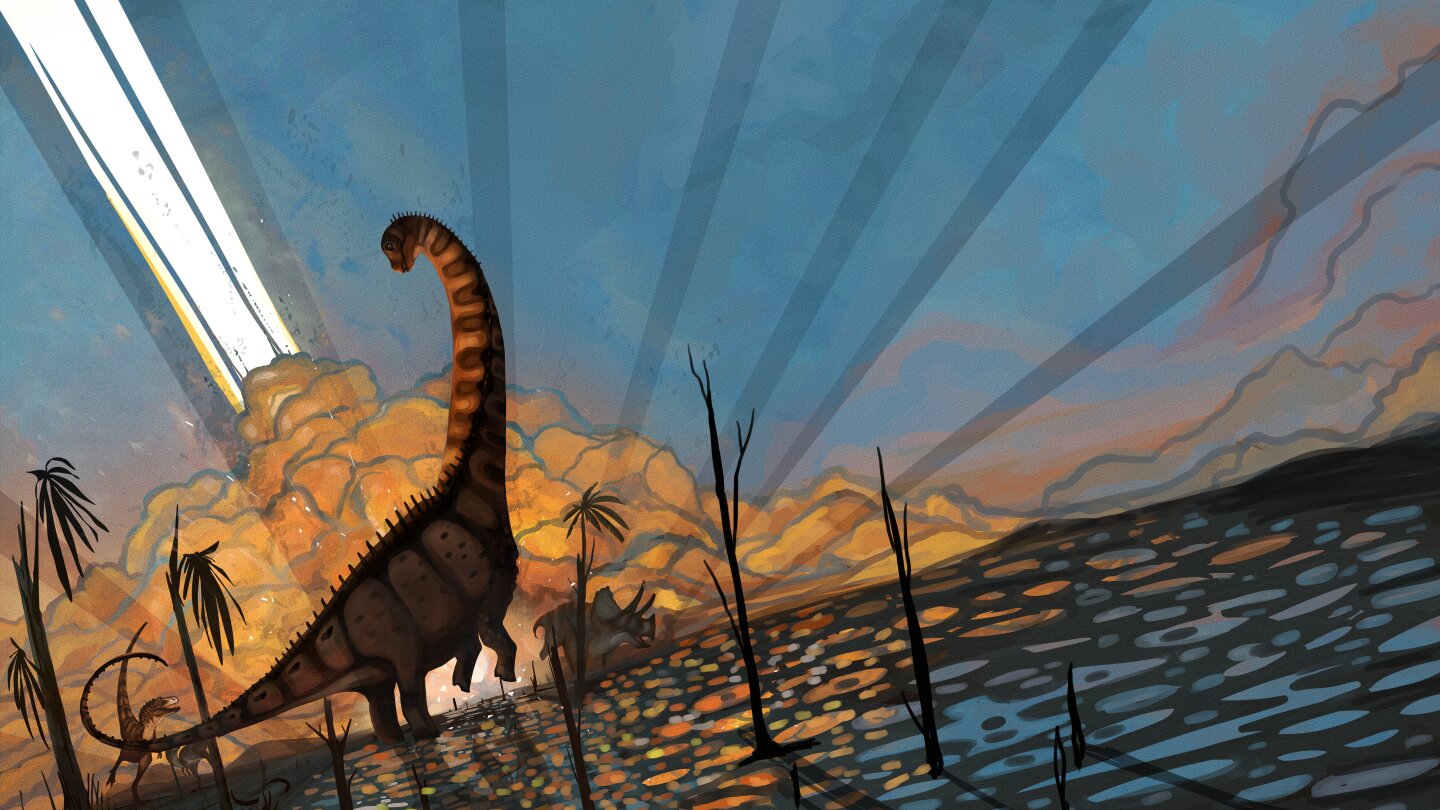
The long-standing debate among scientists about whether dinosaurs were already in decline before the catastrophic asteroid impact 66 million years ago has taken a new turn. Recent research indicates that dinosaur populations in North America were flourishing right up until the asteroid struck, which triggered a mass extinction event. However, experts caution that this finding represents only a fragment of the global scenario. The study, published in the journal Science, focuses on the Kirtland Formation in northern New Mexico, a site renowned for its dinosaur fossils for over a century. Analysis of fossils and surrounding rocks suggests these remains date back to approximately 400,000 years before the asteroid impact—a brief period in geological terms. The dating was achieved by examining volcanic glass particles in sandstone and magnetic minerals in mudstone. Daniel Peppe, a paleontologist at Baylor University and co-author of the study, emphasized that the findings reveal diverse dinosaur communities thriving shortly before their abrupt extinction. The fossils discovered include species like Tyrannosaurus rex, a long-necked dinosaur, and a Triceratops-like herbivore. However, independent experts like Mike Benton from the University of Bristol warn that evidence from a single location may not reflect broader trends across North America or globally. Andrew Flynn, a paleontologist at New Mexico State University and study co-author, highlighted the challenges of accurately dating fossils, as carbon-based materials do not survive in them. Further research is needed to paint a comprehensive picture of dinosaur diversity worldwide on the eve of the asteroid impact.
Dinosaurs were thriving in North America before the mass-extinction asteroid strike, study suggests