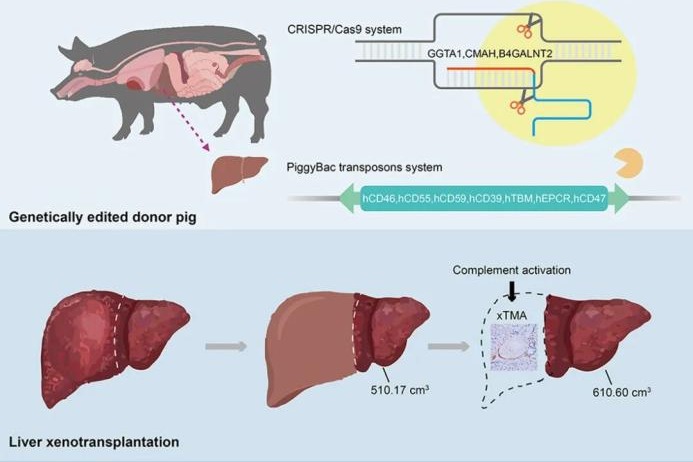
In a groundbreaking medical achievement, Chinese surgeons have successfully performed the world’s first transplant of a gene-edited pig liver into a living human patient, who survived for 171 days post-operation. This historic procedure, detailed in the Journal of Hepatology, represents a significant step forward in addressing the critical shortage of human donor organs. The operation was conducted by a team from the First Affiliated Hospital of Anhui Medical University, utilizing a pig liver developed by researchers from Yunnan Agricultural University. The donor pig underwent rigorous pathogen screening and a complex 10-gene modification process, which included knocking out three genes responsible for rapid antibody-mediated rejection and inserting seven human genes to enhance immune acceptance and prevent blood clotting complications. The transplant was performed on May 17, 2024, on a 71-year-old patient with an unresectable liver tumor. The pig liver was transplanted as an auxiliary organ to support the patient’s native liver. Initial post-surgery results were promising, with no signs of acute rejection for the first 31 days. However, complications arose on day 38 due to blood clots in the small vessels of the transplanted organ, leading to its removal. The patient later experienced recurrent upper gastrointestinal bleeding and passed away on day 171. Despite the limited survival, this case demonstrates the potential of xenotransplantation as a bridge therapy for patients awaiting human liver transplants. The review article in the journal emphasizes that while this operation does not yet enable widespread clinical use of pig livers, it establishes proof-of-concept that such grafts can function in humans.