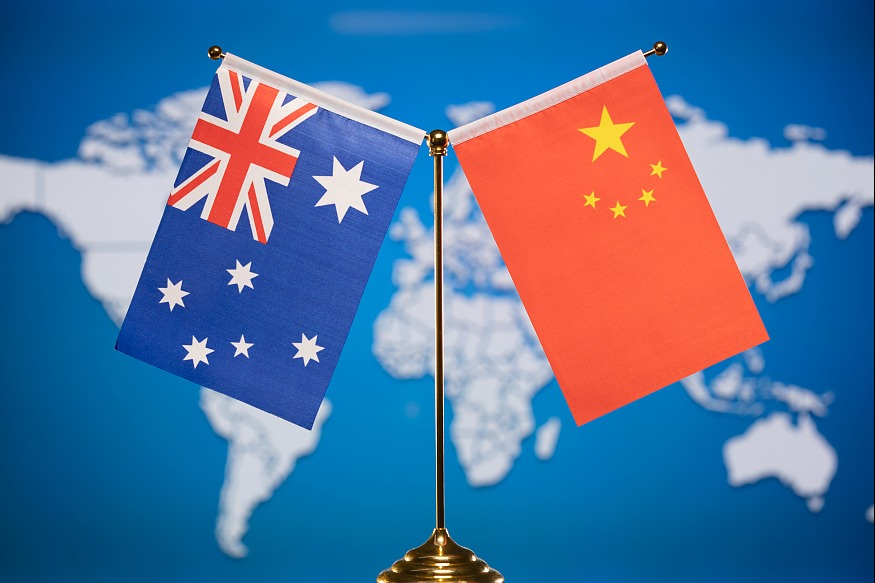
A recent seminar in Melbourne has underscored the growing momentum in economic cooperation between China and Australia, with participants emphasizing the potential for deeper collaboration in finance, clean energy, and emerging industries. The event, themed ‘Australia-China Economic Relations: Future Prospects,’ was part of the Bank of China Melbourne Branch’s 30th anniversary celebrations and the Victoria Business Confucius Institute’s Doing Business with China Workshop Series 2025. Craig Emerson, managing director of Emerson Economics and a former Australian trade minister, highlighted the renewed exchanges between the two countries, which he said are helping rebuild goodwill and restore trust. Emerson, who recently co-chaired the latest round of the China-Australia High-Level Dialogue in Beijing, noted that the talks have not only restored the good relationship but are now opening a new chapter. He also pointed out the economic complementarity between the two countries, with trade relationships evolving as China’s demands change what is bought and sold. Fang Xinwen, Chinese consul general in Melbourne, emphasized the resilience and long-term momentum of China’s economy and expressed optimism for deeper bilateral economic collaboration. He mentioned that the 20th Central Committee of the Communist Party of China is convening its fourth plenary session in Beijing to deliberate on a blueprint for China’s development over the next five years, marking the opening of a new chapter in the country’s modernization drive. Fang also highlighted that China will continue to advance reform and opening-up, develop new quality productive forces, and release the potential of its vast market, bringing more opportunities and confidence to countries including Australia. Last month, the Australian state of Victoria released a new strategy outlining its engagement with China over the next five years, envisioning ‘a new golden era’ of cooperation in areas such as agriculture, healthcare, education, and innovation. Fang said the strategy would inject renewed momentum and offer clearer direction for deepening bilateral economic engagement. Li Mang, general manager of Bank of China Sydney Branch and chairman of the China Chamber of Commerce in Australia, noted that China is developing new quality productive forces through technological innovation and green transformation, while Australia is prioritizing clean energy, critical minerals, and local manufacturing—areas that align closely with China’s development strategy. Li emphasized that by leveraging complementary strengths and promoting innovation, digital transformation, and sustainable investment, both countries can unlock new drivers of growth and enhance long-term competitiveness. He also stressed the importance of strengthening not only trade and investment ties but also cultural and educational exchanges to enhance mutual understanding and trust between the business and academic communities of both countries. Emerson added that future cooperation could expand into health services and artificial intelligence, noting that home-based rehabilitation, aged care, and AI-assisted medical diagnostics could benefit both countries and the wider region under Asia-Pacific Economic Cooperation-related mechanisms.