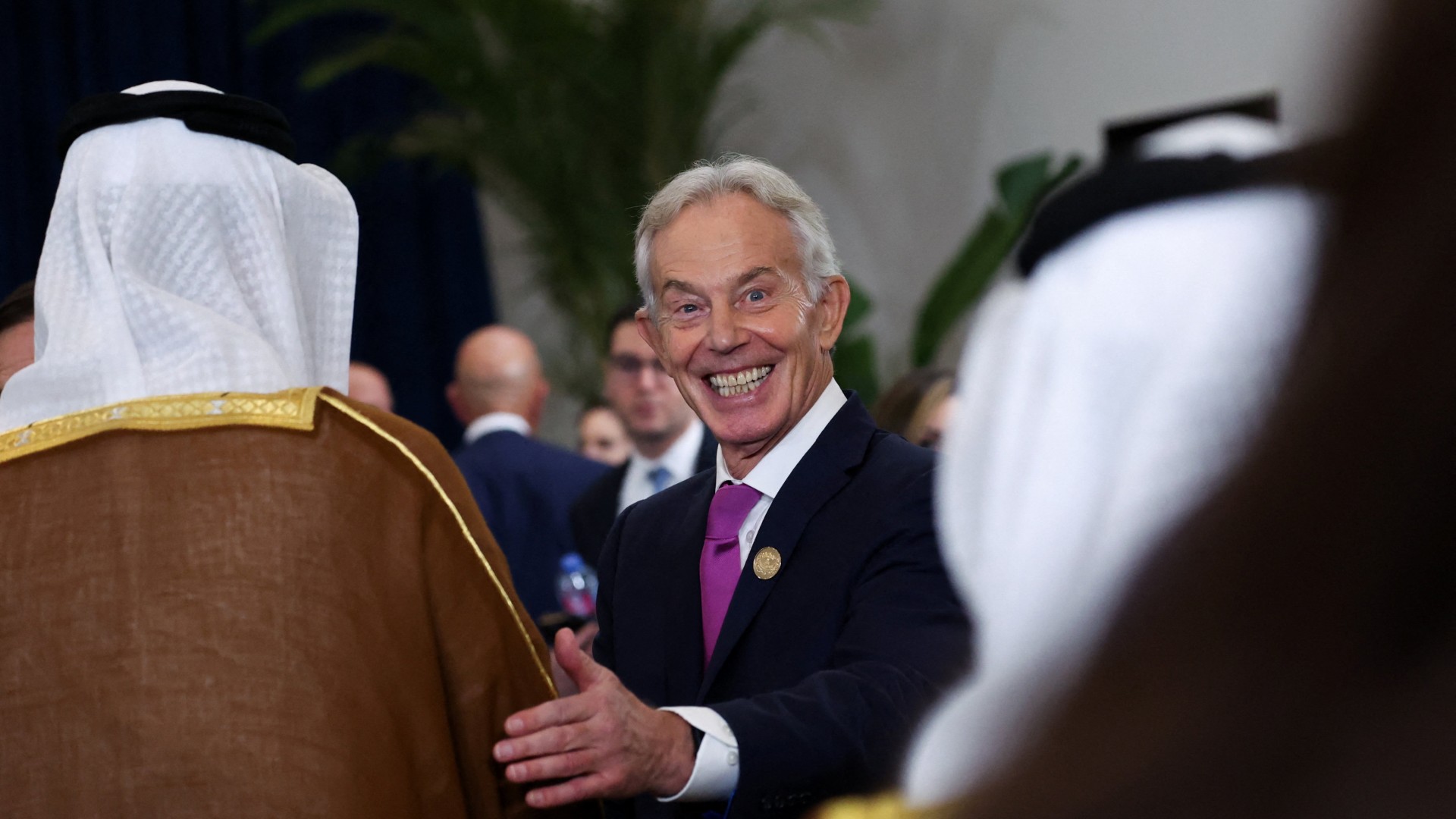
As the Gaza ceasefire took effect, former British Prime Minister Tony Blair’s potential involvement in the region’s future has become a topic of heated debate. U.S. President Donald Trump, en route to the Middle East, commented on Blair’s possible role, stating, ‘I like Tony, I have always liked Tony. But I want to find out that he is an acceptable choice to everybody.’ Blair’s controversial history in the Middle East, particularly his role in the Iraq War, has cast a shadow over his candidacy, with many in the Arab world expressing skepticism and even disdain. However, Blair’s warm reception by Egyptian President Abdel-Fattah el-Sisi at the Sharm el-Sheikh summit suggests strong support from Cairo. Since leaving office, Blair and his Tony Blair Institute (TBI) have advised several governments, including Egypt, the UAE, and Saudi Arabia. A source within the Egyptian presidency revealed that Blair has provided extensive consultations to Sisi, focusing on countering political Islam, economic strategies, and government image management. Despite TBI’s denial of any formal advisory role in Egypt, the source confirmed that Blair’s influence has been significant. Blair’s ideological alignment with Sisi, particularly their shared opposition to political Islam, positions him as a pragmatic choice for leading Gaza’s transitional administration. The proposed Gaza International Transitional Authority (GITA) is expected to be headquartered in Egypt’s Sinai Peninsula, underscoring Cairo’s strategic role in the region’s reconstruction. As Blair’s re-emergence in Middle Eastern politics continues to stir debate, his potential leadership in Gaza remains a contentious yet pivotal issue.