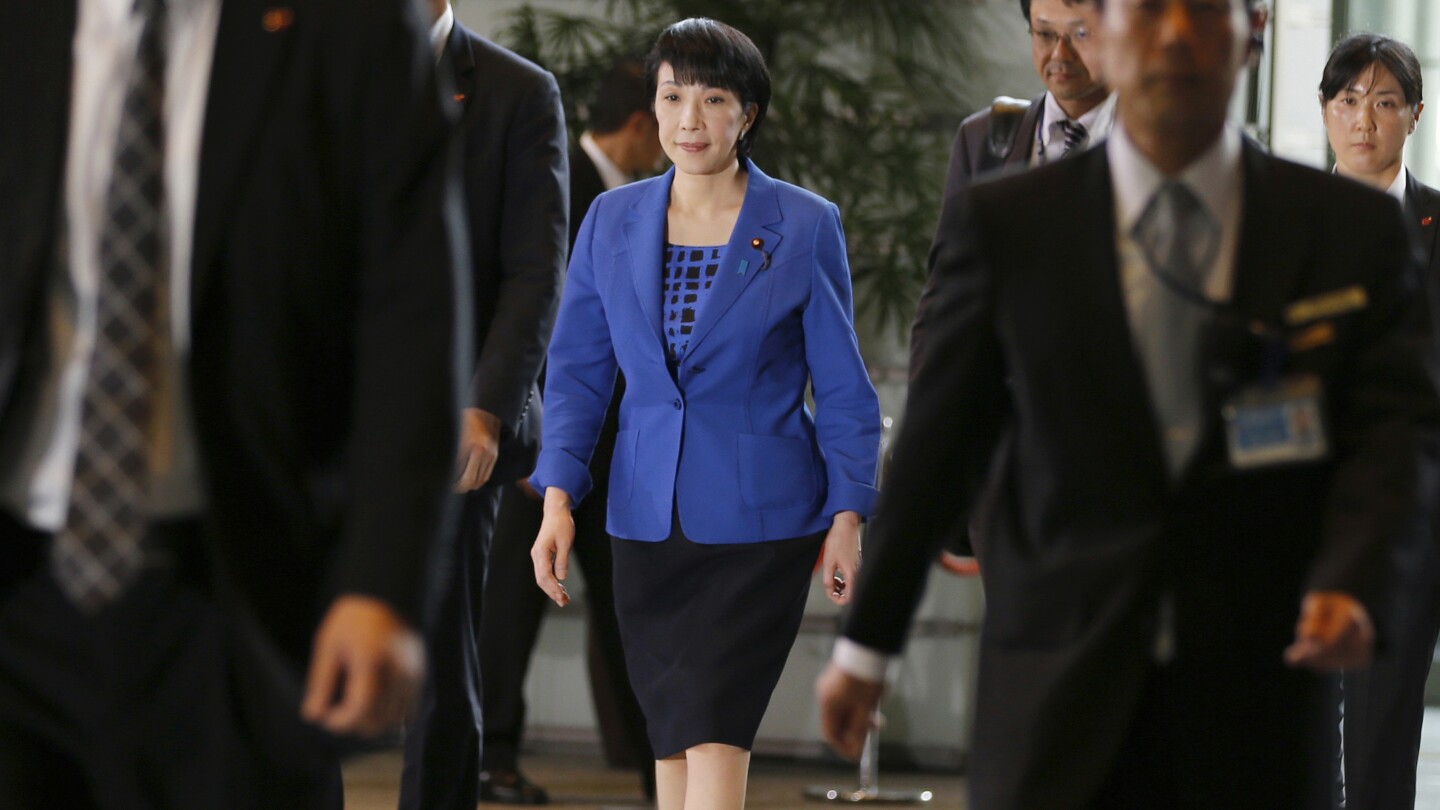
Tokyo’s stock market has surged following the election of Sanae Takaichi as Japan’s first female prime minister, with investors optimistic about her commitment to market-friendly policies. The Nikkei 225 index rose 0.7% to 49,517.57, nearing the symbolic 50,000 mark. Takaichi, a conservative lawmaker and heavy metal enthusiast, secured 237 votes in a parliamentary ballot, surpassing the 233 required for victory. Her policy framework, dubbed ‘Sanaenomics,’ is expected to emphasize increased defense spending and sustained low interest rates, despite concerns over inflation and a weak yen. Takaichi has vowed to address rising consumer prices, which have exceeded the Bank of Japan’s 2% target, reaching 2.5% to 3%. However, her opposition to raising interest rates could complicate efforts to curb inflation and strengthen the yen. Wage stagnation remains a pressing issue, with current levels only recently surpassing 1997 averages. Takaichi also faces the challenge of Japan’s shrinking and aging population, which has led to labor shortages and hindered economic growth. She has proposed tax incentives for companies offering childcare and hinted at family-friendly tax breaks. Takaichi’s policies are expected to mirror those of her late mentor, former Prime Minister Shinzo Abe, including boosting government spending and strengthening Japan’s defense capabilities. Her political rise has already spurred investment in military-related firms. While Takaichi seeks to maintain cordial relations with the U.S., her tenure will likely be fraught with challenges, including resistance to reforms and the need for cross-party support in a fragmented parliament.
What to expect for Japan’s economy under Sanae Takaichi, its 1st female prime minister