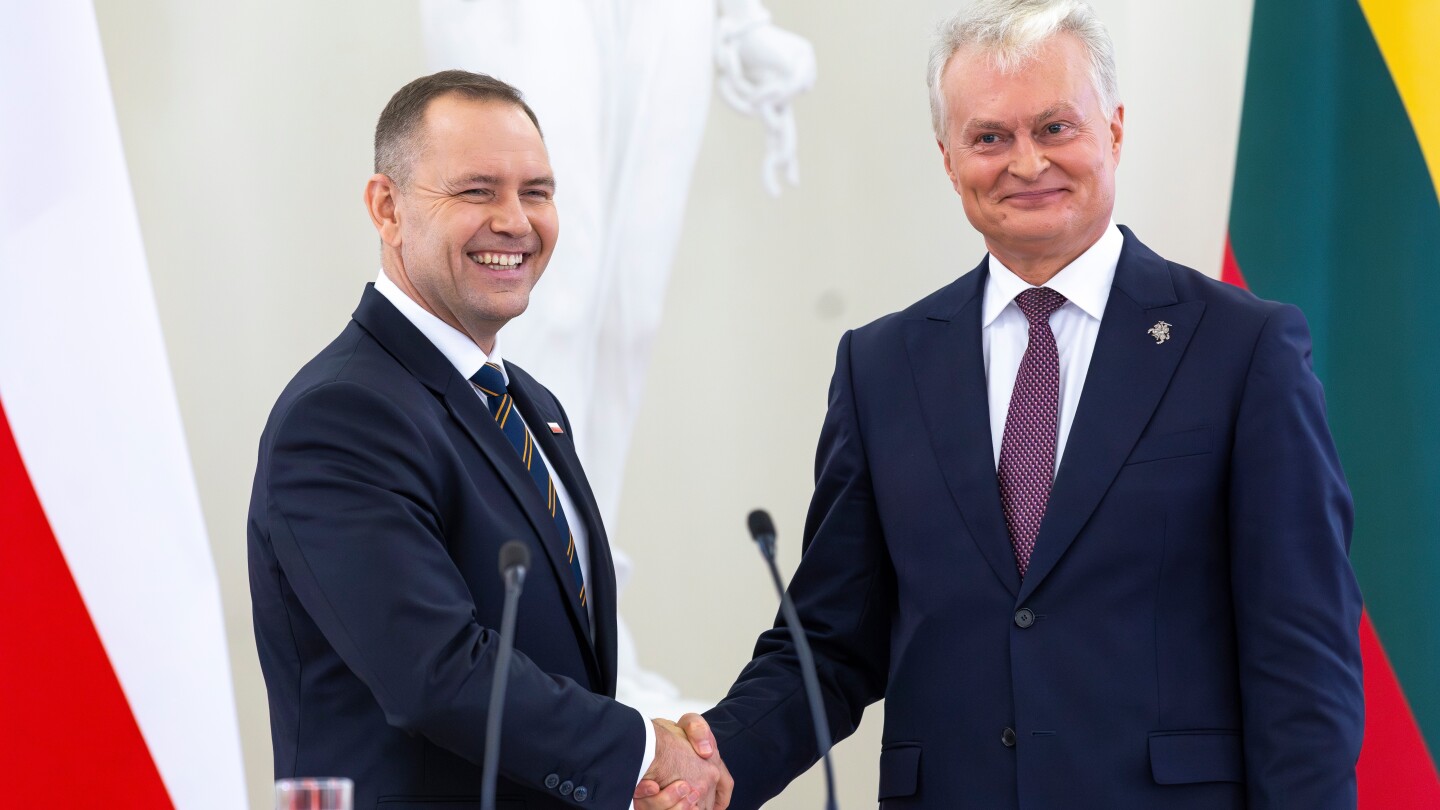
In a significant development for regional connectivity and security, the Via Baltica, a major road linking the Baltic states to Poland, was inaugurated on Monday. This opening comes at a time of heightened tensions between Europe and Russia, particularly following recent incursions of Russian drones into Polish territory and fighter jets into Estonian airspace in September. The 970-kilometer (600-mile) route, which forms part of the European E67 highway, stretches from Warsaw, Poland, through Lithuania, Latvia, and Estonia, culminating in Tallinn. The road traverses the strategically sensitive Suwalki Gap, a narrow strip of land between Belarus and Russia’s Kaliningrad exclave, often cited as a potential flashpoint in any conflict involving NATO and Russia. At the inauguration ceremony on the Polish-Lithuanian border, Polish President Karol Nawrocki and Lithuanian President Gitanas Nausėda emphasized the dual significance of Via Baltica, highlighting its role in bolstering both economic growth and regional defense. Nawrocki stated, ‘This road has a dual purpose – it will help our economy and strengthen the defense capabilities of our region.’ Nausėda echoed these sentiments, describing the road as a symbol of ‘freedom, prosperity, and security,’ while underscoring its economic and logistical importance in connecting Lithuania to the broader European market. The four-lane A5 highway, linking Kaunas, Lithuania’s second-largest city, to Suwalki in Poland, is a key component of Via Baltica. However, some northbound sections remain two lanes and are slated for future expansion, according to Lithuania’s Transportation Ministry. The road’s strategic value lies in its potential to facilitate faster NATO troop movements in the event of a crisis, reinforcing the Baltics’ defense posture amidst ongoing regional instability.