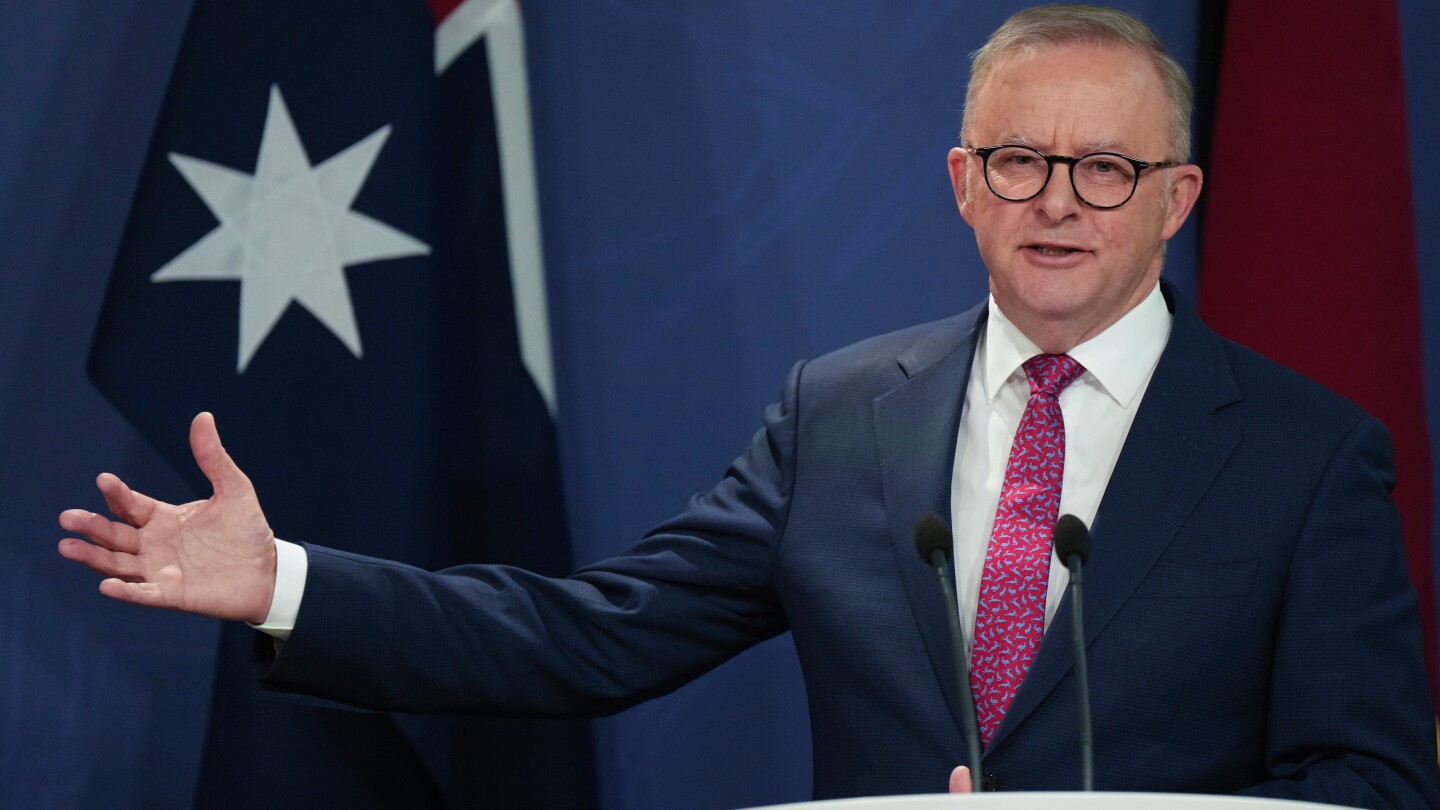
In a significant move to reduce reliance on China’s rare-earth resources, President Donald Trump and Australian Prime Minister Anthony Albanese signed an $8.5 billion critical-minerals agreement at the White House on Monday. The deal, negotiated over several months, aims to bolster the supply of rare-earth materials essential for advanced technologies, from fighter jets to electric vehicles. Trump confidently predicted that within a year, the U.S. would have an abundance of these resources, while Albanese emphasized that the agreement elevates the U.S.-Australia relationship to a new level. The partnership comes as China tightens export controls on rare-earth materials, a move the Trump administration views as an attempt to dominate the global tech supply chain. Kevin Hassett, director of the White House’s National Economic Council, praised Australia’s mining economy and its role in mitigating global economic risks posed by China’s rare-earth monopoly. The agreement includes plans for $3 billion in joint investments within six months, signaling the urgency of the initiative. However, experts caution that while Australia’s resources are valuable, the U.S. must also invest in mining and processing projects in other regions, such as Central Asia, to fully counter China’s decades-long head start. The deal underscores the broader geopolitical strategy of leveraging alliances to counter China’s influence, with discussions also touching on the AUKUS security pact. Albanese’s visit precedes Trump’s upcoming meeting with Chinese President Xi Jinping, highlighting the high-stakes nature of these negotiations.