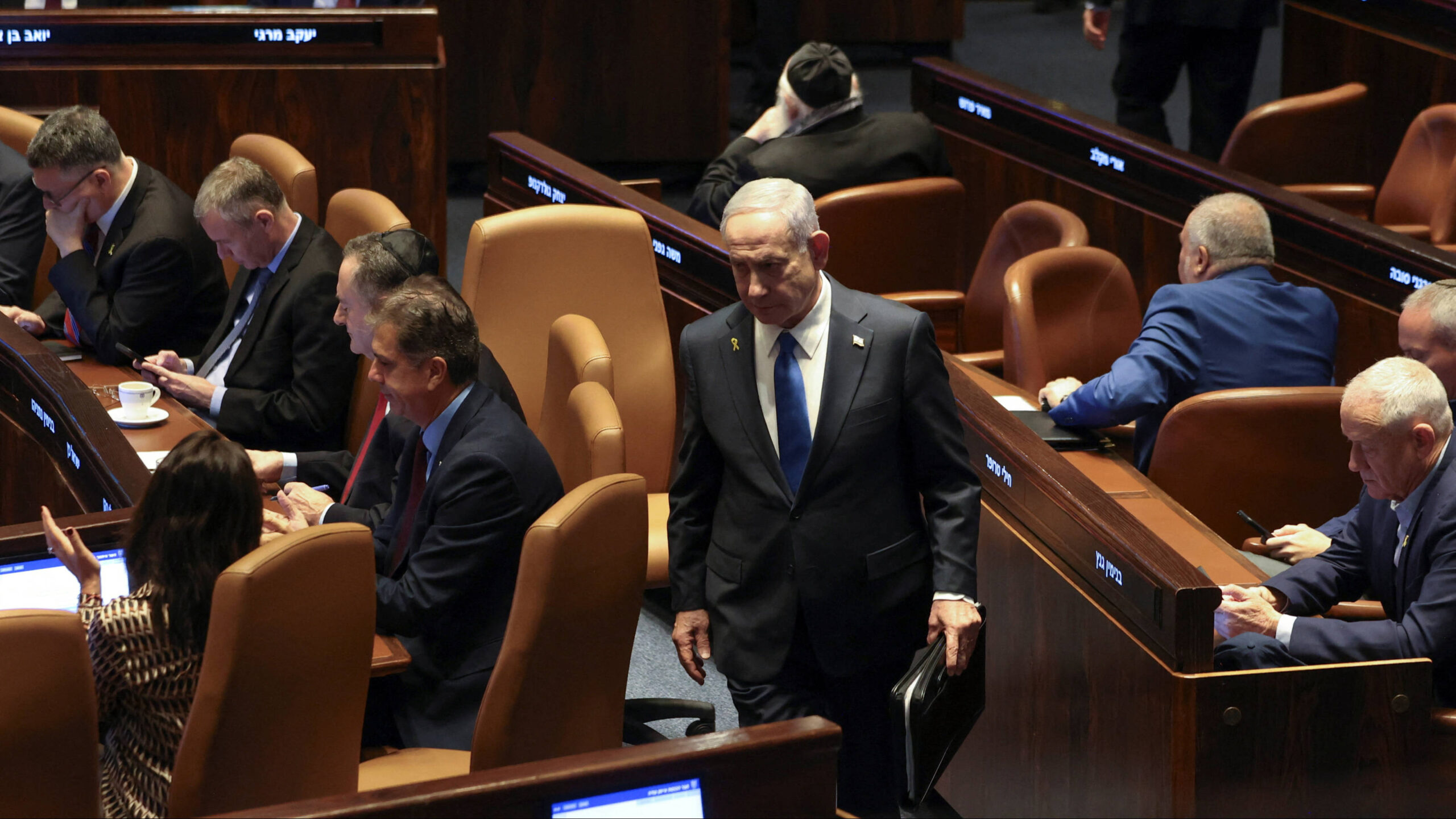
Israel’s Knesset commenced its winter session on Monday, marking the final legislative period before the next general elections, tentatively set for October 2026. The session unfolded against a backdrop of escalating political tensions, with coalition lawmakers targeting the Supreme Court and judiciary, igniting fierce opposition from rival parties. Yair Lapid, leader of the centrist Yesh Atid party, declared during a parliamentary debate that Israel is grappling with its most severe political crisis in history, accusing the government of losing control. A pivotal issue on the agenda is whether to adhere to the scheduled election date or call for early polls, a decision Prime Minister Benjamin Netanyahu has yet to finalize. The session is anticipated to be highly contentious, with several divisive bills poised for debate. Among them are proposals to extend Israeli sovereignty over the occupied West Bank, including one from National Security Minister Itamar Ben Gvir’s Jewish Power party and another from opposition leader Avigdor Lieberman, focusing on the settlement of Ma’ale Adumim. Other significant legislation includes a bill advocating the death penalty for convicted terrorists, championed by Ben Gvir, and measures addressing ultra-Orthodox military conscription exemptions, a topic that has sparked intense public discourse. Additionally, the government aims to advance a bill splitting the attorney general’s role, perceived as part of a broader effort to weaken the judiciary. These developments have reignited concerns over democratic principles and freedom of religion, with critics warning of potential overreach by the right-wing coalition.
Annexation, death penalty, elections: The bills on the menu for Israel’s parliament