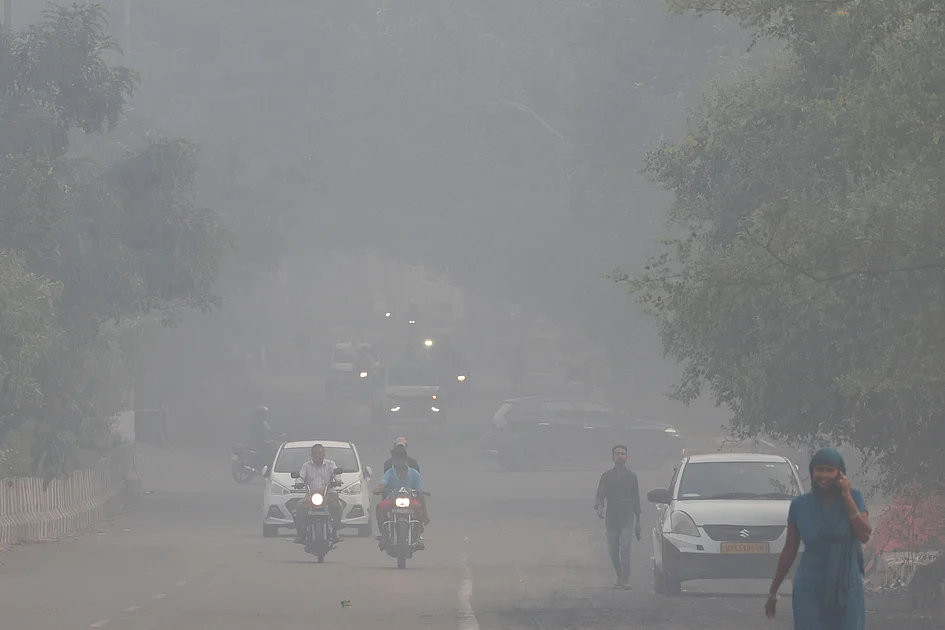
New Delhi, India’s bustling capital, is grappling with an unprecedented environmental crisis as a thick, toxic haze envelops the city. On Monday, air pollution levels surged to over 16 times the World Health Organization’s recommended daily maximum, posing severe health risks to its 30 million residents. The city, already notorious for its poor air quality, faces a deadly combination of emissions from crop burning, industrial activities, and heavy vehicular traffic. The situation has been exacerbated by cooler air trapping pollutants close to the ground and the widespread use of fireworks during Diwali, the Hindu festival of lights. Despite the Supreme Court’s allowance of ‘green firecrackers’ designed to reduce pollution, the ban on traditional fireworks was largely ignored. Monitoring data from IQAir revealed PM2.5 levels reaching 248 micrograms per cubic meter in some areas—particles so small they can enter the bloodstream and cause cancer. The government’s Commission of Air Quality Management has warned of further deterioration in air quality and implemented measures such as ensuring uninterrupted power supply to curb diesel generator use. Additionally, Delhi authorities plan to trial cloud seeding this month, a technique to induce rain and clear the air. A Lancet Planetary Health study highlighted the grim reality, estimating 3.8 million deaths in India between 2009 and 2019 were linked to air pollution. The UN children’s agency has also raised alarms about the heightened risk of acute respiratory infections among children due to polluted air.