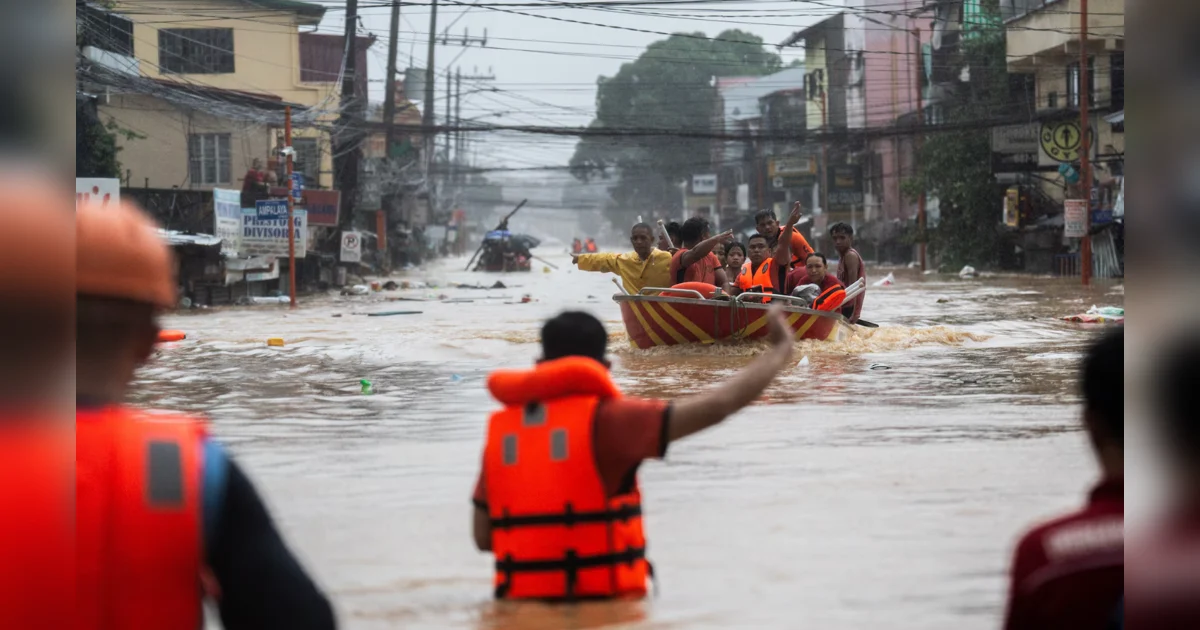
Thousands of residents in the Philippines’ Catanduanes Island were forced to evacuate their homes on Saturday as Tropical Storm Fengshen approached, bringing fears of coastal flooding and severe weather. The storm, with wind gusts reaching up to 80 km/h (50 mph), was predicted to pass near the island, home to 270,000 people, later in the day. Government weather services warned of heavy rainfall and a ‘minimal to moderate risk’ of coastal flooding due to waves measuring 1-2 meters (3-6 feet).
Local disaster officials reported that over 9,000 residents had already relocated to safer areas, following well-practiced evacuation protocols. Catanduanes, often the first landmass hit by cyclones forming in the western Pacific, activated evacuation plans for high-risk zones, including coastal areas, low-lying communities, and landslide-prone slopes. Neighboring provinces of Sorsogon and Albay also initiated preemptive evacuations, though official numbers were not immediately available.
The Philippines, an archipelago prone to natural disasters, faces an average of 20 storms and typhoons annually, many of which strike impoverished regions. Scientists have linked the increasing intensity of such storms to human-driven climate change. The arrival of Fengshen follows a series of devastating earthquakes in the country, which claimed at least 87 lives over the past three weeks, compounding the challenges for disaster response efforts.