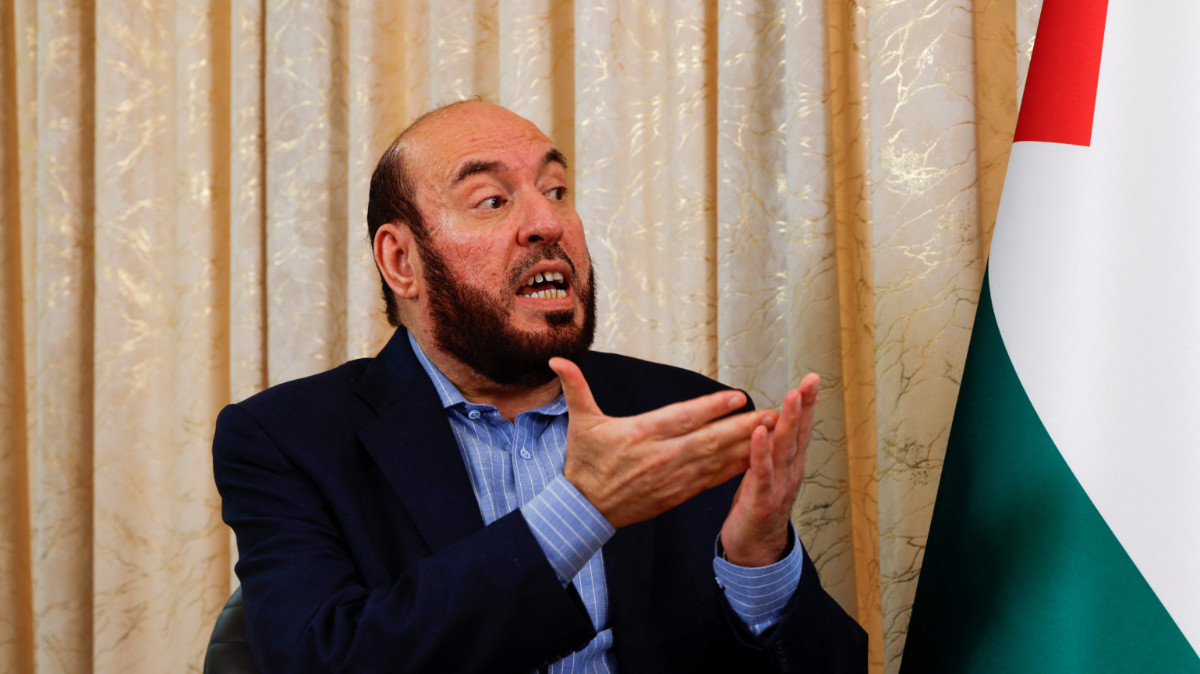
In a recent interview with Reuters, Mohammed Nazzal, a prominent member of Hamas’s politburo, revealed that the group is not prepared to commit to disarming immediately. Instead, Hamas is advocating for a ceasefire lasting three to five years to facilitate the reconstruction of Gaza. When questioned about relinquishing arms, Nazzal responded ambiguously, stating, ‘I can’t answer with a yes or no. It depends on the nature of the project.’ He further questioned the logistics of disarmament, asking, ‘To whom will the weapons be handed over?’
Arab diplomats have indicated that mediators are exploring alternatives, such as transferring Hamas’s weapons to Arab peacekeepers or securing long-range missiles rather than destroying them. This approach aligns with US President Donald Trump’s 20-point peace plan, which calls for Hamas’s demilitarization and a phased Israeli withdrawal from Gaza, though it lacks a specific timeline.
Nazzal emphasized that Hamas would provide a definitive stance during the second phase of negotiations, contingent on consultations with other Palestinian factions like the Popular Front for the Liberation of Palestine and Islamic Jihad. He clarified that the proposed ceasefire is aimed at rebuilding Gaza for civilian purposes, not preparing for future conflict. ‘The priority is to return Gaza to normal civilian life,’ he stated.
Trump’s plan excludes Hamas from Gaza’s future governance but offers amnesty to its members. It proposes a technocratic administration overseen by a ‘board of peace’ chaired by Trump, with a vague mention of potential Palestinian statehood. On the ground, Hamas remains well-organized, with its security forces deployed post-ceasefire. While Trump initially supported their presence to curb crime, he later reiterated the need for disarmament.
Nazzal described the current situation as a transitional phase, with Hamas maintaining its presence until Palestinian elections are held. Hamas has governed Gaza since 2007, following a violent split with Fatah, which controls the West Bank. Despite years of reconciliation talks, progress toward unity and fresh elections remains elusive.