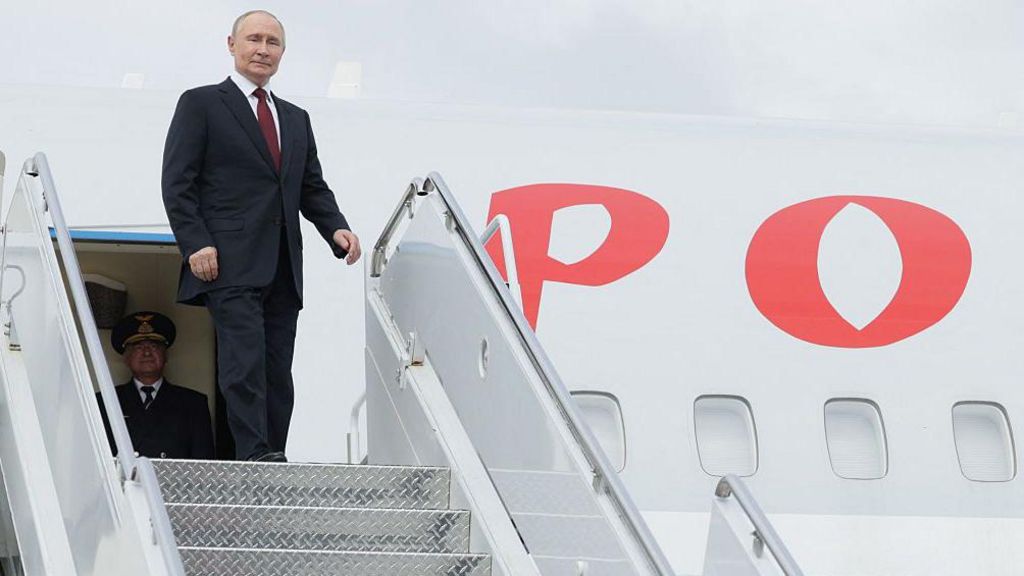
Russian President Vladimir Putin’s potential visit to Budapest for a summit with US President Donald Trump faces significant logistical and diplomatic challenges, despite the willingness of both leaders to engage in talks. The meeting, which has yet to be finalized, would require Putin to navigate complex airspace restrictions imposed by the EU and NATO, as well as geopolitical tensions stemming from Russia’s invasion of Ukraine in 2022. Putin’s preferred mode of travel, his heavily modified Ilyushin Il-96 aircraft—often referred to as the “Flying Kremlin”—would necessitate special permissions to traverse EU airspace, which has been off-limits to Russian planes since the war began. Hungary, a NATO member and one of Putin’s closest allies within the EU, has expressed confidence in facilitating the visit. Hungarian Prime Minister Viktor Orban, who has maintained strong ties with both Putin and Trump, has already initiated preparations for the summit, emphasizing its potential to advance peace efforts in Ukraine. However, the EU’s executive commission has indicated that while it supports dialogue aimed at achieving a “just and lasting peace,” it will not directly participate in the talks. The logistical challenges of Putin’s journey to Budapest are compounded by the need to avoid airspace over Ukraine and Poland, both of which have strained relations with Moscow. Potential routes include flying through Turkey, Bulgaria, and Serbia, though each would require individual approvals from the respective countries. The summit, if realized, could bolster Orban’s domestic standing ahead of Hungary’s upcoming elections, while also testing the limits of EU unity in addressing the ongoing conflict in Ukraine.